
WWDC week is when the Apple world resets itself.
This year, MacPaw took the conversation beyond the keynote with two events: Boston Tech Week and Flip the Script, hosted in partnership with Catalyst Bay. Across both events, one question kept coming up: if every Mac is now an AI device, what kind of AI will define the next wave of Mac apps?
Here’s what we heard from Apple, what developers were talking about, and where MacPaw sees the ecosystem heading next.
What we heard from WWDC 2026
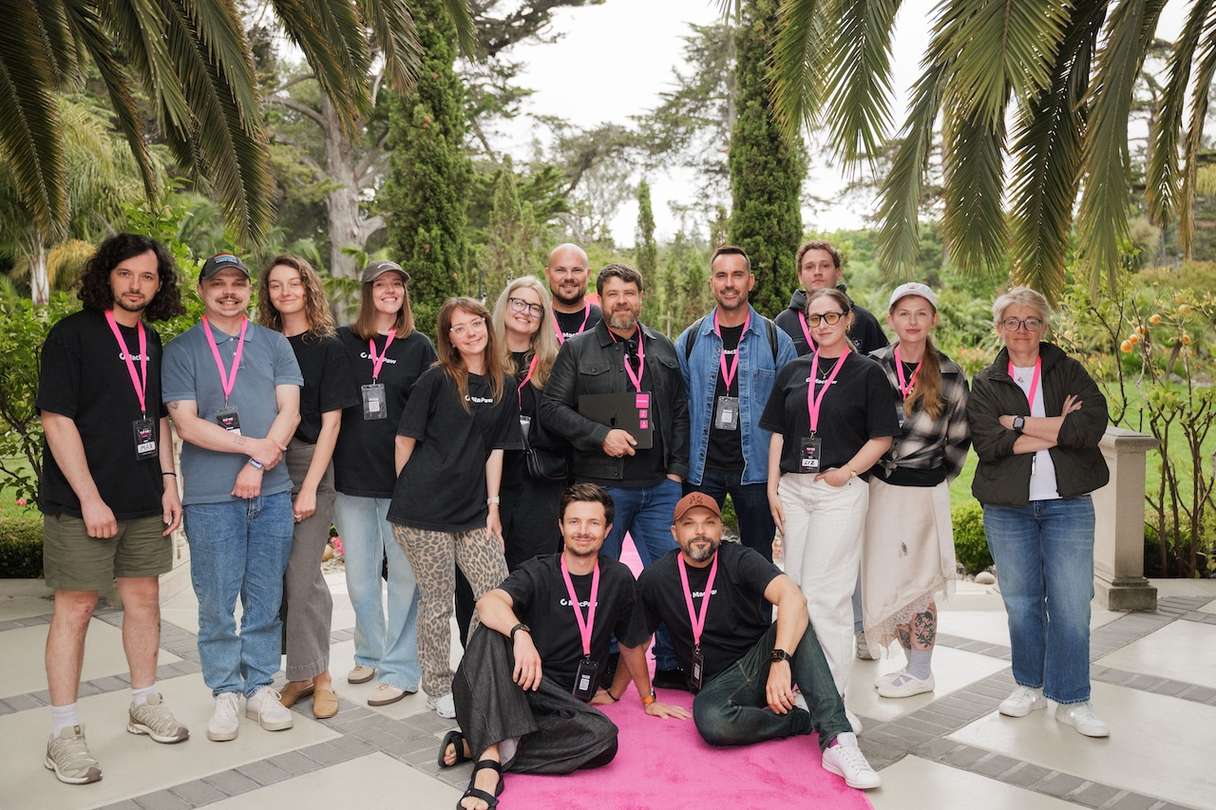
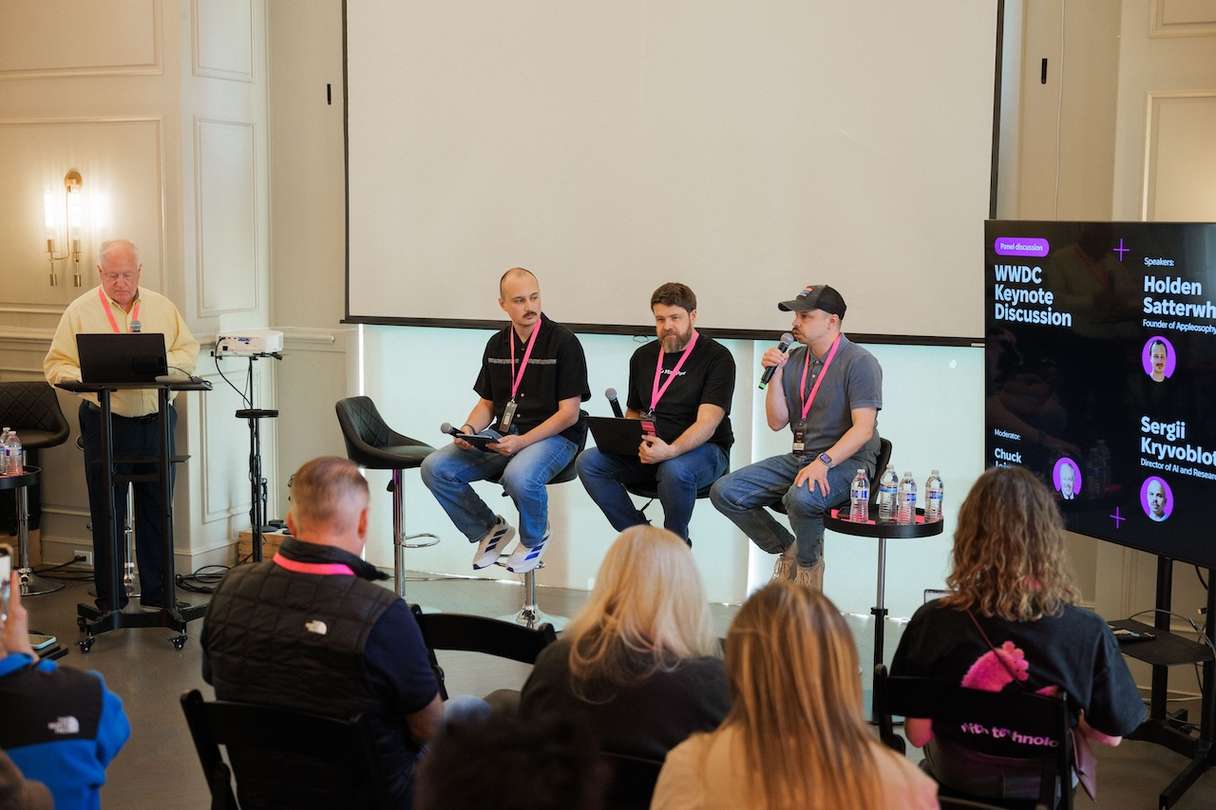
The MacPaw team watched the keynote together at AGI House with the Flip the Script crowd, then sat down with Chuck Joiner of MacVoices and Holden Satterwhite of Appleosophy for a recorded panel discussion.
Across MacPaw, the same themes kept coming up.
Apple Intelligence found its footing
Last year's rollout was hesitant. This year, Apple looked much more confident. Siri AI sits at the center of updates across iOS 27, iPadOS 27, macOS 27, watchOS 27, and visionOS 27.
Serhii Popov, Senior Software Engineer at CleanMyMac by MacPaw, captured the developer feel of the release:
“iOS 27 gives me the same feeling iOS 12 did: the year Apple stopped piling on features and poured the work into speed and efficiency. I'm so glad they did it again, and on my own iPhone running the beta, the performance so far is stunningly good.”
Siri AI puts personal context first
The biggest change is context. Siri can now hold natural conversations, draw on emails, photos, and files, complete multi-step tasks across apps, and use the web when it needs up-to-date information.
Sergii Kryvoblotskyi, Director of AI and Research at MacPaw, called it the biggest personal assistant update Apple has ever shipped.
“From our industry research during the development of Eney, we see that LLM developers set the bar for customers," Kryvoblotskyi noted. "Claude Code and Codex pretty much set the expectation of how AI agents should behave. It is no longer enough to answer single questions; agents should retain context, maintain memory, and actually perform tasks. Apple clearly took that seriously.”
Partnerships became the default
Apple's partnership with Google reinforced a recurring theme at WWDC: building frontier AI is a team sport.
As Sergii puts it:
"It is obvious that nowadays, the pace of the industry is so quick that there is no single company or team that is capable of creating everything on its own. Even tech giants like Apple need partnerships."
The idea carried through MacPaw’s WWDC week, with conversations featuring Liquid AI, Respeecher, Charlie Monroe Software, Readdle, Vellum, and others.
Foundation Models opened up
The new Core AI framework replaces Core ML, letting developers integrate third-party models and choose which models and agents power their apps in Xcode.
Kryvoblotskyi called it the most meaningful announcement for app builders:
"Apple is handing developers like us the building blocks to bring this intelligence into our own products, which is the more meaningful outcome."
Foundation Models can also understand screenshots, documents, and images out of the box.
Yelyzaveta Boiarchuk, AI Engineer at Eney by MacPaw, sees immediate opportunities:
"A whole class of 'understand this screenshot, document, or image' features is now shippable without having to bundle vision-language models by hand or use external APIs."
Europe will have to wait
Apple Intelligence is rolling out US-first. Siri AI still requires the device language to match Siri’s language, leaving multilingual users waiting a little longer.
As Serhii Popov put it:
"There's a hugely multilingual model underneath, but Siri AI is launching with English-first. For multilingual people like me, it's closer than ever, but not here yet."
What we said, across two events
Across Boston Tech Week and Flip the Script, MacPaw focused on three themes: what AI-native Mac apps actually look like, where Setapp comes in for shipping AI apps, and how software businesses look beyond the App Store.
What AI-native Mac apps actually look like
AI is becoming part of the architecture.
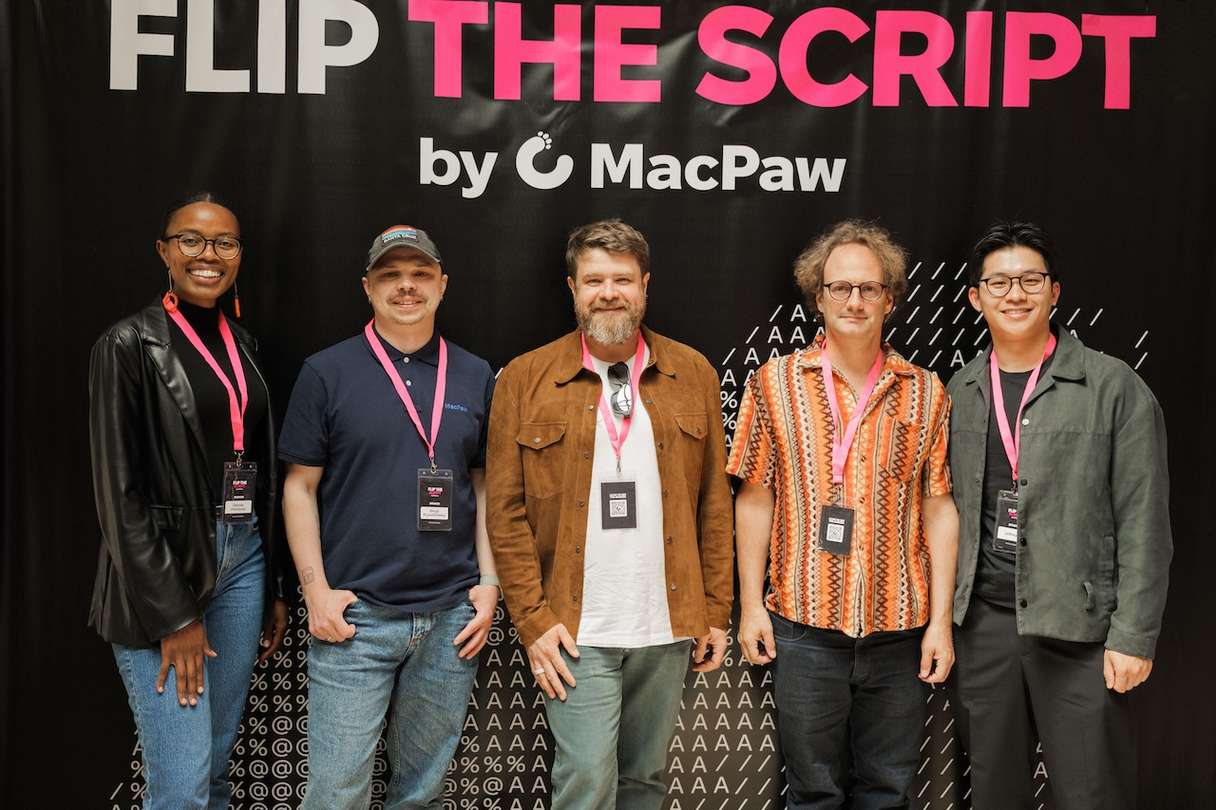
That idea shaped the Day 1 Next on Mac panel at Flip the Script, where Oleksandr Kosovan, MacPaw's founder and CEO, joined Sergii Kryvoblotskyi, Grant Reaber of Respeecher, and Jeffrey Li of Liquid AI, moderated by Denise Umubyeyi of AGI Inc.
The discussion focused on software designed around intelligence from day one: hybrid by default, private by default, and built with AI at its core.
A similar idea came up a week earlier during MacPaw Research’s Boston Tech Week panel with Alexander Amini of Liquid AI and Noa Flaherty of Vellum. Both panels reached the same conclusion: small, purpose-built models are improving quickly, and economics — not just capability — is shaping what developers can realistically build.
On shipping AI apps in 2026 and where Setapp comes in
Building AI features is becoming easier. Operating them at scale is where things get complicated.
At the Setapp live demo, Losing your mind and your margin, Pavlo Haidamak and Oleksandr Tatarchuk of MacPaw joined Olena Obilets of Spark Mail to show how the teams behind Refolder, Pinch Bar, and Spark Mail turned prototypes into products.
The takeaway: developers shouldn’t become AI infrastructure teams to ship AI-powered apps. That’s what Setapp's AI Router and AI Gateway are built for.
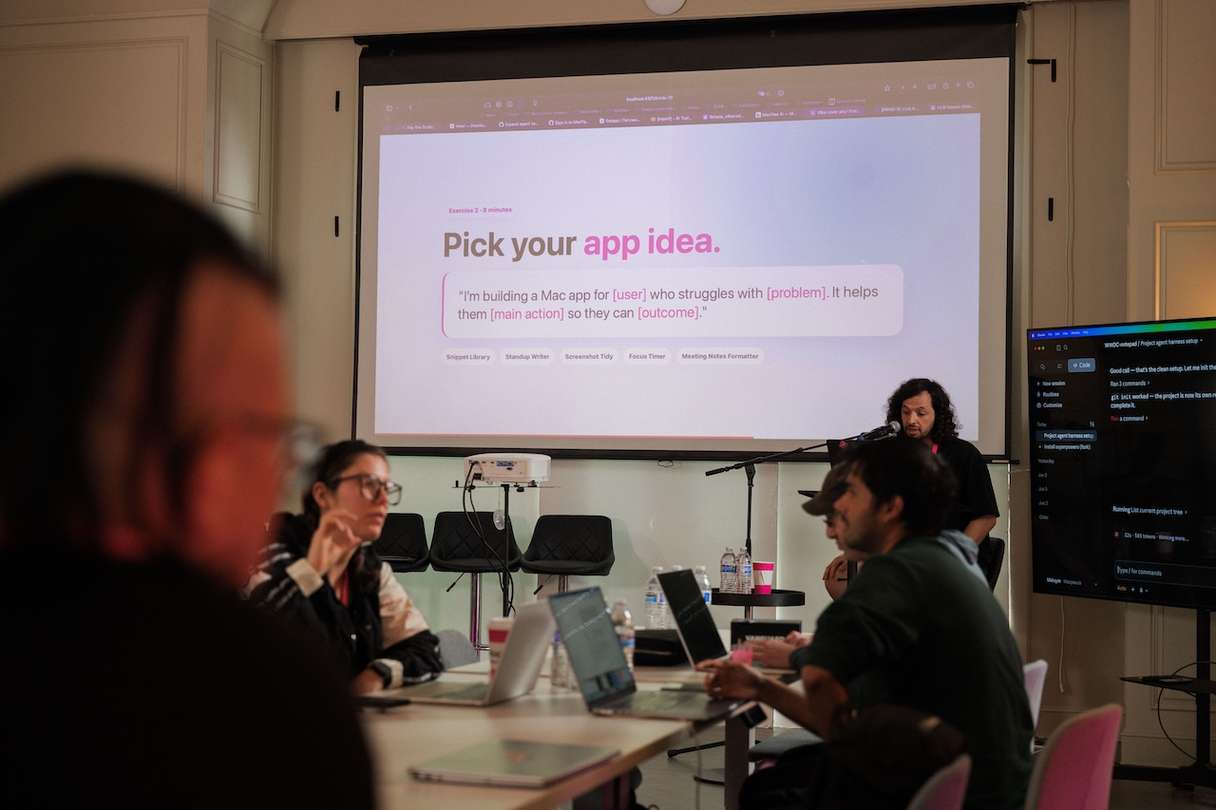
Day 2 workshops put those ideas into practice. Participants built AI-powered prototypes and integrated Setapp SDK and AI Router into the apps.
Boston Tech Week framed the same challenge with the ByDesign and JTPCK.com teams. Vibe coding makes it easier to build a Mac app. Building a sustainable business around it is still the hard part.
Monetization beyond the App Store
The Day 1 hot chair Signed code, now what? brought together Charlie Monroe of Charlie Monroe Software with Maria Polishchuk and Vadym Muraviov of MacPaw, moderated by Niels (@appledsign).
The panel explored subscription and hybrid monetization models, earning trust when every marketing channel feels crowded, and what discovery looks like in the AI era, where showing up in AI-generated answers increasingly matters alongside traditional search.
What's next: MacPaw's AI stack and the ecosystem
The conversations reflected questions many Apple developers are asking right now. For MacPaw, the answers are taking shape in three places.
Building the AI stack: Elix and Mnemos
MacPaw is one of the few consumer software companies in 2026 building its own AI stack instead of relying on third-party APIs.
Elix, MacPaw's inference engine for Mac, and Mnemos, the AI memory and context layer, sit at the foundation.
Built by MacPaw AI and Research, they’ll power the MacPaw ecosystem while giving Setapp developers new AI building blocks.
Building one connected Mac experience
CleanMyMac, Setapp, Moonlock, ClearVPN, and Eney are becoming more connected.
Together, they cover system care, cybersecurity, app discovery, and AI assistance through Eney.
Setapp's next chapter
As more developers build AI-first Mac apps, Setapp is expanding alongside them.
AI Router and AI Gateway give developers unified access to popular AI models through a single API, without having to manage API keys or provider integrations themselves.
Flip the Script workshops showed what it looks like in practice, from first prototype to production app.
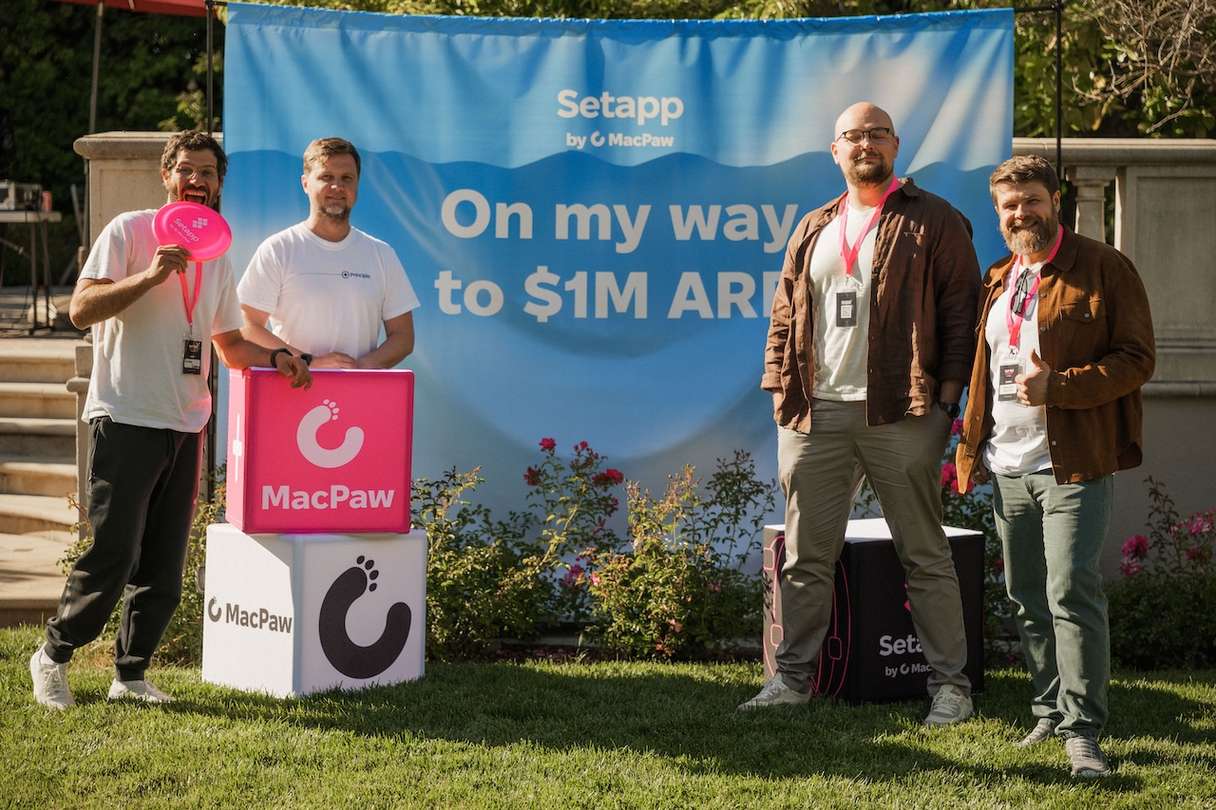
Nearly ten years after launch, Setapp is growing from an app subscription platform into the infrastructure for the next generation of Mac software.
Thank you to everyone who spoke, moderated, attended, and did the behind-the-scenes work to make both events happen.
WWDC lasts a week. The work that follows lasts much longer.