
How to open downloads on Mac and what to do when they won’t? Whether it is an app or another file or even an entirely missing download, there’s a lot you can do to troubleshoot the glitches. Keep on reading, and we’ll show you what to do if downloads won’t open on your Mac.
How to open a download on Mac?
You can open a downloaded file by double-clicking it. You can do it either from the Downloads folder or the browser in which you downloaded the file.
How to find Downloads on Mac
First off, let us remind you how to access downloaded files on a MacBook:
- Access the Downloads folder from the Finder's sidebar: If it is not there, press Command + , to open Finder Settings and select the checkbox next to Downloads in the Sidebar section.
- Go to the Downloads folder from the Dock: You can simply drag it to the Dock from the Finder, and it will stay there.
- Use the Command + Option + L shortcut — it will send you to the Downloads folder, but it works only in the Finder.
- Use the download manager of your browser: In Safari, click a down arrow top right or click Command + Option + L shortcut. In Chrome, you can use the Command + Shift + J shortcut. In Firefox, it is Command + J.
Why can’t I open my downloads on Mac?
There are a few possible reasons why downloads won’t open on your Mac:
- If the download is an application, it may be that macOS security settings are blocking it.
- If it’s not an application, it could be that the file hasn’t downloaded properly.
- If the download is complete, the file could be corrupt, or you may not have an application installed on your Mac that can open that type of file.
- If you cannot see the downloaded file in the Downloads folder, it might have been sent to another folder. Use the search to find it if you remember the name of the file or check the Recents folder. When you find your file, click it — you will see the file path at the bottom of the window. It will allow you to locate the folder in which it is now. Or you can simply drag it to the Downloads folder.
How to troubleshoot problems on your Mac
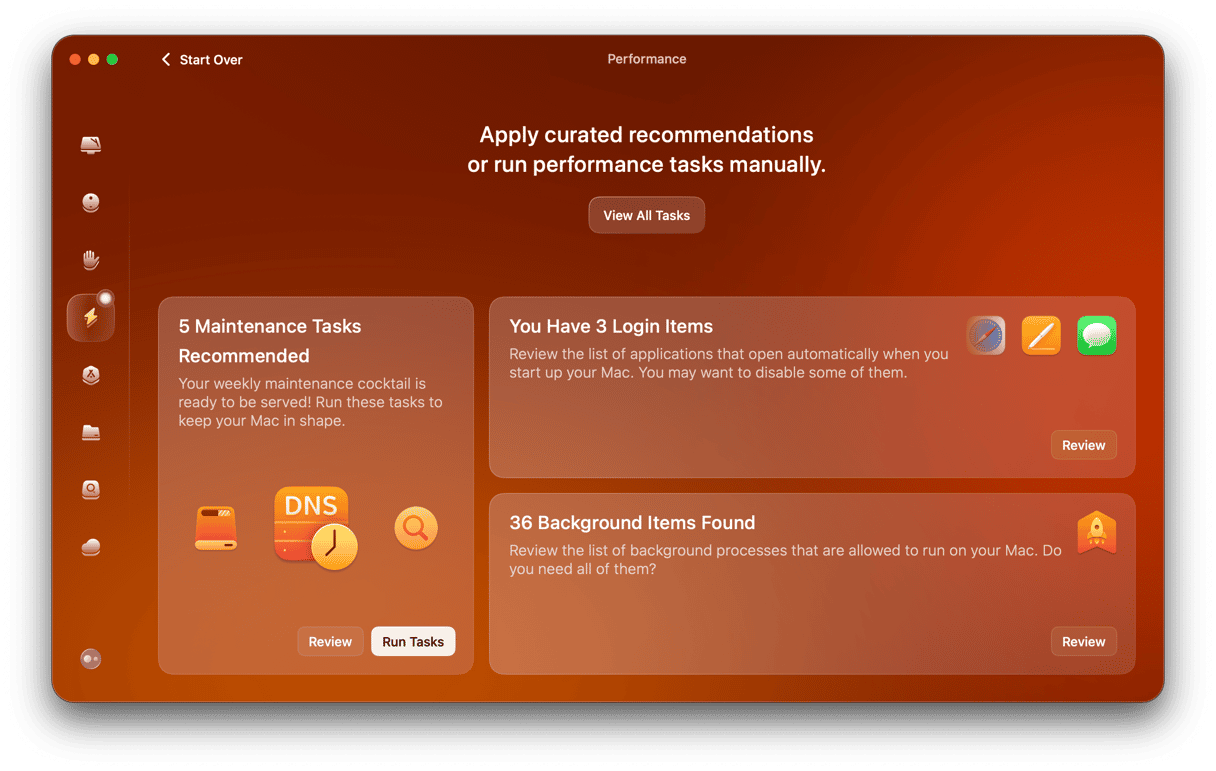
There are lots of ways things can go wrong on your Mac and lots of possible causes. The best way to prevent them is to run regular maintenance tasks. These include reindexing Spotlight, repairing disk permissions, clearing DNS cache, and thinning out Time Machine snapshots.
Doing all that manually is time-consuming and laborious, so most of us never do. However, there is an easy way — CleanMyMac’s Performance feature can run all those tasks for you as well as manage background extensions and login items with just a couple of clicks. You can test it for 7 days free — get your free CleanMyMac trial.
Why use CleanMyMac
- Offers a 360° approach to Mac care — you can clean, maintain, and declutter your MacBook with 25+ tools.
- According to internal reports, on average, users need less than 30 seconds to run recommended maintenance tasks in the Performance feature.
- Trustpilot rating: 4.7/5
Try CleanMyMac for free — see how easy it is to keep your Mac clutter-, malware, and glitch-free with its help.
What to do if you can’t open a downloaded file on your Mac
Depending on what you are trying to open, there are a few different fixes you can try.
If the file is not an application
1. Incomplete download — check the downloads queue in your web browser
In Safari, click the down arrow with a circle around it to see it. Look at the file and check that it has downloaded successfully. If it hasn’t, download it again.
2. No app to open the file — find such app and download it
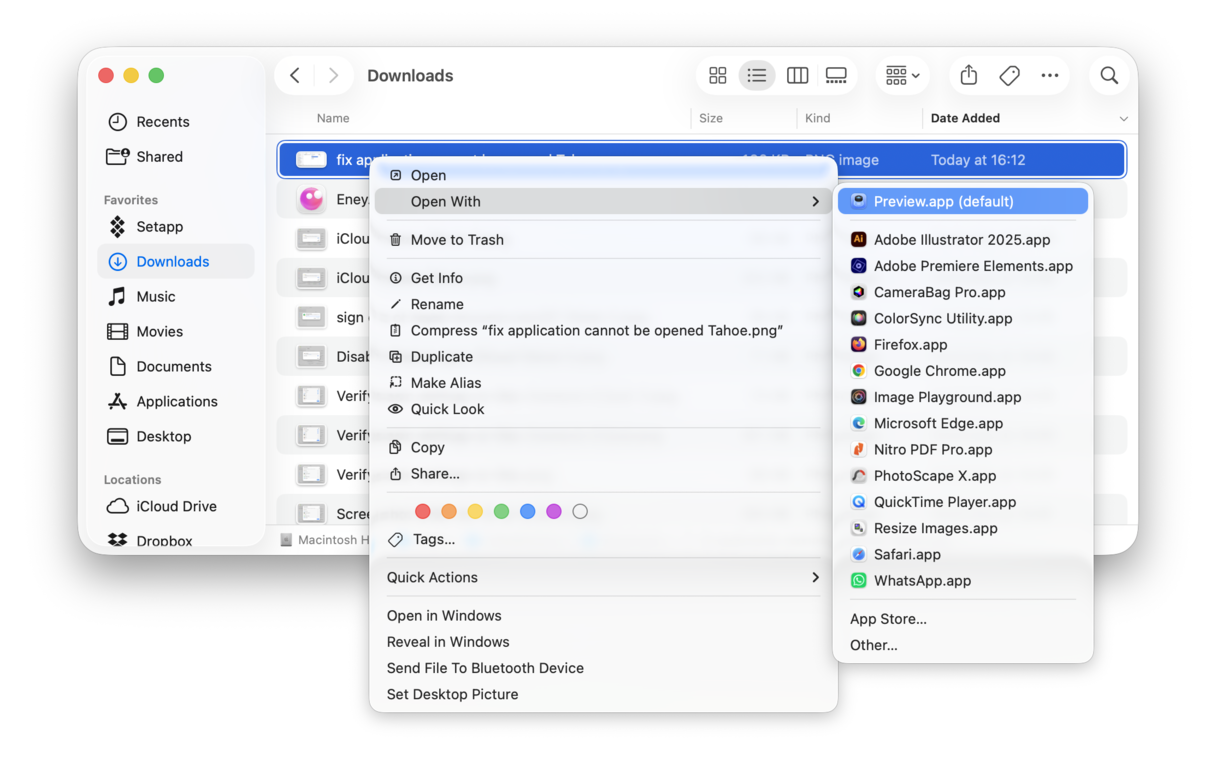
Look for the file in your Downloads folder. If it doesn’t open when you double-click it, Control-click on it and choose Open With. Look at the list of recommended applications and choose one. If there are no recommended applications highlighted, you will need to do some research to find out which applications can open that file and download one.
3. Corrupt download — download the file again
If you have an application on your Mac that is capable of opening the file but you get an error message when you try to open it, the file may be corrupt. Try downloading it again. If it still won’t open, try a different application. If that doesn’t work, you will need to contact the owner of the file and tell them.
If the file is an application
If the file that you’re trying to open is an application, it’s likely that it has been blocked by Gatekeeper, the feature in macOS that keeps the system safe from malicious software (you can learn more about it here in this article from Apple).
In that case, you should see a message telling you that macOS prevented the application from installing or running.
First of all, check your security settings.
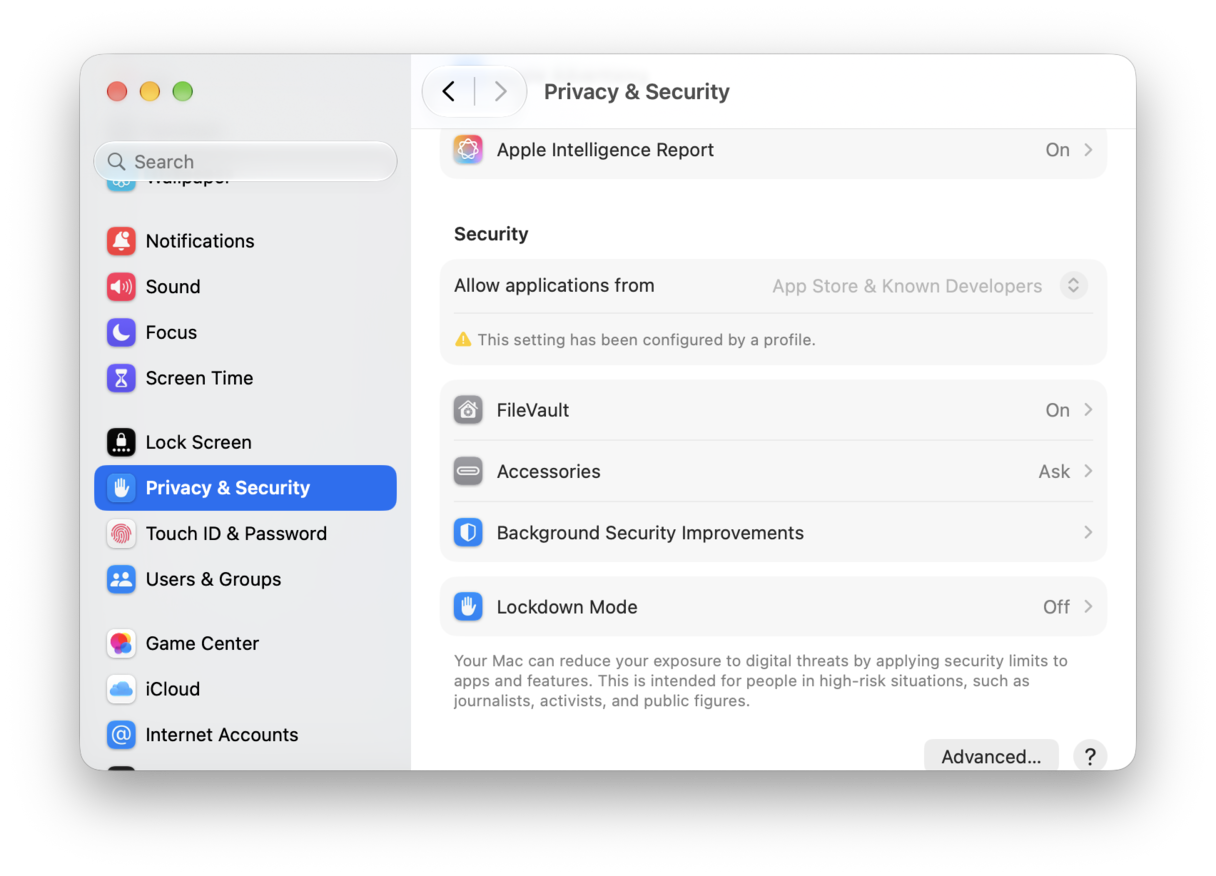
- Go to System Settings > Privacy & Security and scroll to the bottom.
- Look for the ‘Allow applications from’ menu and make sure it’s set to ‘App Store & Known Developers’. If not, choose that setting.
Now, proceed with the fixes.
1. Gatekeeper block ("unidentified developer") — override Gatekeeper
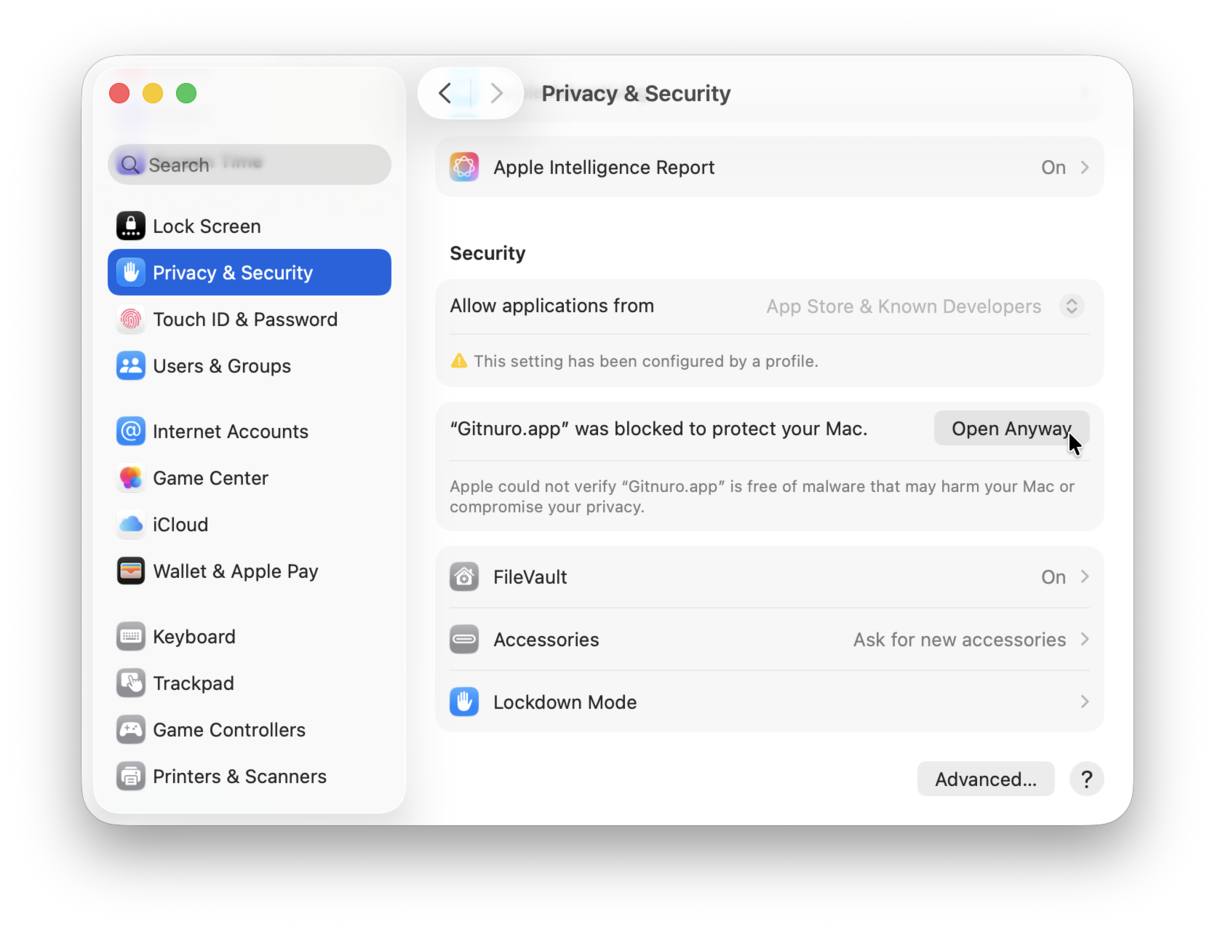
If the application still won’t run with that above security setting enabled, it means that it hasn’t been code signed by its developer and is considered a security risk. You can override that and install the application, if you’re sure it’s safe, by dismissing the warning dialog and going to System Settings > Privacy & Security. You should see a warning there about the application you’re trying to install with an option to ‘Open Anyway’. Choose that option to install the application.
2. "App is damaged and can't be opened" error — remove the app’s quarantine attribute
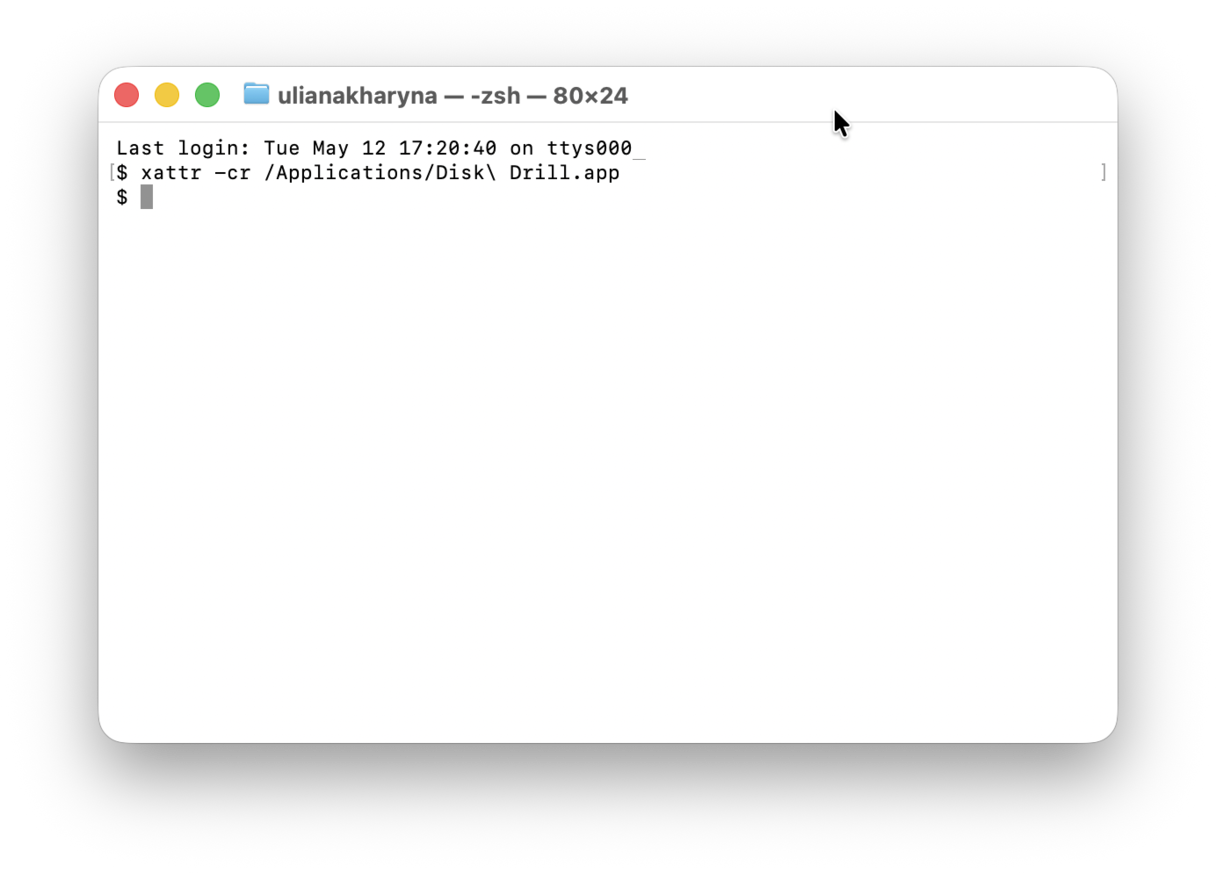
It is usually a false alarm triggered by Gatekeeper. You can fix it by removing the app's quarantine attribute via Terminal. Run this command:xattr -cr [file path to the app] (just drag the app onto Terminal window) followed by Return. Try again. You might need to go to Privacy & Security and click Open Anyway.
3. Tahoe-specific quarantine behavior — remove the attribute to overcome the security feature
Do it only if you're sure that the app is safe to open.
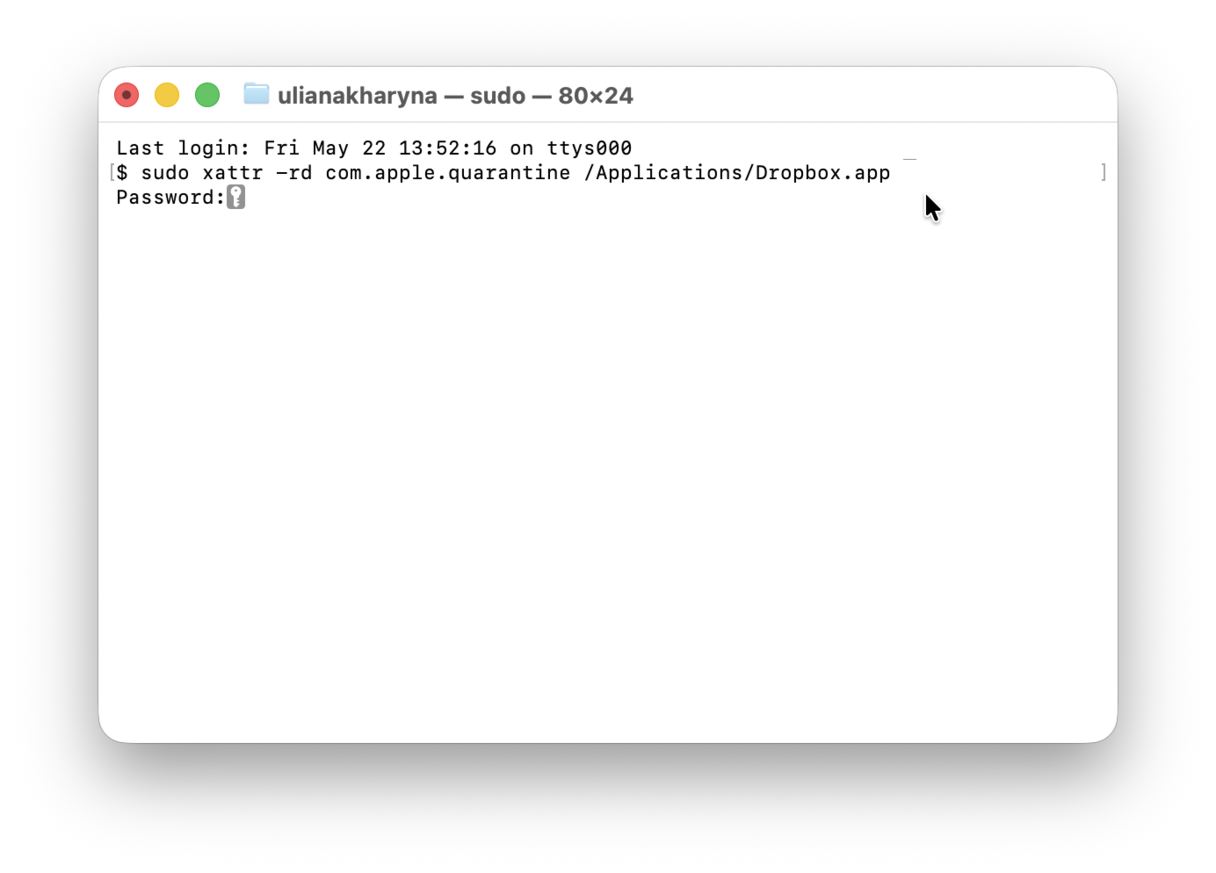
Run this command in Terminal: sudo xattr -rd com.apple.quarantine [file path to the app] (drag the app onto Terminal window) followed by Return. You will need to enter your admin password.
4. "Apple could not verify this app is free from malware"
Follow the steps above one by one or redownload the app. Only if you are 100% sure that the app is safe and not malware. If none of these help, choose an alternative to your application.
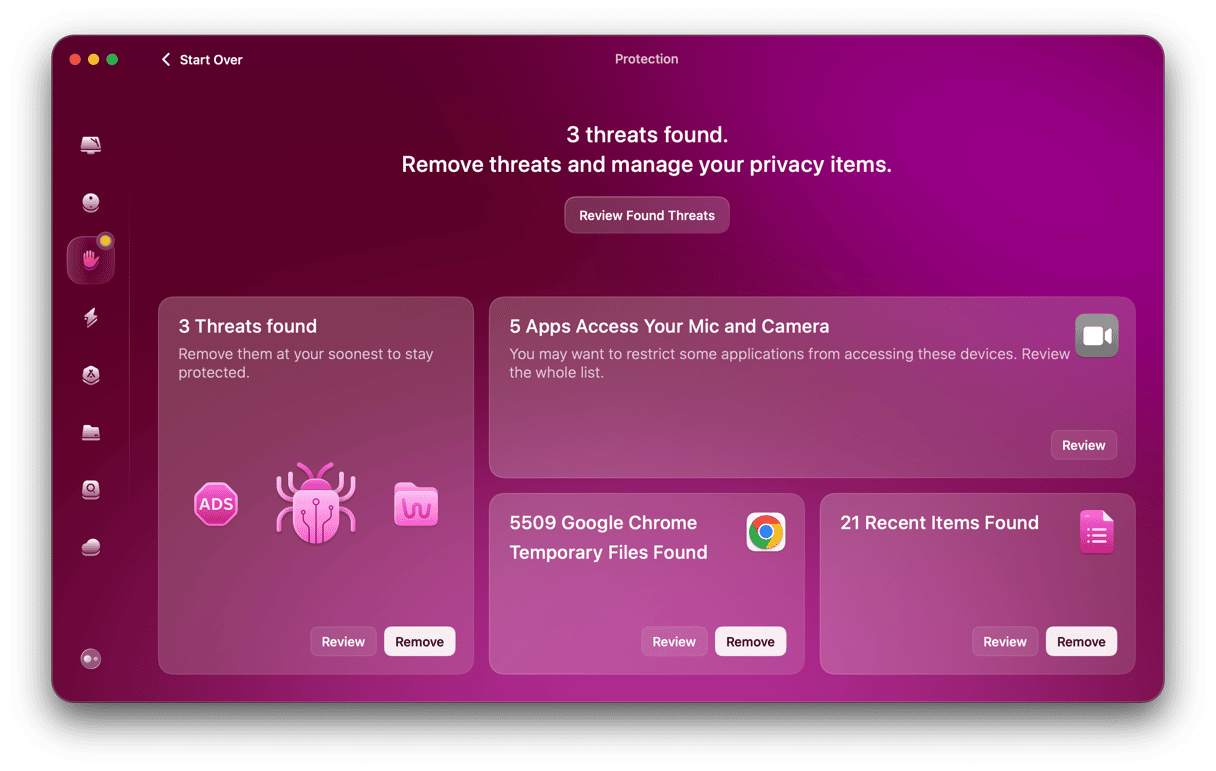
Use CleanMyMac to run a Protection scan — it detects the latest Mac-specific malware so that you can be sure that your Mac is safe and you can open the downloaded apps. Ideally, do it before overriding Gatekeeper or running any Terminal commands.
What to do if you can’t open your Downloads folder
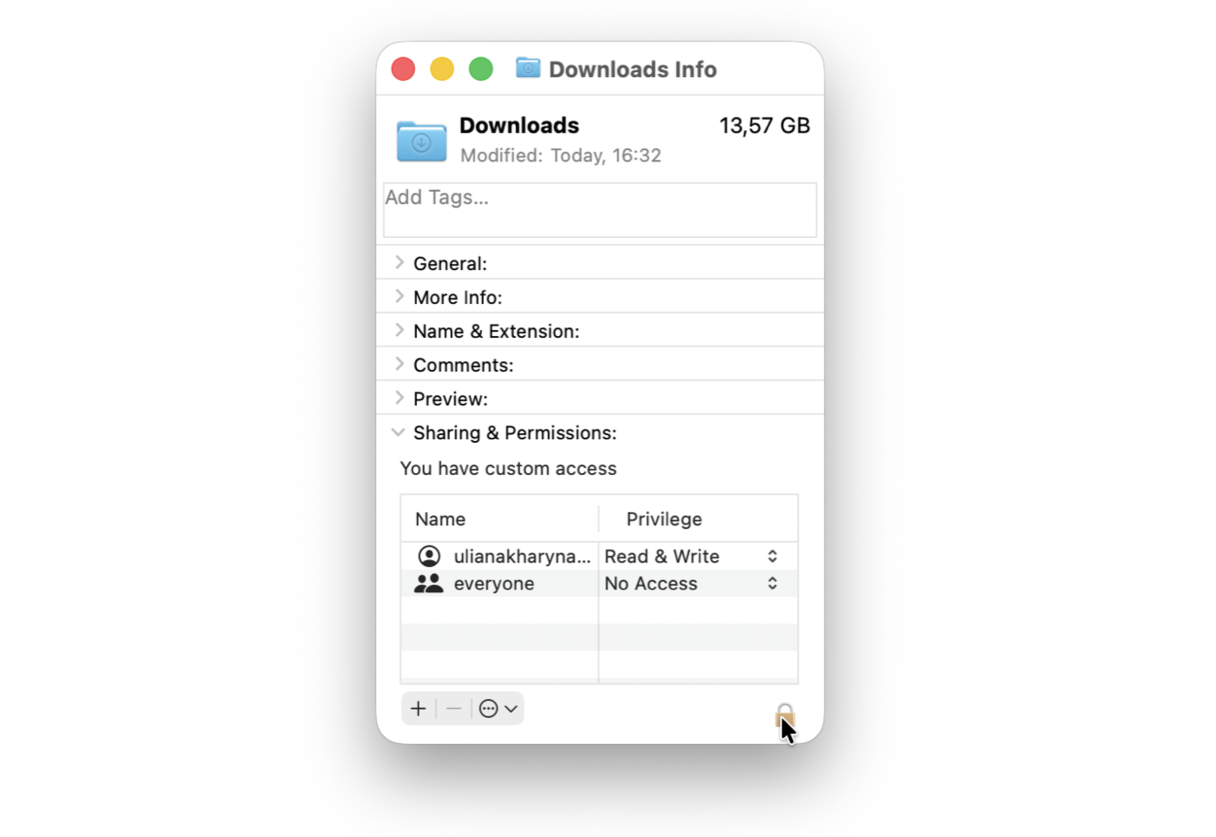
First, restart your Mac. If it doesn’t help, check permissions:
- Open a new Finder window and find Downloads in the sidebar. If it’s not there, press Command + comma to go to Finder settings and select the checkbox next to Downloads in the Sidebar tab.
- Control-click Downloads and choose Get Info.
- Under Sharing & Permissions, make sure that your user has the privilege named Read & Write. To change the permissions, click the padlock and enter your password.
- If you are the only user, you can grant the same permissions to everyone under your username.
- Try to open the Downloads folder again.
Downloads not working on Mac even after changing permissions? Restart your MacBook in safe mode and try again.
Key takeaways
If downloads won’t open on your Mac, there are several possible reasons. Follow these steps to fix Mac downloads not working:
- Check download status
- Try another app
- Check Gatekeeper settings and override Gatekeeper if needed
- Fix Downloads permissions
Frequently asked questions
Why won't Safari open or save downloads and how do you fix it?
It happens due to strict security settings. Make sure that you allow Safari to download your file in the prompt that pops up in the download window. Also, it may be that the files have been downloaded to another location, not the one you were expecting to land them in. You can change this in Safari Settings > General (next to File download location).
Why won't Chrome or Firefox complete downloads on Mac — and is this a browser issue or a macOS issue?
It is usually a browser issue. Try restarting your browser and clearing the cache. You can use the Command + Shift + Delete shortcut to quickly open the delete browser data menu in both browsers.
After successfully opening a previously blocked app, does it stay allowed or will macOS block it again next time?
The action is permanent for your specific blocked app. However, you will have to repeat the same steps for other apps, too, should you be unable to open them.
Why won't Mac let me download files at all and how do I fix it?
It may be because VPN/Firewall is blocking the connection, your Mac is running out of space, or browser cache is causing a conflict. To fix it, disable VPN/Firewall in System Settings > Network, check available storage, and try downloading your file in a different browser.
Why can't I open email attachments downloaded on Mac?
In addition to the lack of free storage or VPN/Firewall blocking a download, you might not be able to open a downloaded email attachment because of the so-called app-already-open conflict. Try quitting Preview (if you use it to view files) and try again. It is a documented macOS bug, and re-opening Preview usually helps fix it.