If you have a Nintendo Switch games console, you may prefer not to hook it up to your TV but also want to use it with a bigger screen than the one built into the device. The solution is to connect it to your Mac. You could connect Switch to MacBook or iMac and use its screen. Whichever Mac you have, you can connect your Switch to it. We’ll show you how to do it in this article.
Can you connect Switch to MacBook?
Yes, and the main reason you might want to connect a Nintendo Switch to your Mac is that you want to play on a bigger screen than the one on the Switch itself, but you don’t have access to a TV to which you can connect the Switch dock. Perhaps you share an apartment or house with others and can’t use the shared TV. Or maybe you don’t have a TV at all. Whatever the reason, connecting a Nintendo Switch to your Mac is a good solution. There's just one catch worth clearing up first.
Can't I just plug the Switch into my Mac with an HDMI cable?
Unfortunately, no. A Mac's screen can't act as an HDMI monitor for another device. The old Target Display Mode that let some 2009–2014 iMacs serve as a display was retired years ago and never worked with sources like a Switch anyway. To get Switch gameplay on your Mac, you need a capture card.
Which Switch do you have?
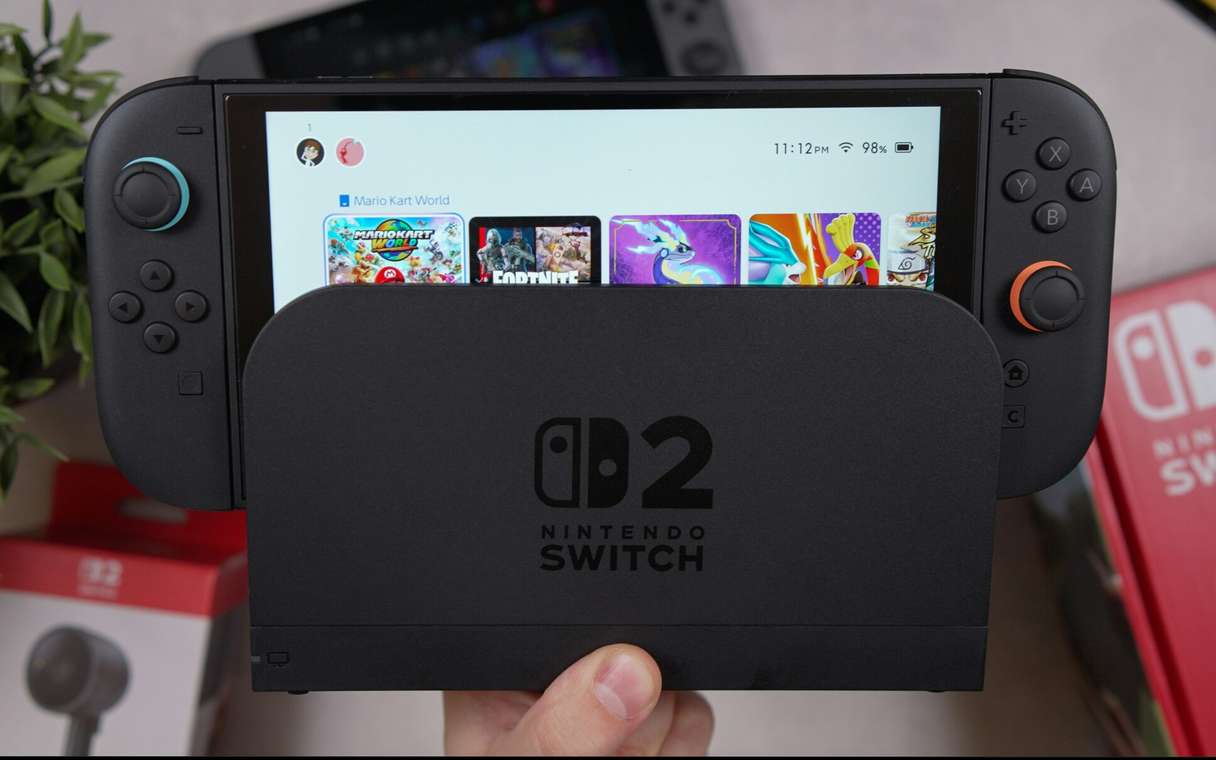
- If you have the Switch 2: The steps below work the same for the Nintendo Switch 2 (released in 2025). The only difference is that it can output up to 4K resolution, so you'll want a 4K-capable capture card like the Elgato 4K S rather than a 1080p one.
- Original Switch / Switch OLED: These top out at 1080p, so any 1080p card, such as the Elgato HD60 X, is fine.
- Switch Lite: It has no dock and no video output, so it can't be connected to a capture card or shown on your Mac's screen at all. The Switch Lite is a compact, lightweight console dedicated to handheld play, so it's missing the chip that sends video out through the USB-C port (the one the standard Switch relies on). It's a hardware decision, not a software limitation, so no adapter or dock can get around it. To play on a bigger screen, you'd need a standard Switch, an OLED Switch, or a Switch 2.
What you'll need
You don't need a separate monitor: you can play directly on your Mac through the capture software. Here’s everything you need to play Switch on MacBook:
- Your Switch and its dock (the Switch 2 needs its own dock — the original won't drive it properly)
- The Switch's power adapter
- An HDMI cable
- A Mac-compatible capture device
- Software to display the feed: OBS Studio (free) or the card's own app
How to connect a Nintendo Switch to your Mac
There are two parts to connecting a Switch to your Mac. The first is to connect the console itself so that you can see its screen on your Mac’s display. The second is to connect the controllers to your Mac using Bluetooth. You don’t have to connect the controllers to your Mac to play Switch games and see them on your Mac’s screen, but if you want to use the controllers for other things, like playing macOS games, you will need to connect them to your Mac using Bluetooth.
Step 1. Choose a capture device
There are several capture devices available. Some connect to a USB-C port; others to a USB-A port. And some need a PCI slot. The device you choose will depend on the Mac you’re using. If you have a Mac that only has USB-C ports, it makes sense to choose one with a USB-C connector unless you plan to use it with a dock.
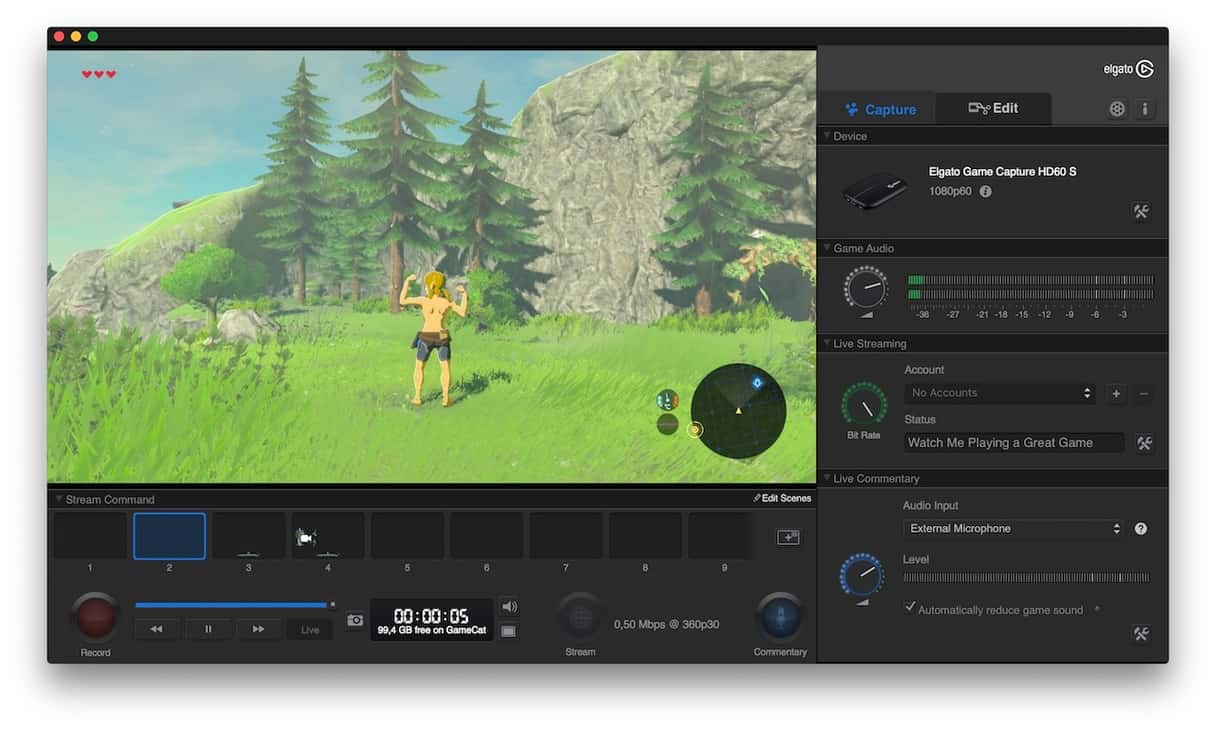
The other thing to consider is software. Elgato devices come with their own software, which is part of why they are so much more expensive than some other devices available on Amazon. If you go for a cheaper option, you may need to source the software separately. But the open source OBS Studio will do the job and is free to download.
What is the cheapest capture card that works with Mac?
Beyond price and ports, the one spec that really matters on a Mac is UVC (USB Video Class) compliance — that's what lets a card work without drivers. It's also why Elgato cards are a safe bet, since they're all UVC. With other brands, look for "UVC / driver-free / works with OBS on Mac" in the specs.
The Guermok 4K is the best of the cheaper options, usually around $20, though budget cards tend to be hit-or-miss and you may run into audio-sync issues. If you'd rather spend a bit more for reliability, the AVerMedia StreamLine MINI+ (about $80) offers smoother gameplay and proper 4K60 passthrough, sitting between the bargain cards and pricier Elgato models.
Step 2. Connect it all together
How you connect everything and get it working will depend on the capture device you bought. Here are the steps for a basic USB-C capture card:
- Download and install OBS Studio.
- Get your Nintendo Switch 2 and its dock (the Switch 2 needs its own dock — the original Switch dock won't work properly).
- Connect an HDMI cable from the dock's HDMI OUT to the HDMI IN on your capture device, then plug the dock's power cable in.
- Connect the capture device to your Mac with its USB-C cable. (If your card uses USB-A, you'll need a USB-A-to-USB-C adapter.)
- Dock the Switch 2 and power it on.
- In OBS, click + under Scenes and click OK.
- Click + under Sources, choose Video Capture Device, and click OK.
- In the Device field, select your capture card (it may show as "USB Video" or by its product name). Your Switch screen should appear.
- Click + under Sources, choose Audio Input Capture, and select your capture card. If you get no sound, open its Properties (the three dots in the Audio Mixer > Properties) and change Device from Default to your card's USB digital output.
- Right-click the preview and choose Fullscreen Projector to play full screen.
Elgato capture cards come with their own app, so if you have one, you can record and play on your Mac without installing OBS Studio. For live streaming, you'd still use OBS or similar.
Using Elgato Studio instead of OBS
Connect everything as described in Step 2 above, then:
- Download and install Elgato Studio.
- With everything connected and your Switch powered on, open Elgato Studio. Your gameplay preview appears right away.
- Hit the Record button at the bottom to start capturing.
- To set the recording quality and where files are saved, open Preferences (the gear icon in the top-right) and go to the Recording tab.
Elgato Studio handles incoming signals up to 4K60 with HDR. Use it when you just want to record and play; if you plan to live stream to Twitch or YouTube, you can use OBS Studio, which is built for broadcasting.
Capture card not showing up in OBS
If your capture card doesn't appear in OBS's Video Capture Device list, work through these fixes:
- Unplug and replug the USB cable, and try a different USB port. Some USB hubs don't supply enough power, so connect directly to the Mac if you can.
- Quit and reopen OBS after connecting the card, so it locates the new device.
- Check System Settings > Privacy & Security > Camera and make sure OBS is turned on. If it isn't, OBS sees the card but shows a blank source.
- If you're using a USB-A-to-USB-C adapter, try a direct USB-C card instead.
Some capture cards require their manufacturer's software to install the driver, even if you don't use that app. The Elgato HD60 S, for example, needs Elgato's capture software on your Mac because it includes the USB driver that registers the card as a video source. Without it, macOS won't expose the card to OBS at all. After installing, unplug the card, restart, plug it back in, then recheck the Video Capture Device in OBS.
Can I play online through this setup?
Yes, online play works exactly as it usually would. Your Switch handles its own internet connection over Wi-Fi. If you'd rather go wired, a Switch OLED or Switch 2 dock has a built-in Ethernet port, while the original Switch dock needs a USB LAN adapter. Your Mac only displays the video feed coming from the capture card, so it has no effect on the Switch's network connection or your online gameplay.
The hidden problem with Mac gaming
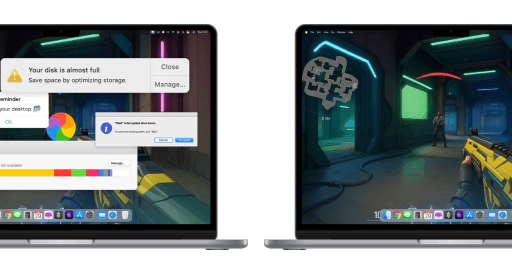
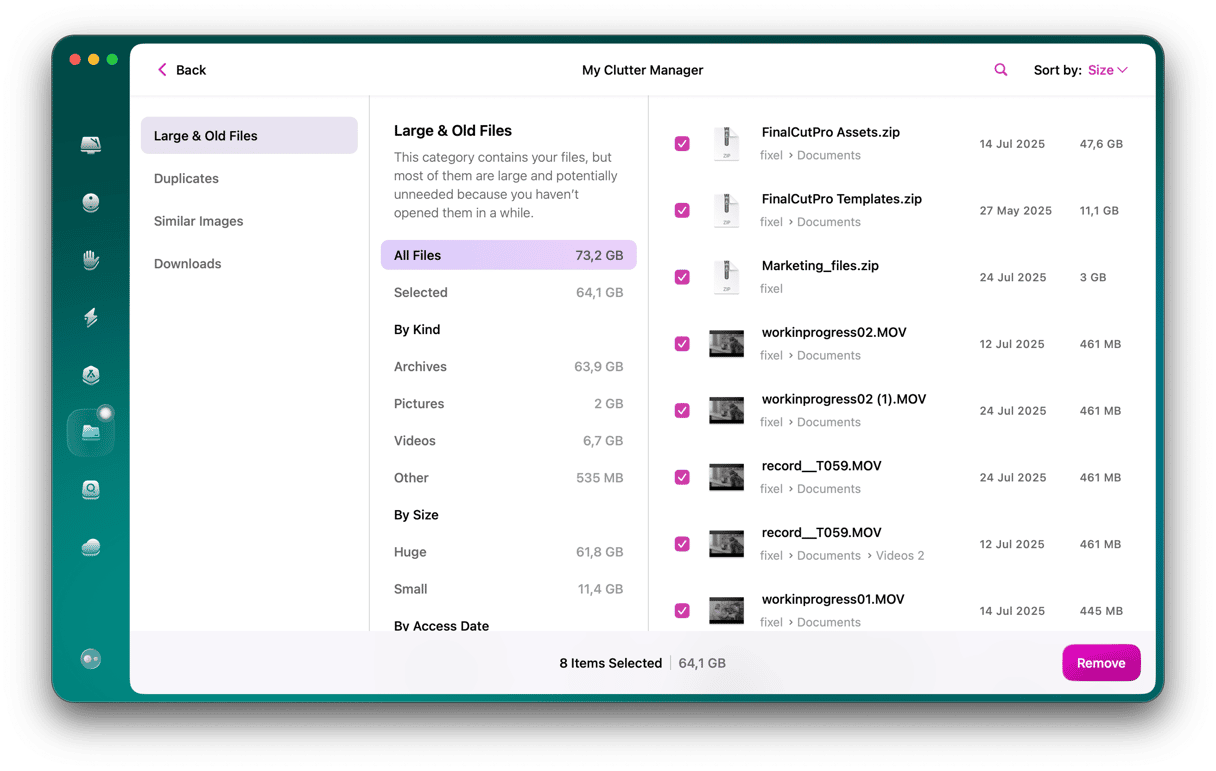
Here's something worth knowing before you get too deep into recording sessions: capture files are huge. A single hour of 1080p gameplay can easily run 10 GB or more, and that climbs fast at higher-quality settings. Since OBS quietly saves these to your Movies folder by default, they can pile up in the background until your storage suddenly runs out.
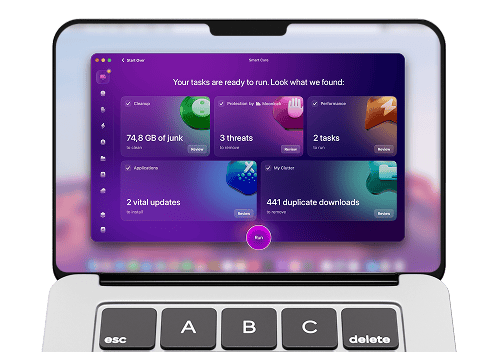
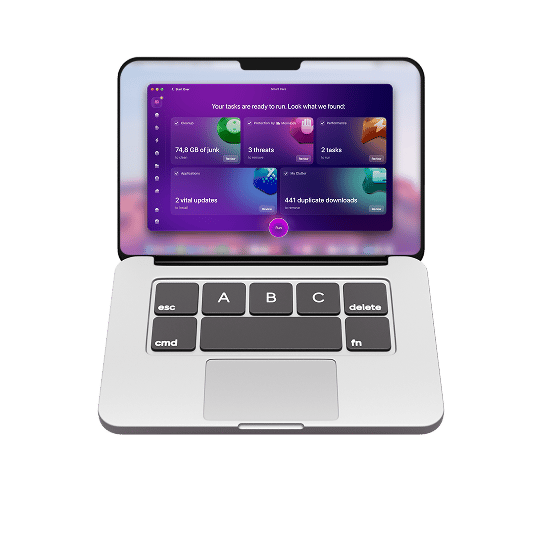
The fix is simple once you can see what's actually taking up the room. CleanMyMac scans your entire Mac to locate the largest and oldest files, so you can clear out recordings you're done with and free up space. Try the app for free and reclaim GBs of storage.
Do Joy-Cons work for non-Apple Arcade games?
You can pair the Joy-Cons over Bluetooth to use them as controllers for Mac games — not just Apple Arcade titles, but Steam games and others too. But it depends on the game how smoothly the process goes:
- Apple Arcade and Mac App Store games: These are easy to set up. On macOS Ventura or later, just pair over Bluetooth (follow the steps below), and you're done.
- Steam games: Steam has native Joy-Con support, so they work once paired over Bluetooth. With the controllers connected, open Steam, click the Steam menu in the top-left, and choose Settings. Open the Controller tab, where at least one of your Joy-Cons should appear, and make sure the Combine Joy-Con Pairs option is enabled so the two halves act as a single gamepad. Restart Steam afterward.
- Games with no native controller support: Connect them via Bluetooth and then use key-mapping software, such as Joystick Mapper, to convert controller inputs into keyboard or mouse actions.
Pairing your Joy-Cons over Bluetooth
To pair the Joy-Cons follow these steps (you'll need macOS Ventura or later):
- Go to System Settings > Bluetooth.
- On one Joy Con, on the flat side normally connected to the Switch, press and hold the small black button until you see the green LEDs light up.
- Wait for the Joy Con to appear in the Bluetooth settings on your Mac, then click Connect.
- Repeat steps 2 and 3 for the other Joy Con.
- You can now use each Joy Con as a separate controller.
- To use them together as one controller, press and hold the screen capture and the home button on both controllers at the same time.
Pairing the Nintendo Switch Pro Controller with Mac
The Pro Controller pairs over Bluetooth just like all other game controllers:
- On your Mac, go to System Settings > Bluetooth.
- On the Pro Controller, press and hold the small Sync button on the top edge, next to the USB-C charging port, until the four player LEDs at the bottom start flashing back and forth.
- Once the Pro Controller appears under Nearby Devices, click Connect.
Unlike the Joy-Cons, the Pro Controller is recognized as one controller out of the box, so no extra step is needed to use it as a single gamepad.
Reducing lag when playing Switch on your Mac
If you’ve run into picture or audio lag when playing Switch, there's something you can do to fix it.
Picture. Playing through a software preview always adds a little delay, and for most people, OBS handles it fine. If it does feel laggy, don't switch to Streamlabs: it's built on OBS and runs heavier, not lighter. The real fix is your capture card's HDMI passthrough: run a second HDMI cable from the card to a TV or monitor and play off that screen. The passthrough signal is near-instant, and only the feed going to your Mac is delayed. If you'd rather keep everything on the Mac, the Elgato app or QuickTime are both lighter on resources than OBS for the preview window.
Audio. Audio lag is usually about how the sound is routed, not your mic. The biggest culprit is Bluetooth, since wireless audio adds noticeable delay, so if you're on Bluetooth headphones or speakers, switch to wired ones to remove most of it. If you're recording in OBS, also turn off audio monitoring so you aren't hearing a delayed second copy of the sound. Monitor directly from your audio interface or mixer instead, which gives effectively zero latency.
Whether you want to connect a Nintendo Switch to your Mac to play games using your Mac’s display or to use the Switch controllers with macOS games, you can do it. Follow the steps above, and you will have your Switch hooked up to your Mac in no time.