iMessage is a great tool for keeping in touch with friends, family members, and work colleagues. One of its most useful features is that you can sync messages and attachments across all your Apple devices. So, any messages you get on your iPhone, you can reply to from your Mac. However, you may not want to be interrupted by messages on your Mac or just do not need to use it on your Mac. If that’s the case, there are a few things you can do. In this article, we’ll show you how to sign out of iMessage on your Mac.
What is iMessage?
iMessage is the name of the proprietary messaging system that is used on Apple devices. When you send a text message from the Messages app on your iPhone, iPad, Mac, or Apple Watch to someone with an Apple device, it is sent via iMessage, and you will see the message in a blue bubble. If the other person is not using an Apple device, the message is sent by SMS from your iPhone phone number, and the message appears in a green bubble.
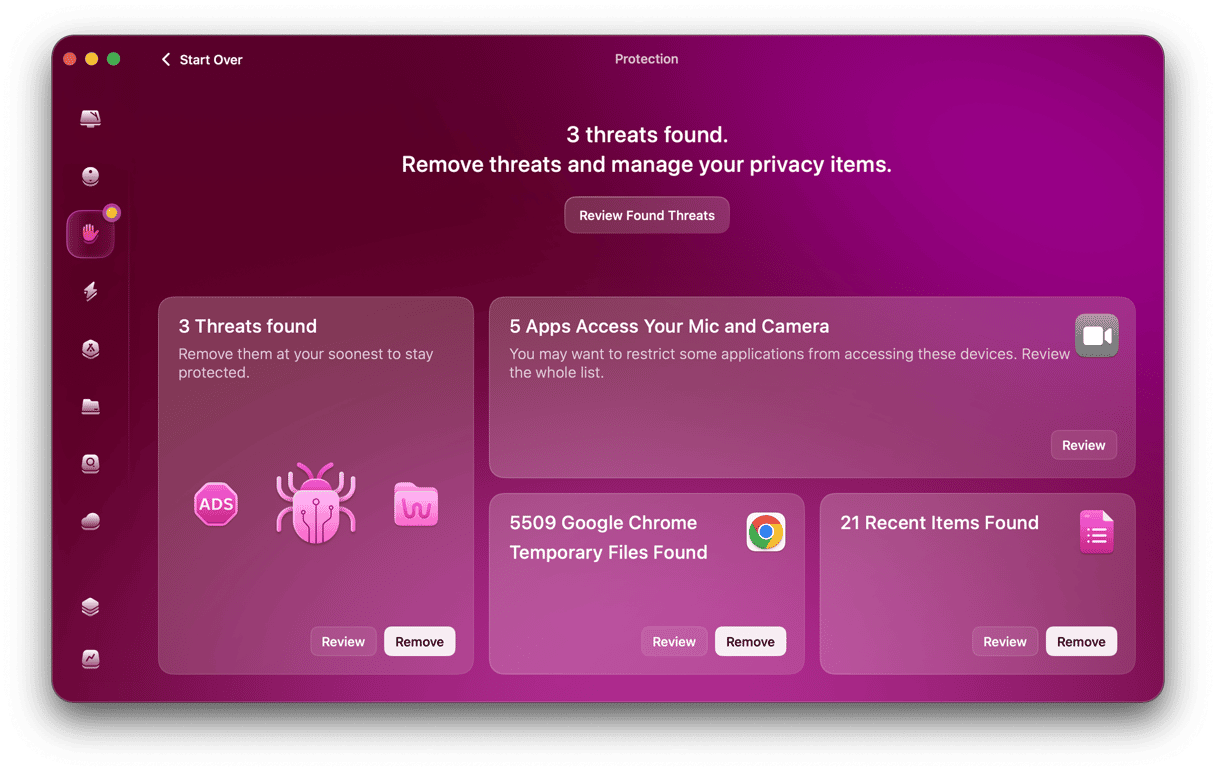
If you want to remove other traces of your activities on a Mac, you can start by deleting browser data. The Protection feature in CleanMyMac and its Privacy tool clears your browsing and download history, cookies, and saved passwords, helping you stay private whenever you let someone else use your Mac. You can also control app permissions to ensure no shady software can access your camera, microphone, or data.
Here’s how to use it:
- Get your free CleanMyMac trial — test the app for 7 days at zero cost.
- Click Protection > Scan.
- Review and manage privacy items or threats CleanMyMac has found.
How to sign out of iMessage on your Mac
There are a couple of different ways to sign out of iMessage on your Mac. One is quick and easy and allows you to stop syncing Messages on your Mac with iCloud. The other takes a little longer and signs you out of your Apple Account in Messages. We’ll show you how to do both.
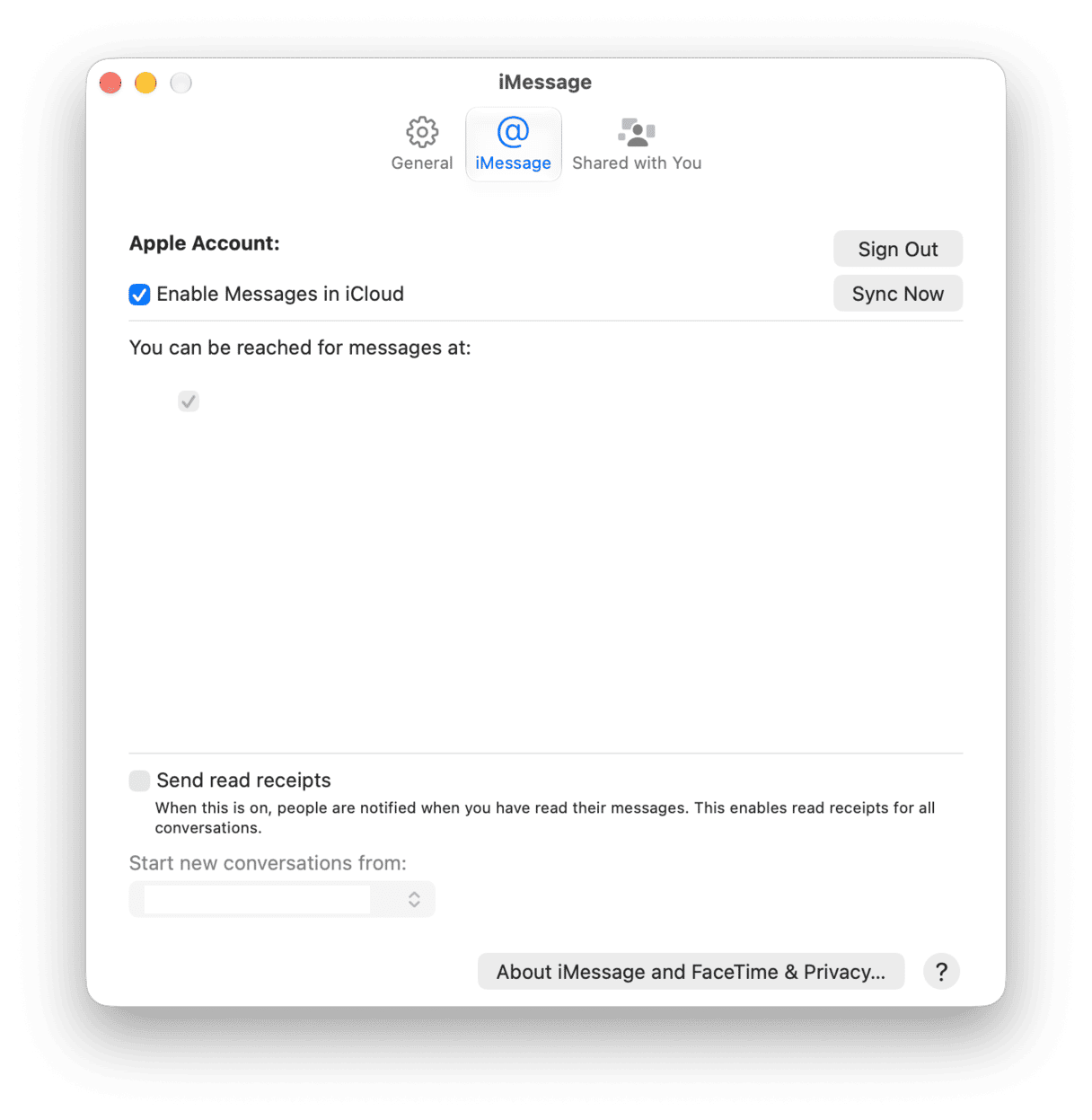
Disable Messages in iCloud
If you wanted to know how to turn off messages on Mac, you can't do it completely. Because Messages is an Apple app that’s installed as part of macOS, you can’t simply delete it. Fortunately, you can turn iMessage off on your Mac either permanently or just for a little while so you can get some work done.
Here's how to do it:
- Open the Messages app on your Mac.
- Click Messages in the menu bar and choose Settings.
- Select iMessage at the top of the window.
- Deselect the checkbox next to Enable Messages in iCloud.
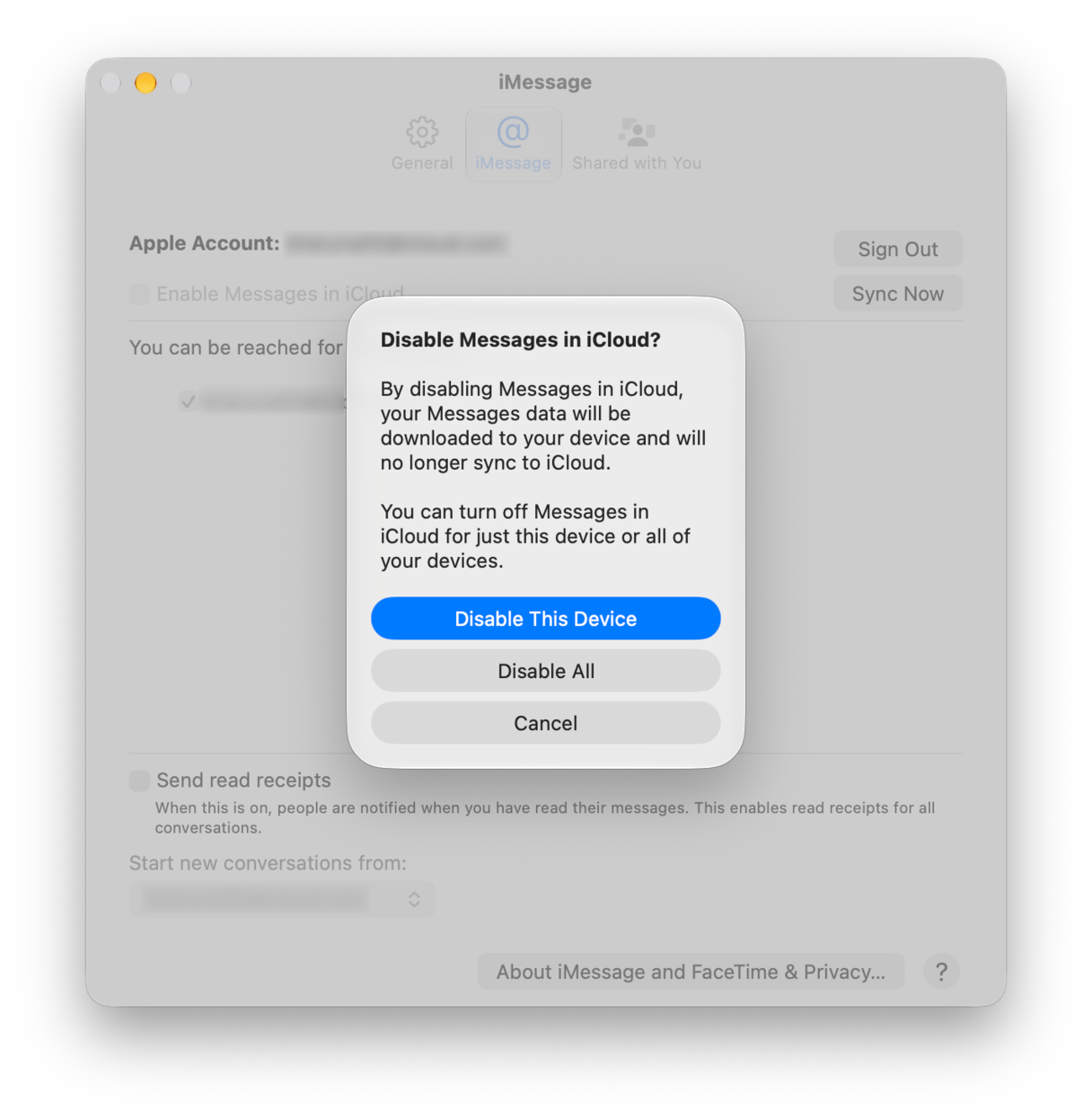
That will stop syncing your messages to iCloud. You can now click Disable This Device — this will disable syncing on your Mac. Alternatively, you can select Disable All to turn off syncing on all your devices.
Sign out of your Apple Account
Now, if you do not need to receive iMessages altogether on Mac, you can sign out of your Apple Account. Here's how to log out of iMessage on Mac:
- Open the Messages app on your Mac.
- Go to Messages > Settings > iMessage.
- Click Sign Out.
- You will see a message telling you that you will no longer be able to receive iMessages on your Mac. Click Sign Out.
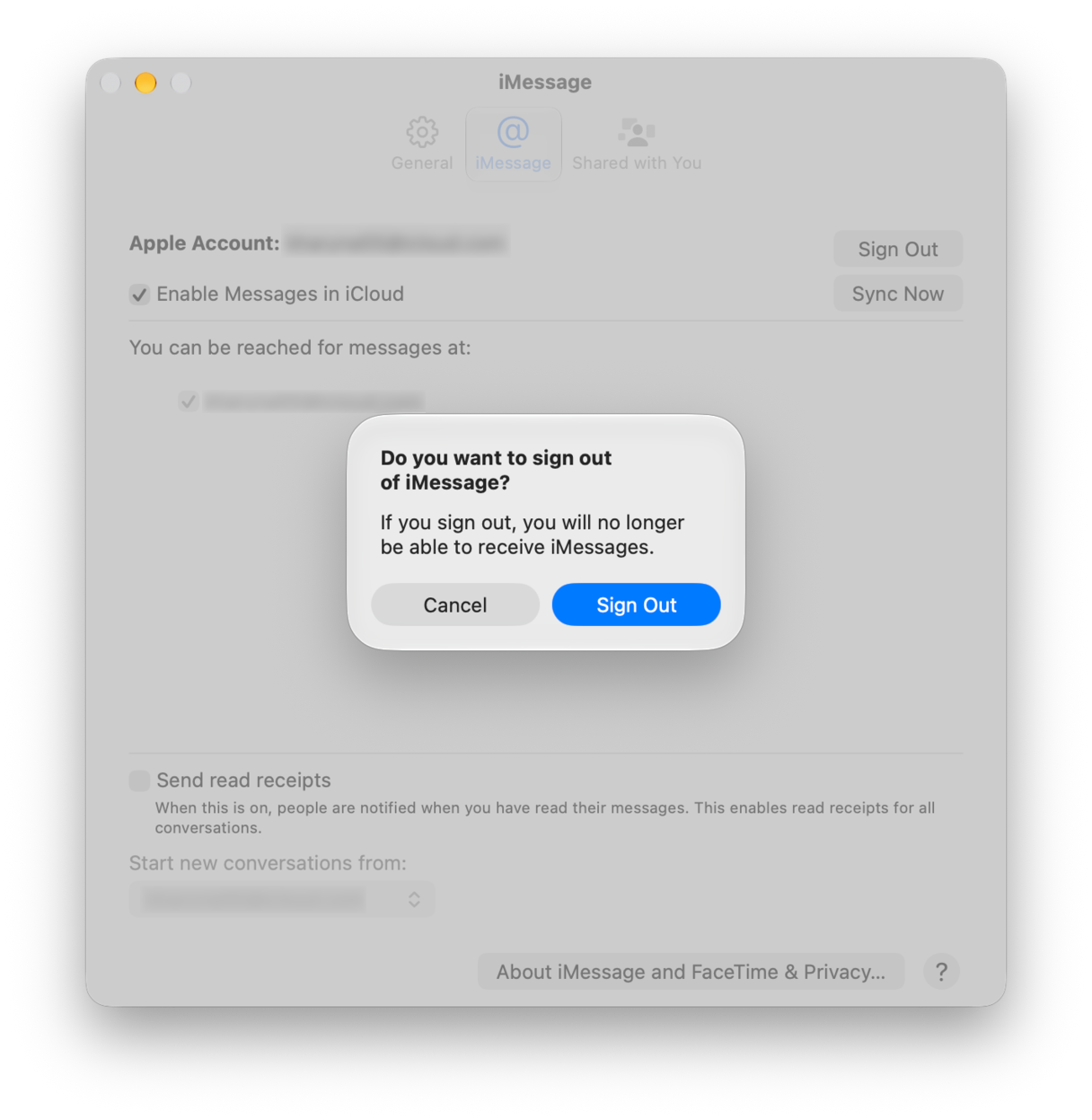
If you sign out and later decide that you want to use Messages on your Mac, after all, you can add your account by going to Messages > Settings and clicking the ‘+’ at the bottom of the Accounts pane, then type in your Apple Account (formerly Apple ID) and password. If you have two-factor authentication turned on, you may need to type in the passcode sent to your trusted device.
There is another option if you want to be able to send messages from your Mac but don’t want notifications.
How to turn off notifications from iMessage
- Click the Apple menu and choose System Settings > Notifications.
- Click Messages on the list.
- Toggle off Allow Notifications.
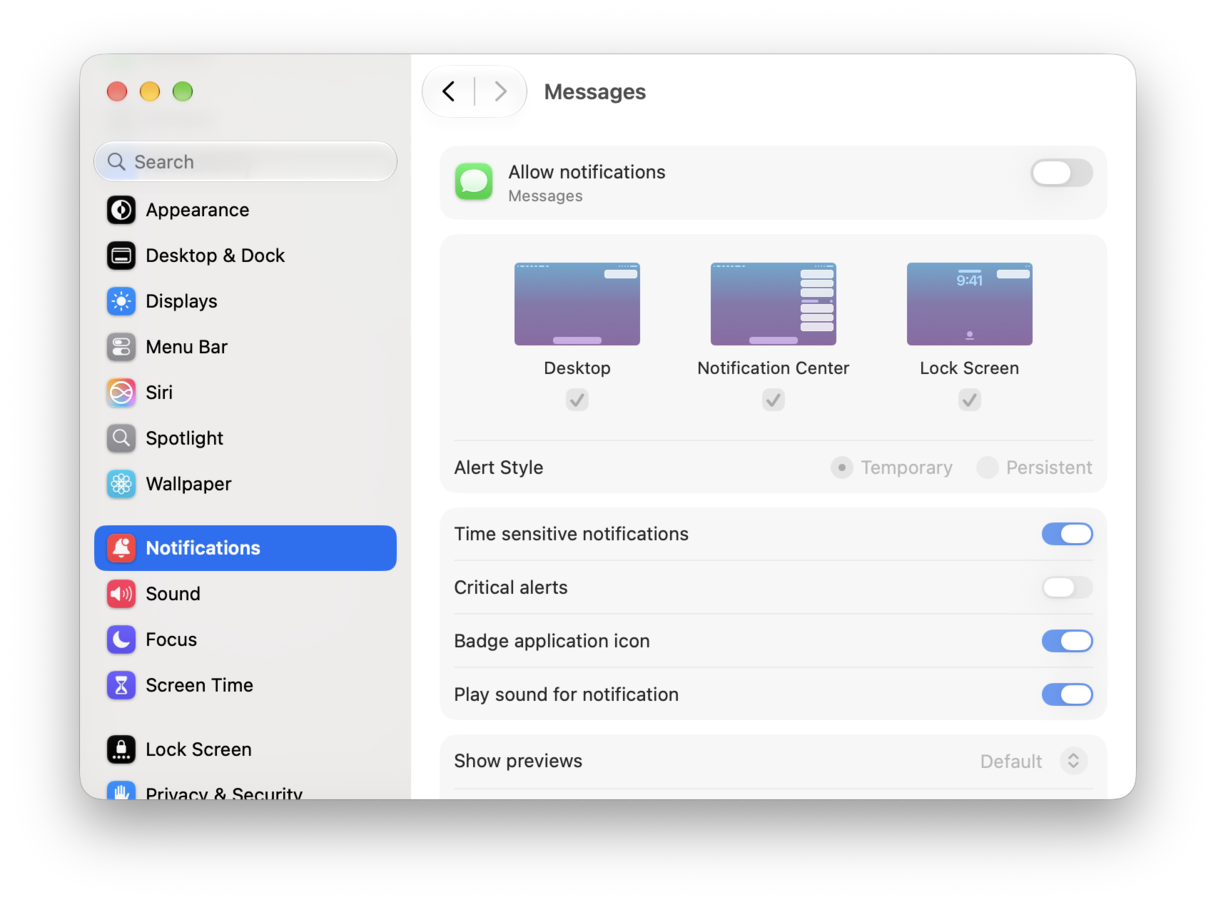
Now, you’ll still be able to send and receive messages, but you won’t be pestered by annoying alerts.
If you want to disable iMessage on your Mac because you’re selling it or giving it away, you’ll need to sign out of iCloud altogether, in addition to signing out of Messages.
- Click the Apple menu and choose System Settings.
- Click your Apple Account.
- At the bottom left corner of the window, click Sign Out.
What to do if you can’t sign out of iMessage
In most cases, that’s all you will have to do to sign out of iMessage, but there may be rare occasions when it won’t work. Here’s what to do if that happens:
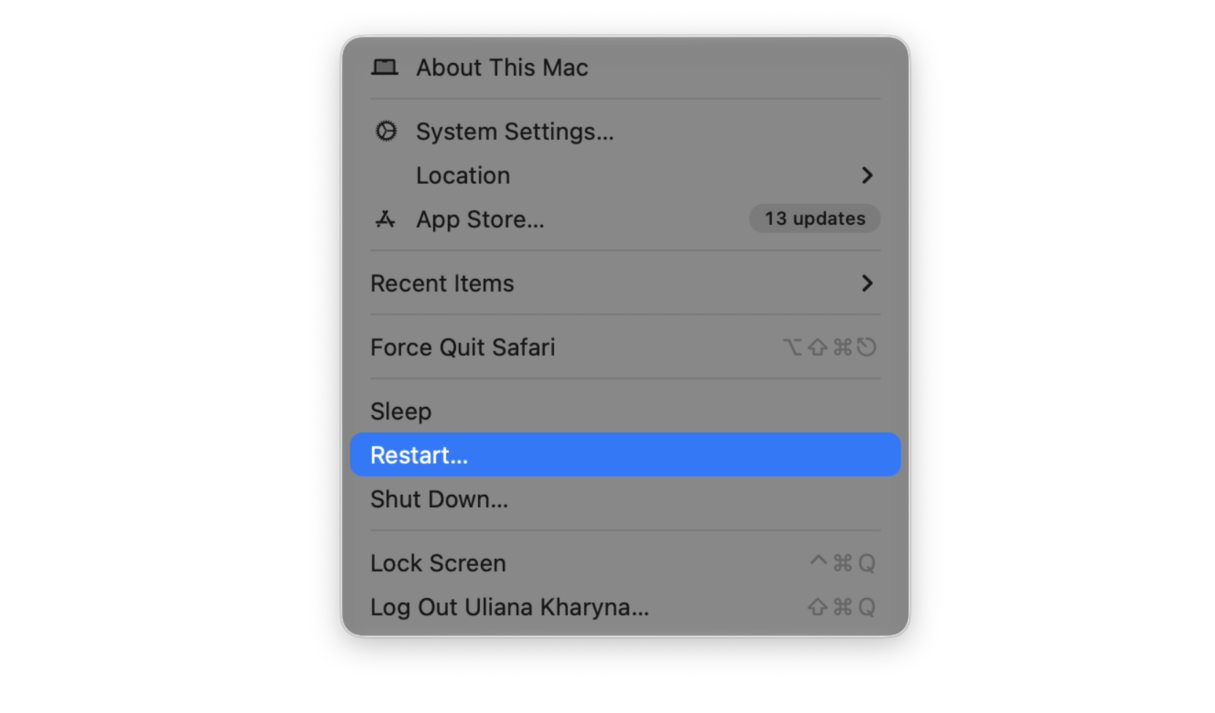
- Restart your Mac. Sometimes this is all you need to do to fix a problem. Restarting your Mac clears out temporary files, frees up RAM, and performs checks on your Mac’s startup disk.
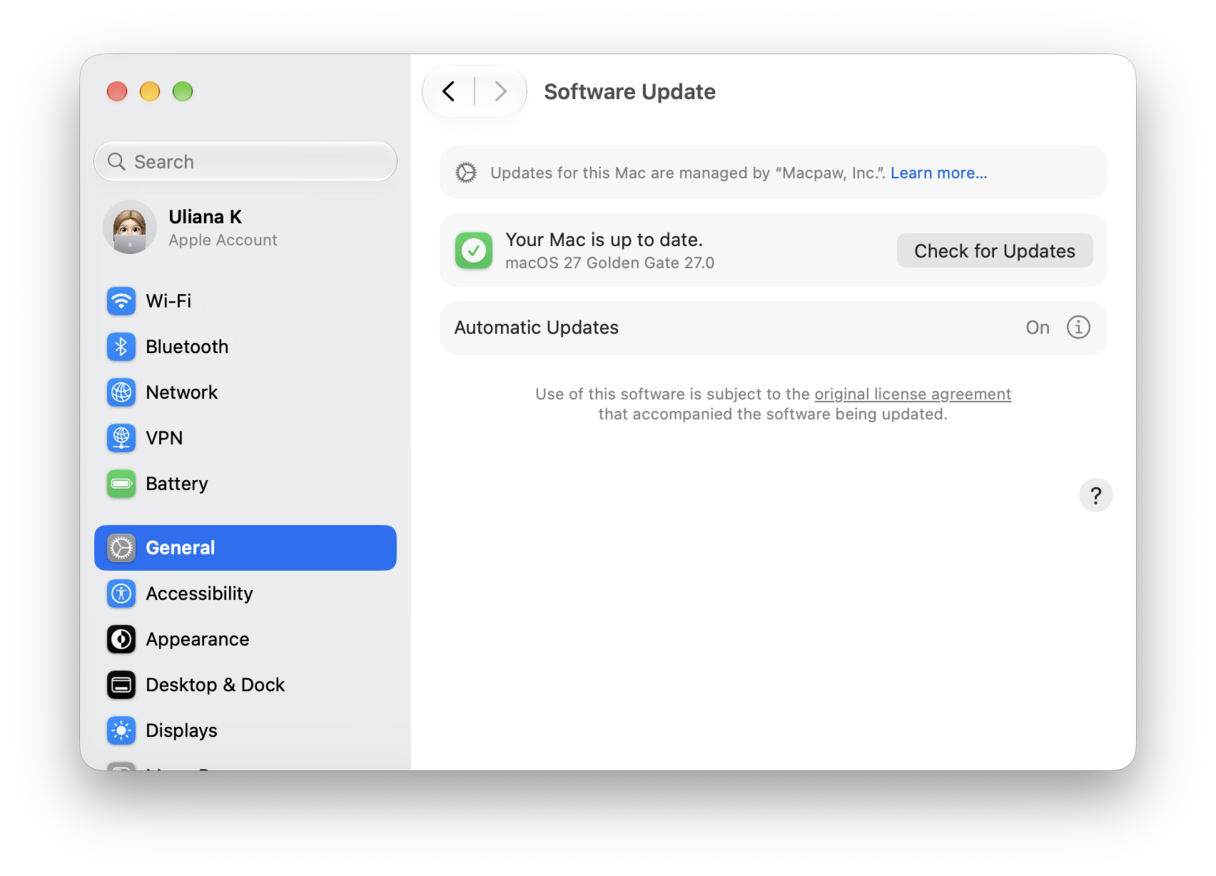
- Check for an OS update. If you still can’t sign out of iMessage. Go to System Settings > General > Software Update. If there is an update available, follow the instructions on screen to install it.
- Sign out of your Apple Account and then sign back in again. Go to System Settings > your name. Scroll to the bottom of the window. Click Sign Out. Confirm you want to sign out. Once you have signed out, sign back in again. Now try to sign out of iMessage.
How to fix Messages when it’s not working properly
If the reason you want to deactivate iMessage and stop messages from showing on your Mac is that it’s not working properly or that they’re not syncing properly on your iPhone or iPad, there are a few things you can try:
- Turn off iMessage on Mac using the steps above, then turn it back on again.
- Sign out of Messages using the steps described earlier, then sign back in again.
- Make sure you’re using the same phone number on your Mac as on your iPhone.
- Make sure the email addresses you’ve enabled in Messages on the Mac are those associated with your Apple Account.
- If you have more than one Apple Accounts, make sure you’re signed in to the same one in Messages on all your devices.
If Messages from your friends aren’t displaying their name or photograph correctly, go to the Contacts app in your Applications folder and search for their name. Check that the entry has the phone number or email address they’re using for Messages. If not, add it.
iMessage is a very useful service, but many of us only use it on our iPhones and don’t need it on our Mac. If you like to use it on your Mac occasionally, you can turn off all Messages notifications, so it never intrudes. But if you want to stop using it completely, say for privacy reasons, follow the steps above to sign out of iMessage on your Mac.
Frequently asked questions
How to block someone on iMessage?
You can block specific people from contacting you via Messages. To do it, open the Messages app and go to Settings (press Command + comma) > iMessage > Blocked. Click ‘+’ at the bottom of the window, and you’ll see a window slide down that has your Contacts in it. Start typing the name of the contact you want to block into the search box and select it once it appears. You will now see that all their phone numbers and email addresses have been added to your blocked list. If the person or company you want to block isn’t already in your Contacts, go to the Contacts app in the Applications folder, add their details, and repeat the steps above once again. Alternatively, you can select the dialogue the sender of which you want to block, click Conversation in the menu bar, and choose Block Person. This way, you do not have to add their info to the Contacts app.
How to delete an iMessage conversation?
If you only want to remove one or several conversations in Messages, it is also easy and straightforward: just open the Messages app, right-click the conversation you want to remove, and choose Delete.
How to mute iMessage on Mac?
If you want to mute the Messages app, you can disable notifications in System Settings > Notifications. However, you can mute a specific dialogue. Just select the conversation, right-click it, and choose Hide Alerts. When you are ready to unmute the sender, deselect Hide Alerts in the same window.
Why is my iMessage on Mac not syncing with iPhone?
Most likely, syncing issues are due to not being signed into the same Apple Account on both Mac and iPhone. But you may have disabled syncing on Mac. To check, open the Messages app and press Command + comma to launch Settings. In the iMessage tab, select the checkbox next to Enable Messages in iCloud — it will turn on syncing your messages to all devices signed into the same Apple Account.