
If you decide to get rid of unneeded software, you will need to remove not only the application binary but also all app-related files that are hidden. Hunting down these leftovers is boring, and you might miss some. Unless you use an app cleaner — dedicated software that can make the app-deletion process quick and painless. But which one to choose? Keep on reading to learn about the best apps to uninstall apps on Mac.
Quick recap
- Best overall? CleanMyMac (complete app removal + Mac maintenance, protection, and cleanup)
- Best free? AppCleaner
- Best for automation? Hazel
- Best dedicated cleaner? App Cleaner & Uninstaller
| Name | Price | Free trial | Features | Info |
|---|---|---|---|---|
| CleanMyMac | $39.95/year | 7 days, unlimited in functionality | An all-in-one app remover that not only uninstalls apps but also cleans up, protects, and maintains your Mac | Link |
| AppCleaner | Free | n/a | An easy-to-use and clean app for basic and quick app deletion | Link |
| AppZapper | $19.95 | 5 free zaps | A drag-and-drop app that ensures complete app removal and lists all app-related files before deletion | Link |
| Hazel | $42 | 14 days | An automation tool that allows to create custom rules for deleting apps and unnecessary files | Link |
TrashMe | $21.59 | 5 free uninstallations | A neat app for complete app removal and the deletion of widgets, plugins, and preferences panes | Link |
| CCleaner | $44.95/year | 14 days | A user-friendly app cleaner that allows to uninstall apps and clean up Mac loved by switchers from Windows | Link |
| AppCleaner & Uninstaller | $14.95/year | 2 days | A dedicated app uninstaller that can also remove launch agents, extensions, and leftovers | Link |
Top 7 app cleaners for Mac
Below are 7 great apps for uninstalling software. Choose the one that works best for you. We've tested all of them on a Mac running macOS Golden Gate 27.0.1, so you can be sure that they work perfectly well on the newest macOS versions, too.
1. CleanMyMac
CleanMyMac does so much more than just removing unwanted apps and freeing up valuable space. With over 29 million downloads from 150+ countries — and counting — over 10.5 million apps have been removed, with millions more files and folders that were taking up disk space and reducing the processing speed of Macs (based on internal data). With the Applications tool, you can clean up old leftovers and delete apps safely.
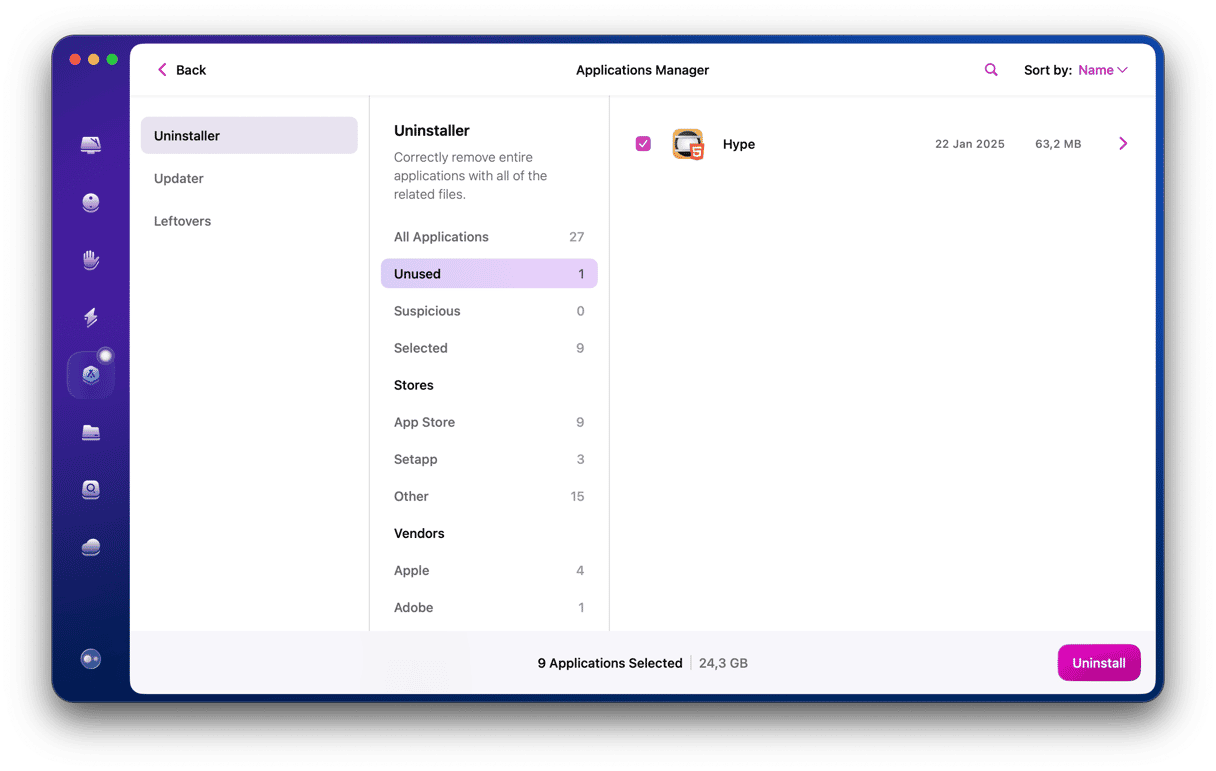
Besides, you can easily delete all unnecessary clutter like duplicate files and similar photos, large and old files, and app downloads. System junk, iOS backups, and email downloads are also easily removed with a few clicks, making this one of the most powerful app cleaners around, with hundreds of positive reviews from Mac users, tech bloggers, and experts.
CleanMyMac is the only Mac app cleaner you will ever need for effortless and careful maintenance as well as decluttering and malware removal. According to internal data, on average, users find and remove over 9 GB of unnecessary system junk and 1 malware after the first scan. It is also the winner of the iF Design Award and the Red Dot Award. And it is updated for macOS Golden Gate. CleanMyMac is notarized by Apple, meaning it is absolutely safe to use.
Price: $39.95/annually with a free trial version available
2. AppCleaner
If you are looking for a little app uninstaller, look no further — AppCleaner is not only user-friendly and easy to use but also absolutely free. All you have to do is find the app on the list of all apps, and click it. AppCleaner will then open the list of all app-related files and let you remove them with a click.
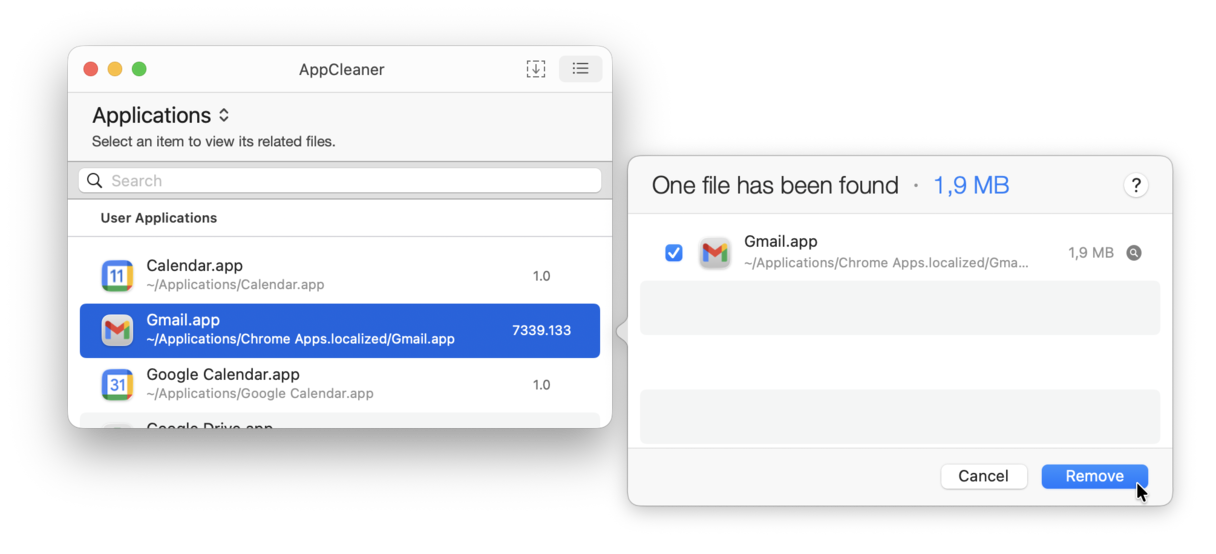
You can even delete several apps at a time. Besides, AppCleaner lets you remove widgets and plug-ins — an extra step in cleaning unnecessary software. Another outstanding option is the ability to drag the unwanted app onto AppCleaner, so you don’t have to look for it in the list of all applications installed on your MacBook.
Price: Free
3. AppZapper
AppZapper is a ‘drag-and-drop’ app cleaner that makes it easy to remove unwanted apps.
Deleting an app isn’t as easy as dragging it out of your applications folder into trash. Apps keep files and folders scattered about your Mac; however, finding them is the hard part, which is why so many people hope to find a free app cleaner to remove them without any difficulties. Usually, good app cleaners aren't free, but they will get the job done.
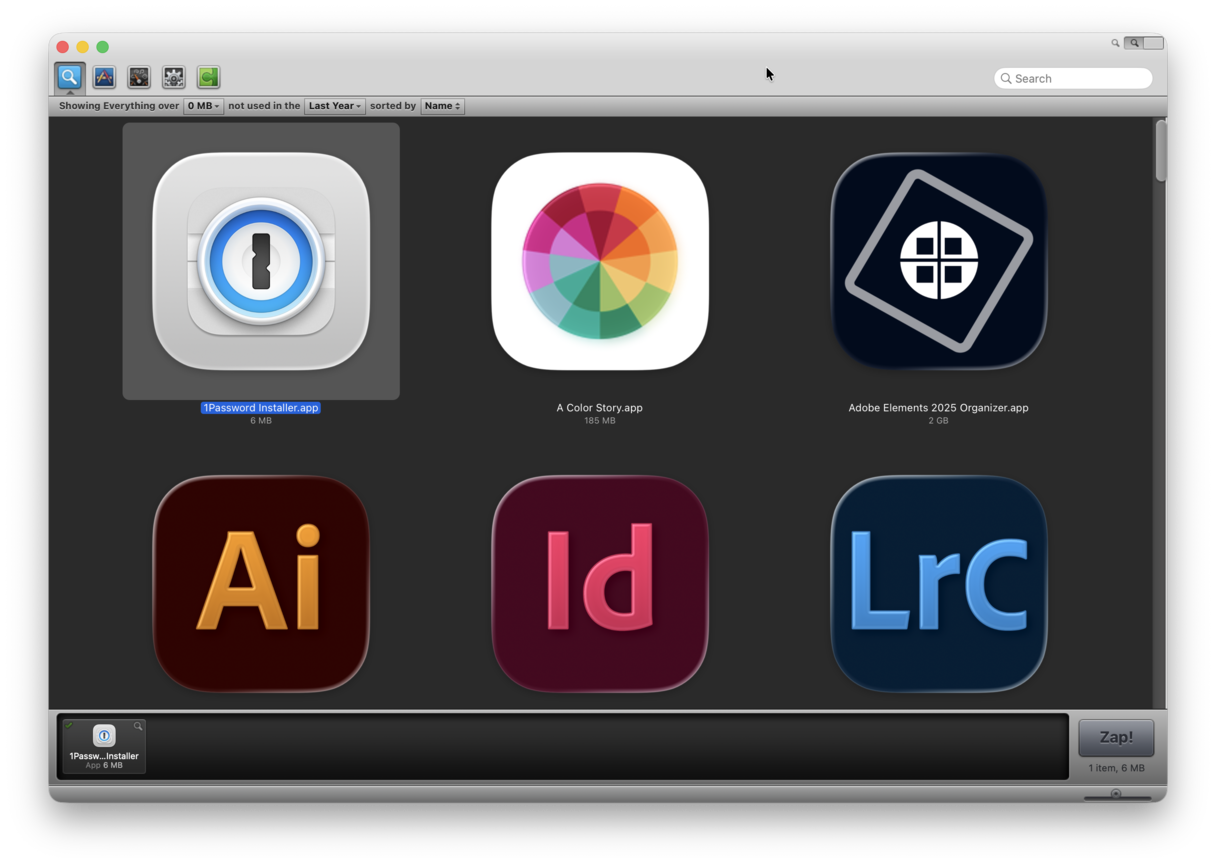
AppZapper locates the files related to the apps you want to delete. Shows you them first, and when you are confident the right files and cache folders have been located, you can Zap them with one click.
Price: $19.95. 5 free zaps available
4. Hazel
Hazel is an app uninstaller and junk cleaner. With numerous ways to use it, the app lets you both remove apps completely and delete unnecessary files. It is possible by adding rules that would automate particular actions on your Mac. Some users, though, may find it an overly complicated process, regardless of its high efficiency.
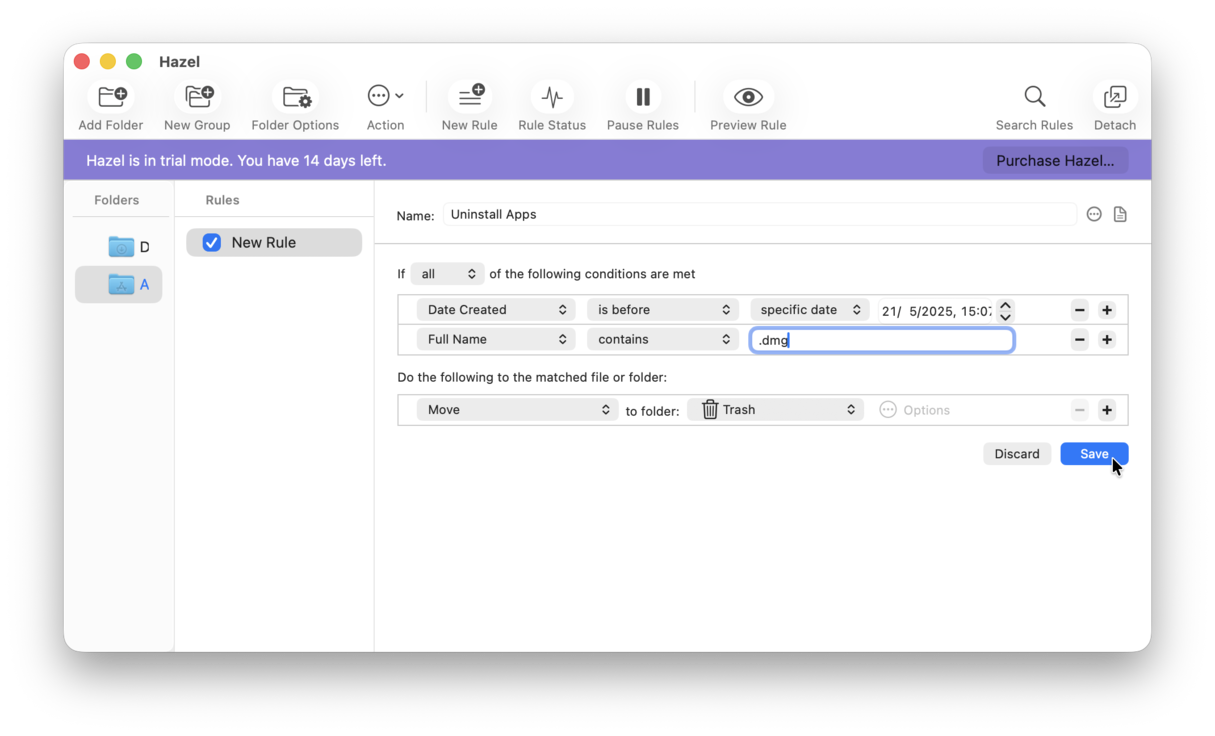
In relation to app deletion, Hazel lets you set condition-based rules that would automatically search for app support files. Once they are located, you can remove them. Also, you can set a rule that would automatically empty trash on a timely basis.
Price: $42. Free trial version is available.
5. TrashMe
TrashMe is an app designed specifically for what is mentioned in its name — trashing files. A great thing about this app is that it is an outstanding file hunter. Not only does it detect app-related files and leftovers, but it can also find redundant and duplicate files and incomplete downloads.
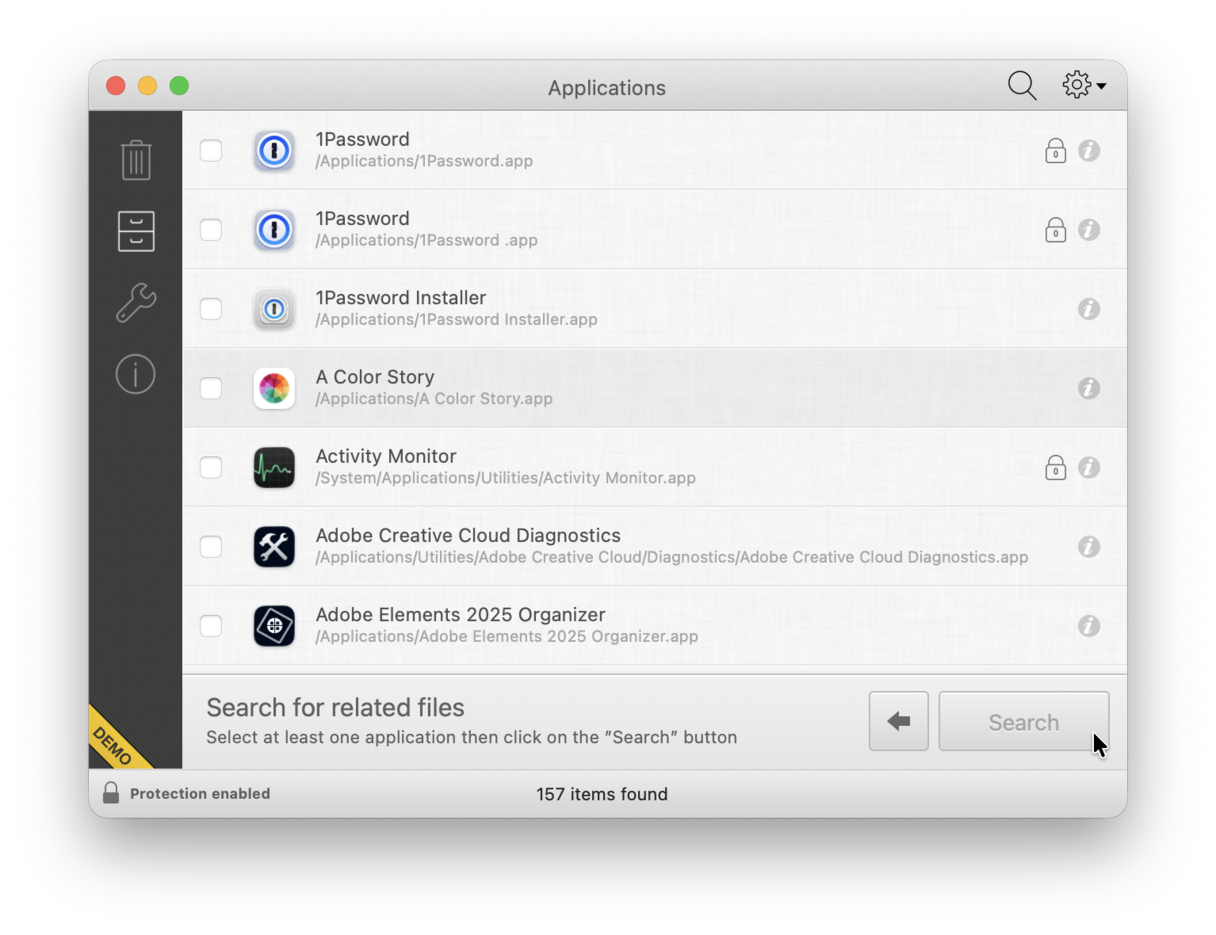
Another great feature of the app is a significant level of control granted to users. Most app cleaners delete files permanently. TrashMe, on the other hand, lets a user select which files will be removed right away and which of them are left in Trash so that you can restore them later.
Price: $21.59. Trial version available (5 free uninstallations)
6. CCleaner
CCleaner is a user-friendly and beautifully crafted app cleaner for Mac. It stands out for letting you find and remove unnecessary apps and their leftover files. In fact, you can even delete several apps at a time by merely selecting a few.
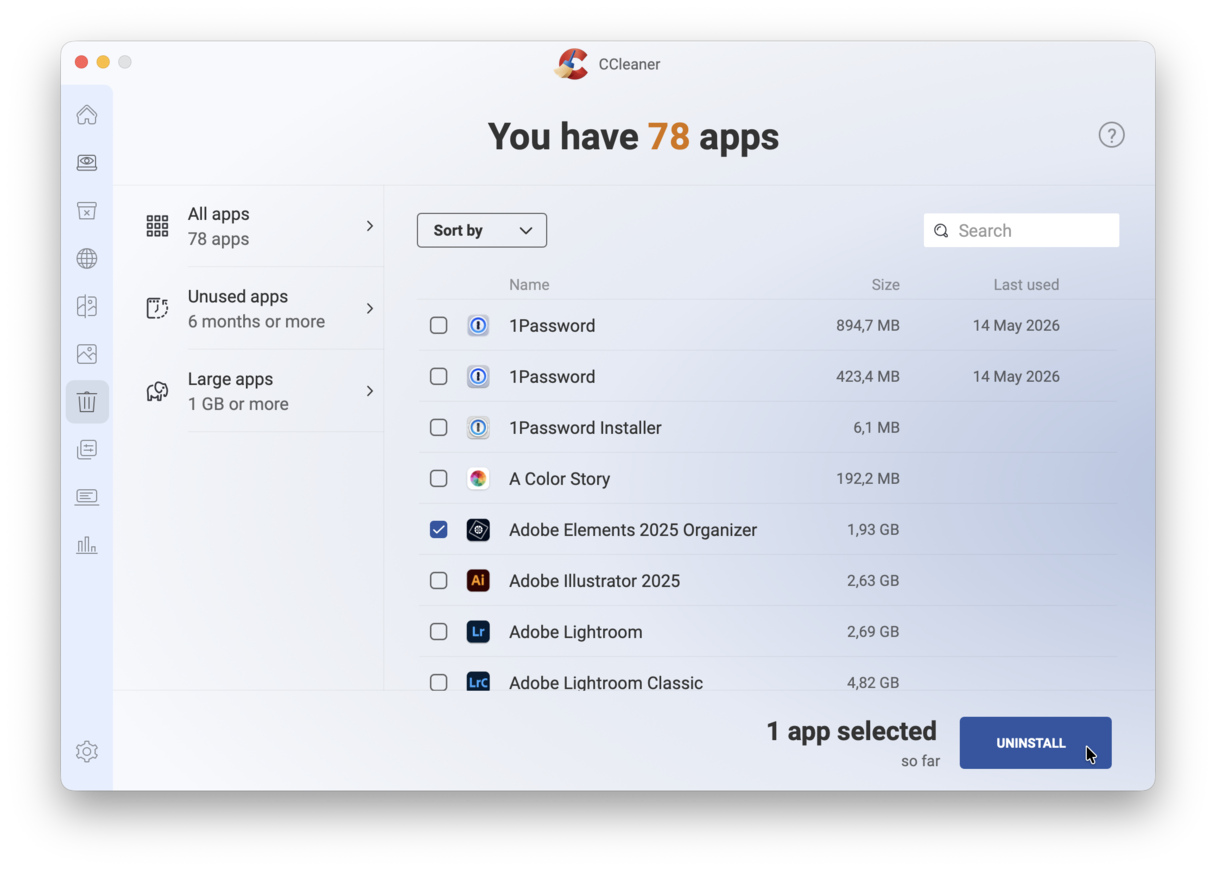
Like some other app cleaners outlined above, it has tools for finding duplicate and unneeded files. Another great feature of this app is that it lets you find large apps, so if your goal is to free up space, it can be of value. The app can be downloaded for free, but the trial version comes with limitations.
Price: $44.95. 14-days free trial is available.
7. App Cleaner & Uninstaller
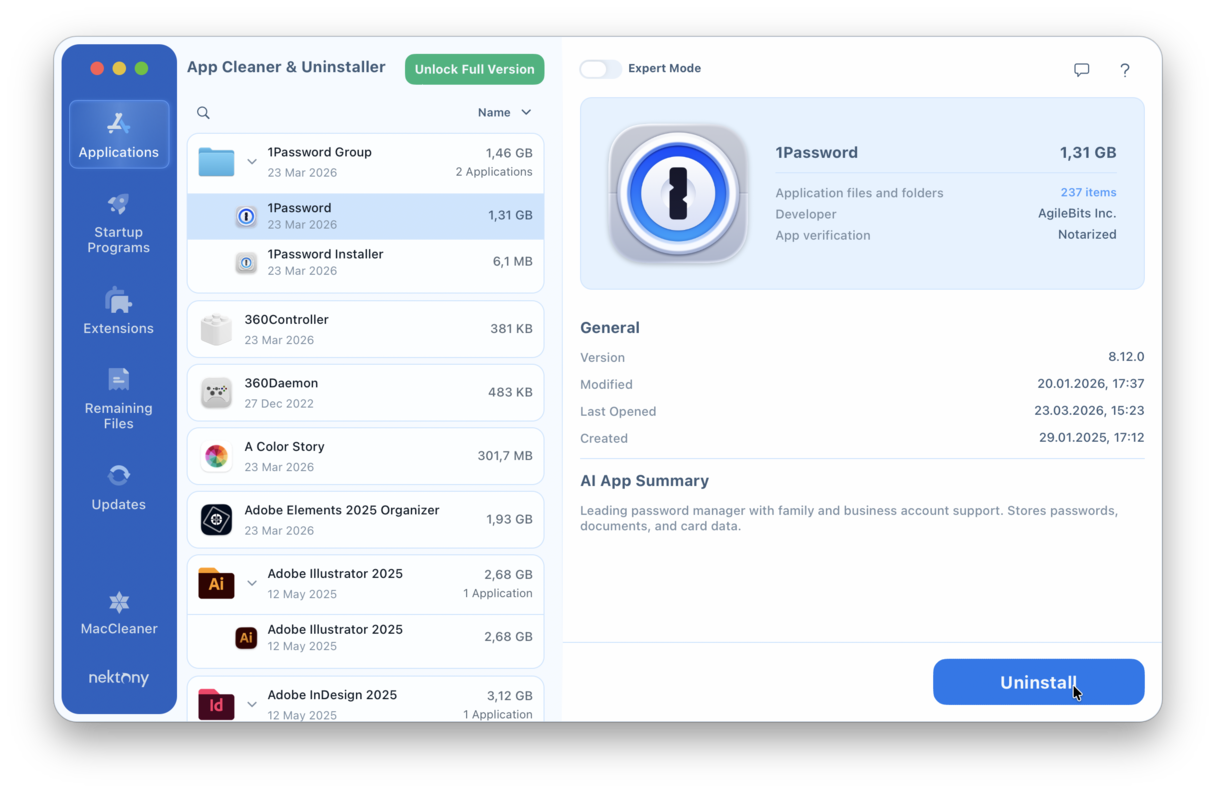
A lightweight free app cleaner for those who download, capable of finding unwanted apps and deleting related files, including login items and launch agents. Deleting apps safely to ensure Macs have more space and computing power is the work of App Cleaner & Uninstaller. It comes with several positive reviews from those who've downloaded it.
Price: $14.95/year. 2-day trial version is available.
Frequently asked questions
What exactly is an app cleaner for Mac?
An app cleaner is a tool designed for automating different cleaning routines, from uninstalling apps to removing duplicate files. Depending on the developer, it can delete only system files or both system and personal files. However, in case of letting a user get rid of unneeded personal files, the cleaner needs the involvement of the user (e.g., preselecting files).
When should you use a Mac cleaner?
There is almost nothing you cannot do manually on a Mac, so the most honest answer is that you should use a Mac cleaner when you want to save time. So, instead of browsing system folders, all you have to do is click a few buttons. For example, if you delete apps that leave a lot of residual files behind (like Adobe Suite apps or Microsoft Office), you might benefit most from a dedicated app cleaner. However, there is another reason to use a Mac cleaner — you are not sure what to remove. In this case, running a trusted app is a sure way to prevent macOS corruption.
Are Mac cleaners safe?
It all depends. As long as you download them from a trusted developer and only from their official websites or the App Store, app cleaners are safe to use. They are designed in a way to avoid removing personal files without the user's approval or vital system files. However, if you download a cracked version of an app from a freeware website, it is not safe because it can infect your Mac with malware.
How do you tell a trustworthy app cleaner from a rogue one?
There are a few criteria to assess: Apple notarization, transparent file previews before deletion, active development/update history, and the reputation of the developer. We suggest checking out reviews, too, and looking for the above information in different sources, not only the developer's website, for more objectivity.
What specific files does an app cleaner find that dragging to Trash misses and where exactly are they stored on the Mac?
App cleaner searches for app-related files stored across different locations, such as ~/Library/Application Support, ~/Library/Caches, ~/Library/Preferences, ~/Library/Containers, /Library/LaunchAgents, /Library/LaunchDaemons. When you drag an app to the Trash, you do not remove files from these locations unless you go directly to these folders and look for files containing the name of the deleted app in their names. Alternatively, you will need to know exact filepaths to app-related files to remove them — some cleaners have proprietary databases of such filepaths and use them for ensuring complete app uninstallation.
How much storage can leftover files realistically take up — is this a real problem or a minor inconvenience?
It all depends on the app you remove. Development tools can leave behind 100+ GB of space. Adobe Suite apps might leave over 10 GB of caches, temp files, and versions. But if you used a note-taking app, for example, it might be just a few MB of files.