
How to clear cache and cookies on Mac and why even care about it? Because if left unnoticed, these files can quickly eat up 65+ GB of space. Ultimately, it may lead to all kinds of glitches: overall Mac and browsers slowdown, increased startup time, and interference with app and macOS updates. But how to delete cache on Mac and where to look for these files if they are hidden? Keep on reading to learn answers to these questions and even more.
In short, this guide covers five manual methods: clearing browser cache, system cache and app cache, flushing the DNS cache, and starting up in safe mode. There is also an automated option based on using CleanMyMac and its Cleanup feature that quickly removes all kinds of caches. Before you start, see the section on which caches need extra caution.
What is cache on Mac and how does it work?
Cache is a small file storing temporary data. When you open a web browser or an app, this information is then retrieved instead of being downloaded to make the work of this app or browser faster and address your request within seconds.
There are roughly three main types of caches on your Mac.

Browser cache: Temporary web data storage
No matter what web browser you use, they all have their own cache. Those caches store files and their elements like HTML, CSS, JavaScript, or images that your browser uses to display websites: for instance, product page images.
System cache: macOS background files
System cache files are caches that macOS and its built-in services create on your disk. Font caches and the kernel cache are two examples, and macOS creates them again as needed after they are cleared.
DNS cache: Recent DNS lookups
It is a subtype of system cache. DNS cache is a list of domain names attributed to the websites you’ve visited. However, it is not the same as browser history: it stores the results of recent DNS lookups, which translate human-readable domain names into the numerical IP addresses your Mac uses to connect to websites.
Application cache: User app data
Just like a web browser, each app maintains cache files of its own. It helps quickly reload images, search history, videos, and other needed information to speed up as well as improve the performance and efficiency of the apps.
Why you should clear cache on Mac: 8 key benefits
- Improve system performance and speed and get faster loading, reduced lag, and better system responsiveness.
- Free up valuable disk space: depending on how you use your MacBook, you may free up megabytes or gigabytes of space.
- Fix website loading and display issues: deal with outdated content, broken pages, and formatting errors.
- Enhance online privacy: removing cookies and other website data along with the cache may reduce tracking.
- Troubleshoot crashing or freezing apps: fix app instability and remove outdated app files.
- Ensure you see updated website content: current versions, updated pages, and fresh data.
- Resolve network and DNS connection problems: get rid of DNS errors, connection failures, and network glitches.
- Prepare your Mac after system updates: ensure macOS compatibility, remove outdated files, and fix update conflicts.

When should you clear cache on Mac?
Warning signs your Mac cache needs clearing
Here are a few issues that cache clearing can fix:
🚩 Your Mac feels sluggish or has become unresponsive and it takes forever to start up.
🚩 Your apps started to take a long time to open or respond and crash frequently.
🚩 Your browsers have become slow, even though your internet connection is stable and fast.
🚩 Your Mac is displaying system errors.
🚩 You are running low on space and, specifically, note that System Data has grown large.
Recommended clearing frequency by user type
Based on how you use your MacBook, the need to clear cache may be different:
- Casual users (browsing, watching videos, education) — quarterly
- Heavy users (video and photo editing, streaming) — monthly
- Developers (developer tools and virtual machines) — weekly
What you can (and can't) safely delete: Critical guidelines
macOS clears some system caches when you start up in safe mode and creates them again as needed, but that does not cover every cache on your Mac. For the rest, you will have to clear caches yourself to free up some space and troubleshoot glitches.
But not everything is safe to delete. Here’s the main breakdown:
✅ Safe to delete | ⁉️ Approach with caution | ❌ Never delete |
Browser cache | System cache in use | System folders |
DNS cache | Active app files | Complete cache folders |
Old app data | Critical macOS files |
Before you start deleting cache, take these precautions, too:
📝 Back up your Mac — preferably, using Time Machine
📝 Quit apps running in the background
📝 Make sure you have the needed login credentials (website logins, app accounts, etc.) stored in a safe place or noted down
How to clear browser cache on Mac (All major browsers)
Potential space reclaimed: up to 15% (based on our experience)
If not deleted, browser cache can pile up quickly and generate some privacy-related issues. The process depends on the browser you use. It's important to delete cache for all browsers you have installed on your Mac. Clearing cache in one browser will not automatically clear it for all other browsers because each browser manages its data and cache separately.
After clearing cache in browsers, websites may load slower at first because all elements are re-downloaded. But this slowdown is temporary, because the browser saves these files to its cache again as you browse.
Also, here are a few popular concerns for you to consider:
- In Safari, removing cookies and other website data along with the cache may sign you out of websites, so keep your logins at hand. Clearing only the cache is a separate option in each browser.
- Clearing only the cache does not delete saved passwords or autofill data: Chrome and Edge list passwords and autofill form data as separate items from cached images and files.
- Files you downloaded via the browser stay on your Mac: Chrome, Edge, and Safari remove only the list of downloads, not the files. You will not lose your bookmarks, saved settings, and data stored in the cloud.
- Clearing cache files may help prevent online tracking, but won’t stop it entirely because it is mainly handled by cookies.
- In Chrome, for example, “Cached images and files” is a separate option from browsing history and cookies, so clearing only the cache leaves them in place.
Now, to browser cache cleanup.
🛠️ How to clear cache in Safari
🛠️ How to clear cache in Chrome
🛠️ How to clear cache in Firefox
How to clear Safari cache on Mac
Deleting cache files in Safari is not as straightforward as in other browsers. However, it's still not too complex if you follow the steps we outline. The steps vary for macOS Ventura and later and macOS Monterey and older.
Using the Develop menu
macOS Ventura or later
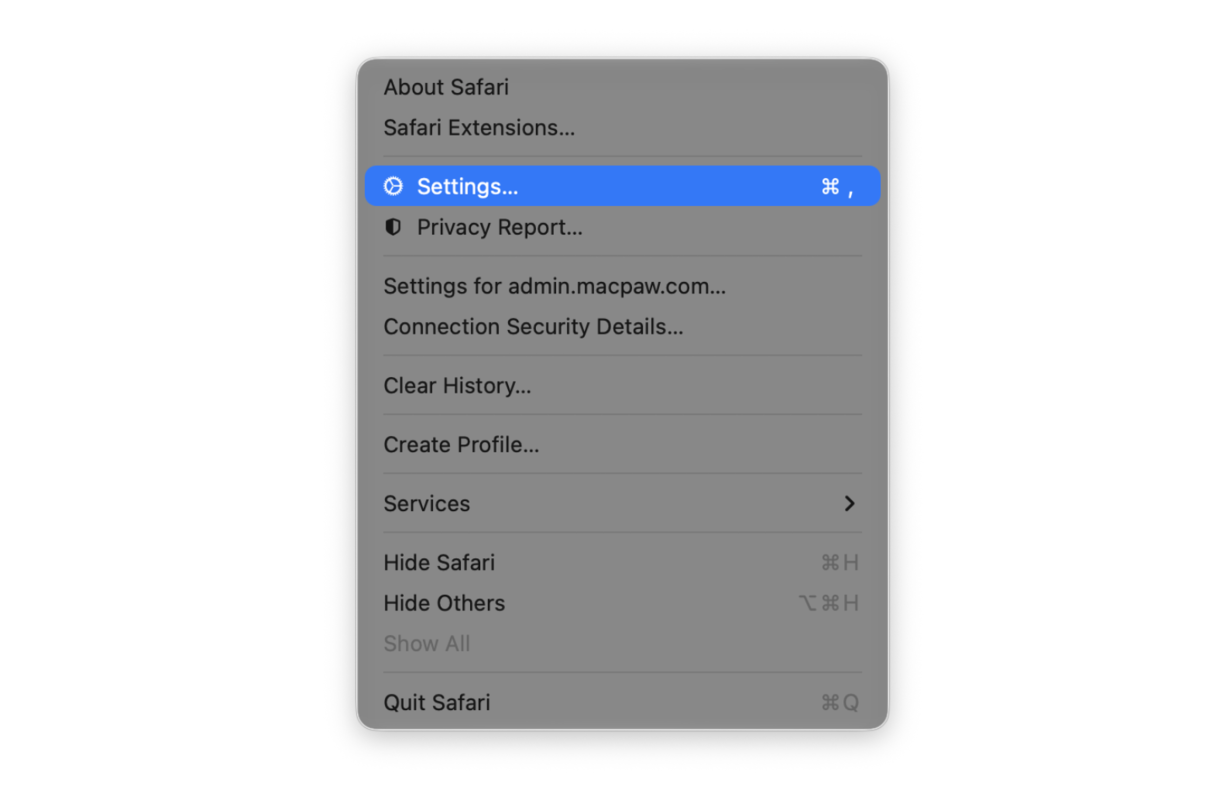
- Open Safari and go to Settings from the menu bar.
- Navigate to the Advanced tab and make sure that the box next to the "Show features for web developers" option is selected. In Safari 16 and earlier, Settings is called Preferences and the option is named "Show Develop menu in menu bar."
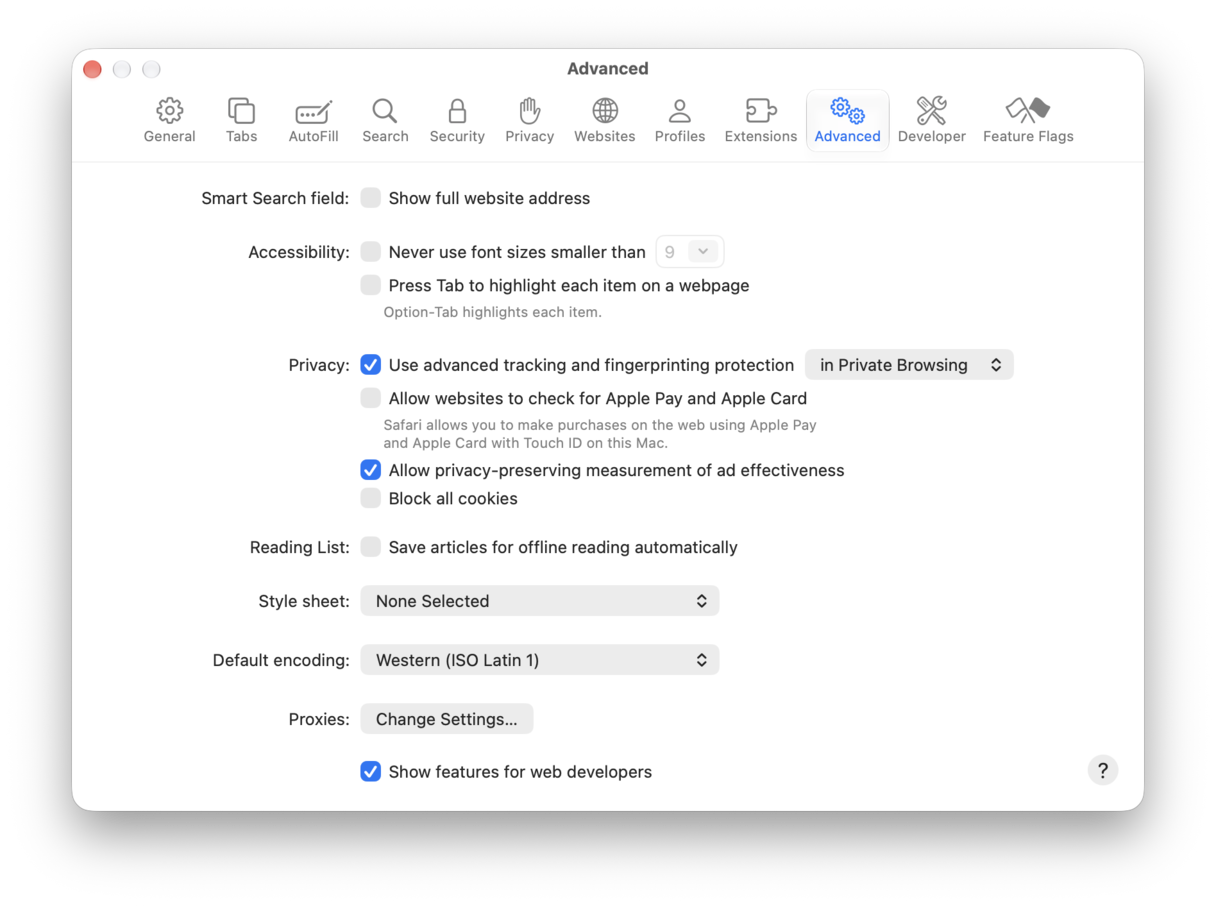
- Quit Settings.
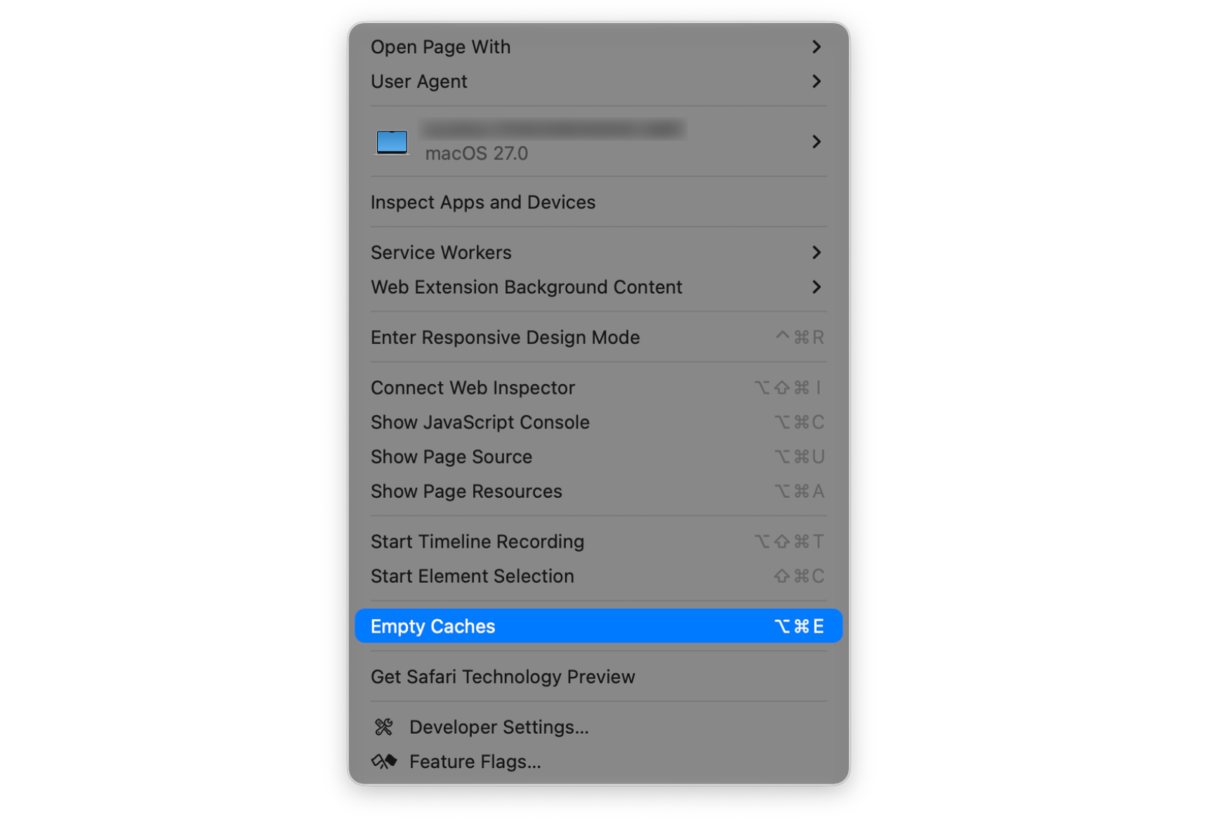
- Now, navigate to Develop > Empty Caches.
macOS Monterey or older
- Open Safari and go to Preferences > Advanced.
- Enable "Show Develop menu in menu bar".
- Quit Preferences.
- Click Develop from the menu bar > Empty Caches.
Finally, restart the browser.
Clear Safari data via Privacy settings and remove browsing history and cookies
To delete cache and other data for a specific website, go to Settings > Privacy and click Manage website data. Select the website and click Remove. This way, you can also clear cookies on Mac in Safari, and if you click Remove All, it will delete cookies for all websites you've ever visited.
This may reduce tracking, but it may also sign you out of websites.
Apple notes that removing cookies and website data in Safari may change or remove them in other apps.
Now, click History > Clear History in the menu bar.
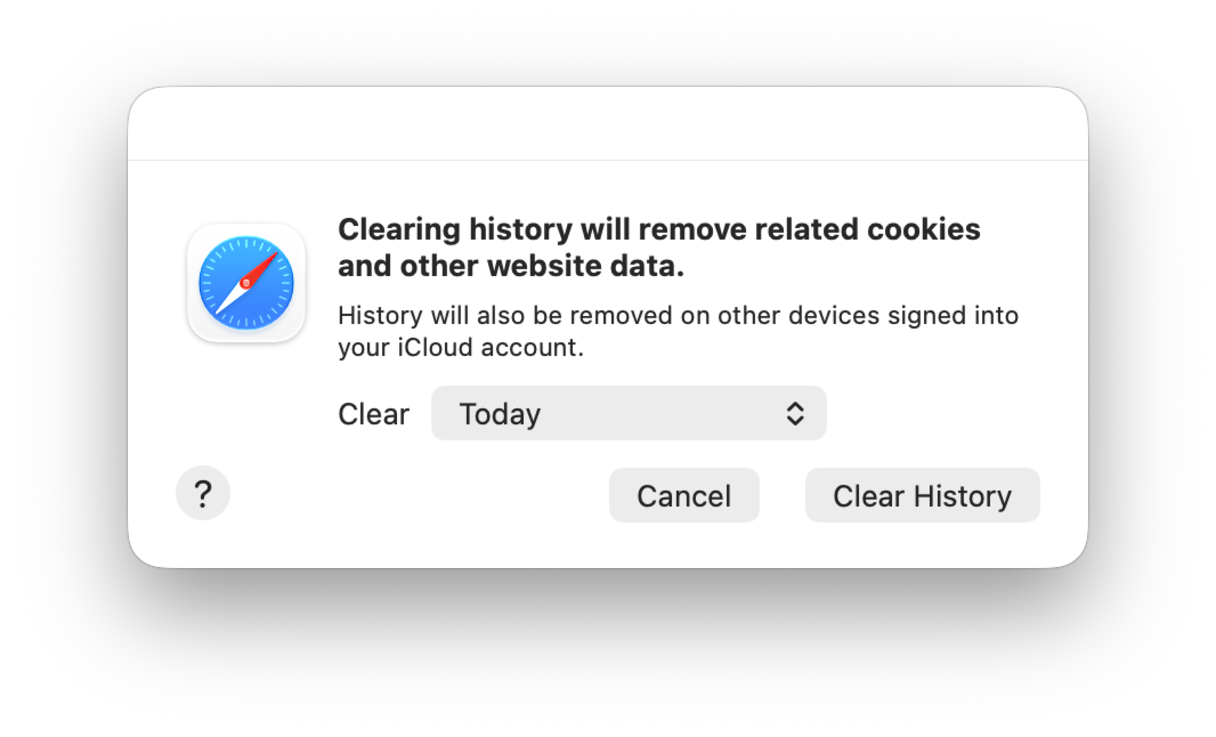
Tip: While in Settings > Privacy, you can also select the checkbox next to Prevent cross-site tracking — it limits third-party cookies and other data collectors from following you across different websites.
Let's move on to the next browser.
How to clear cache in Chrome
Clearing browser cache in Chrome is less tricky. Here's how:
- Open Chrome and paste the following in the address bar: chrome://settings. Now, press Return.
- Navigate to the "Privacy and security" section and click "Delete browsing data" there.
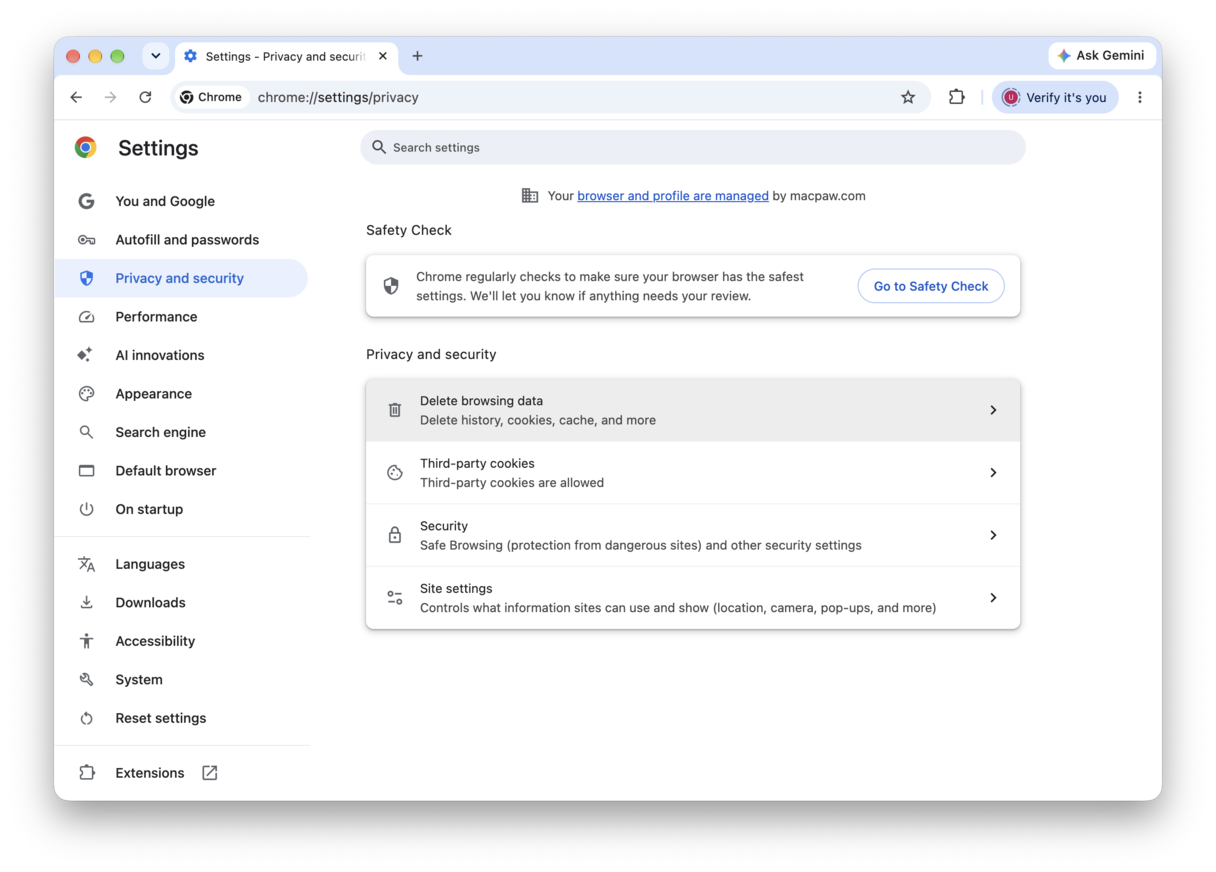
- From the list, select "Cached images and files".
- In "Time range," choose "More" >"All time" and click "Delete from this device".
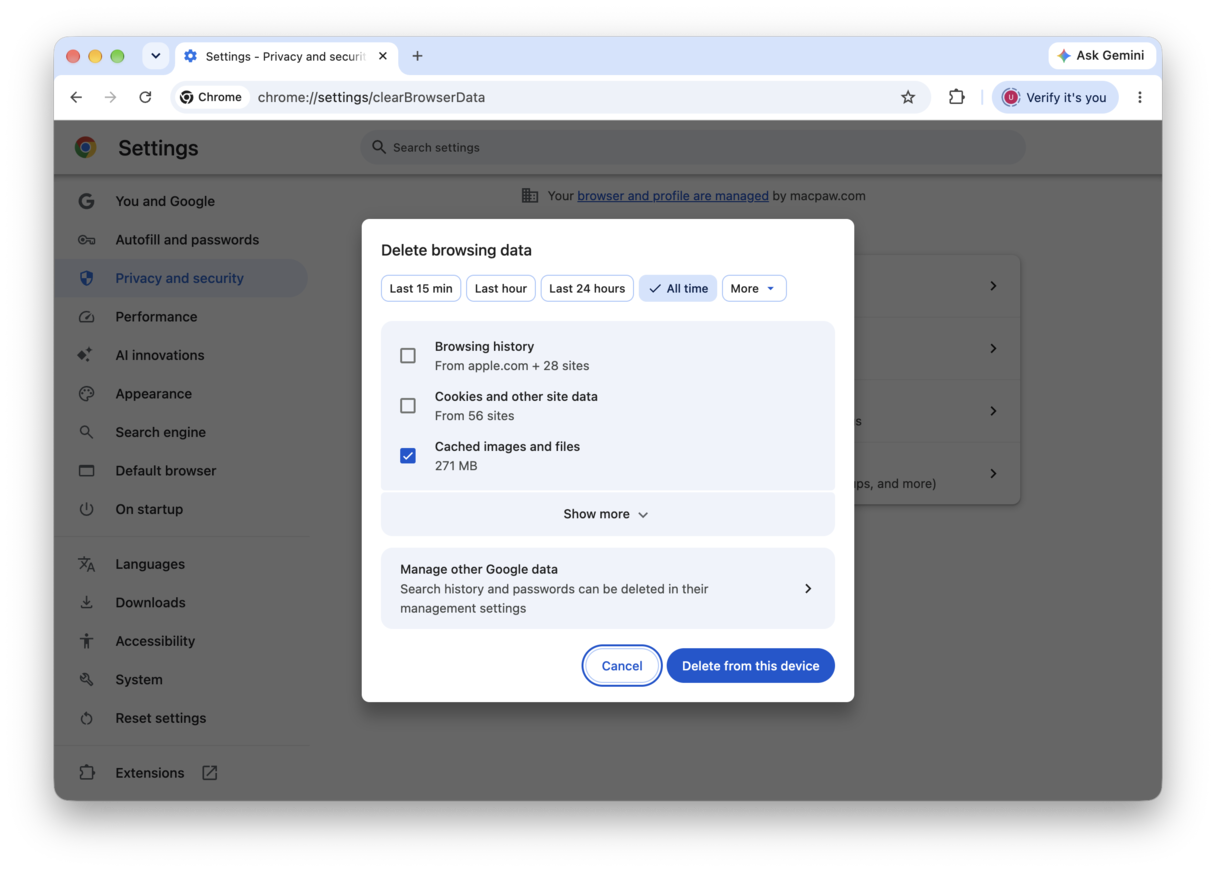
And if you want to prevent cross-site tracking, in Privacy and security, click Third-party cookies and select Block third-party cookies.
Selective cache clearing
If you want to remove cache for a specific website, paste this path into the address bar: chrome://settings/content/all
Now, find your website in the list and click the trash icon (Delete) next to it, then select Delete to confirm. This deletes the data the site stored, so it may sign you out of the website.
Tip: Another way to speed up your browsers is to delete cookies, not only browser cache. To delete cookies in Chrome, select the checkbox next to Cookies and other site data before clicking Delete data.
Let's move on to our third browser.
How to clear cache in Firefox
In Firefox, the process is somewhat similar to Chrome. Here's how to delete cache in Firefox manually:
- Open Firefox and paste about:preferences into the address bar.
- Navigate to the Privacy and security section.
- Find Browsing Data in the pane and click "Clear browsing data".
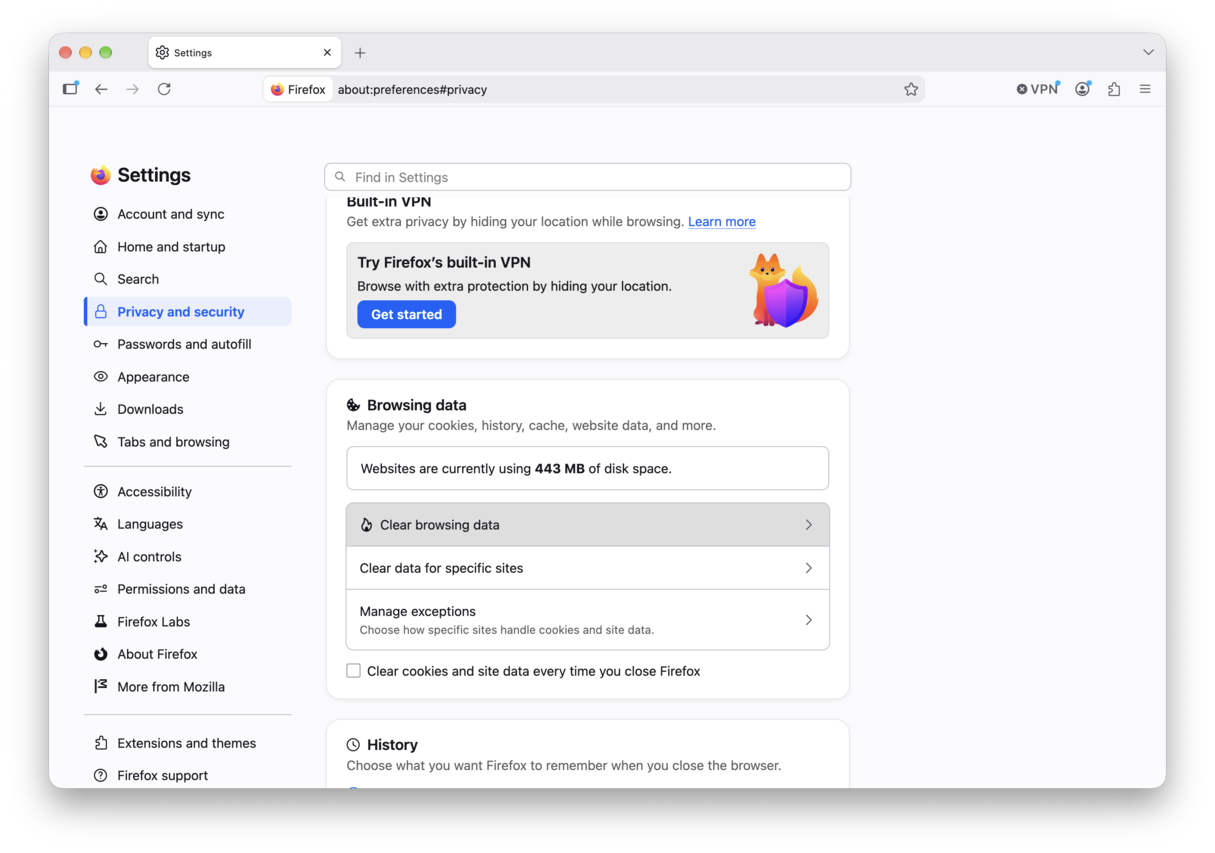
- Choose "Temporary cached files and pages" and click "Clear" to confirm.
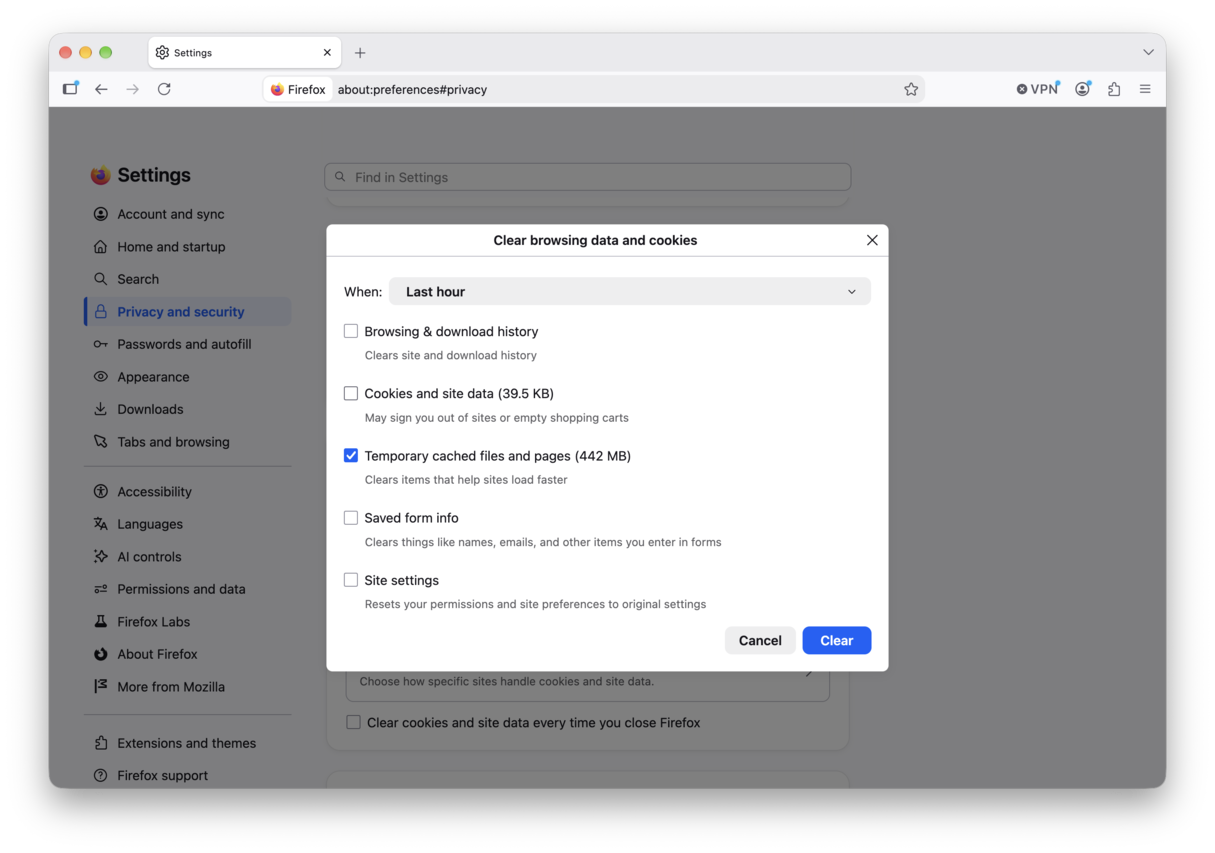
If you want to clear cache for a particular website, instead of Clear browsing data, click Clear data for specific sites. Now, find your target website, select it, click Remove Selected, then click Save Changes and confirm with Remove.
If you want to prevent tracking, in the Privacy and security section of Settings, choose the option that works best for you under Enhanced Tracking Protection.
How to clear cache in Edge on Mac
The steps for Edge are somewhat similar to those for Chrome and Firefox. Here’s what to do:
- Open Edge.
- Click the three-dot icon top right.
- Go to Settings > Privacy, search, and services and click Clear browsing data.
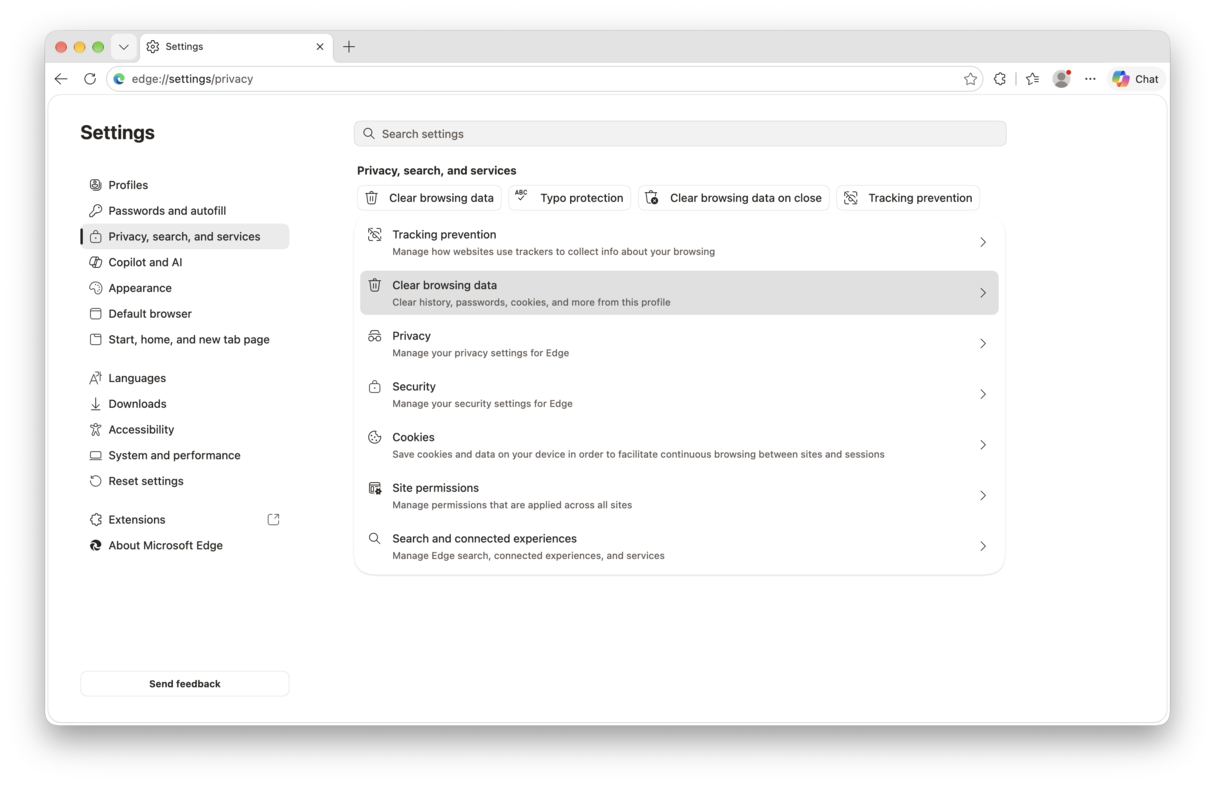
- Click Choose what to clear and All time under Time range and Cached images and files.
- Click Clear now.
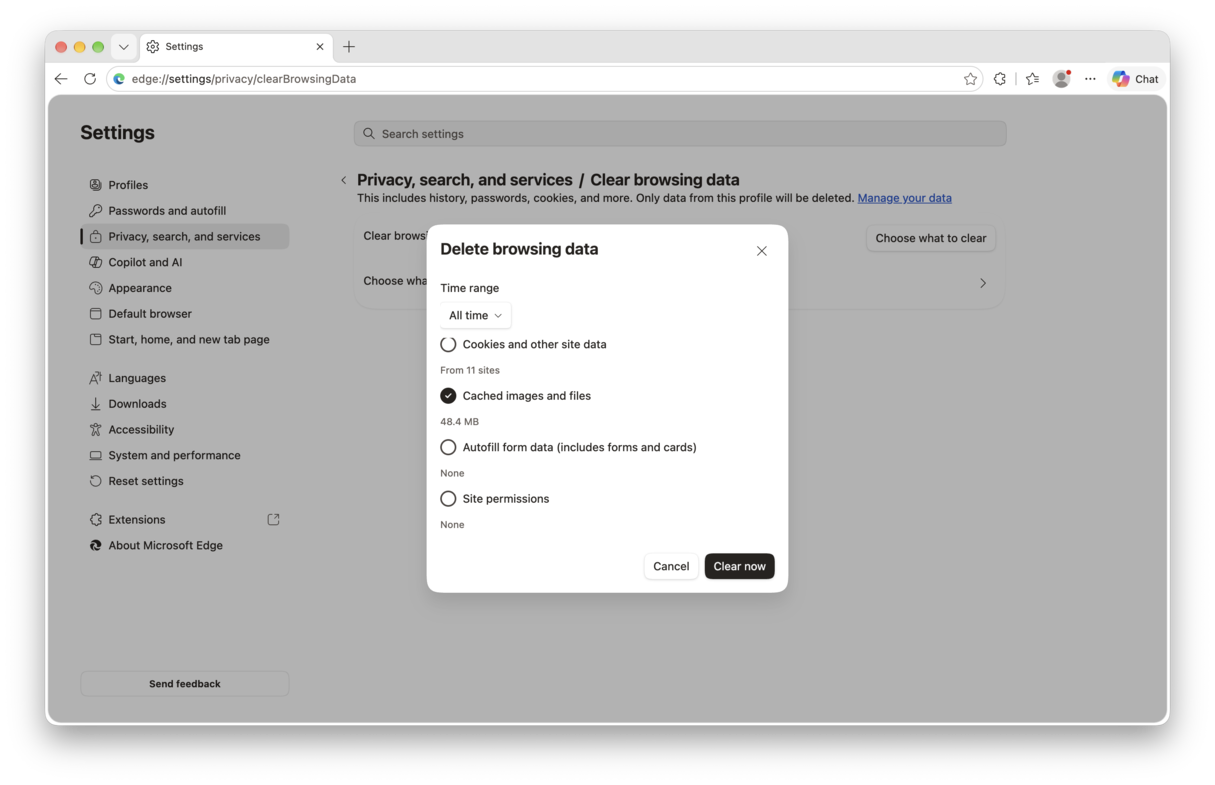
If you were wondering how to clear cookies on Mac in Edge, it is just like for two other browsers (Chrome and Firefox). All you need to do is select Cookies and other site data before clicking Clear now, and the cookies will be gone.
In the same section of Settings (Privacy, search, and services), you can prevent tracking by clicking Tracking prevention and choosing your preferred option.
To clear cache for a specific website, open it first. Now, press Fn (globe key) + F12 to open Developer tools. Right-click the refresh icon to the left of the address bar and choose Empty cache and hard refresh.
Is there a shortcut to empty cache on Mac?
There is a shortcut to delete browser cache. In Safari, it is Option + Command + E. If it doesn't work for your Mac, check what it is by clicking Develop in the menu bar with Safari open and looking next to Empty Caches. For Chrome and Firefox, it is Command + Shift + Delete.
In Chrome, it opens the Delete browsing data window.
How to clear system cache on Mac (Manual method)
Potential space reclaimed: Up to 10% (based on our experience)
Now, let's continue our cache-clearing journey by deleting system cache files — files that macOS system services generate for proper operation. To locate them, open the Finder, and from the Go menu, choose Go to Folder. Now, paste /Library/Caches and press Return.
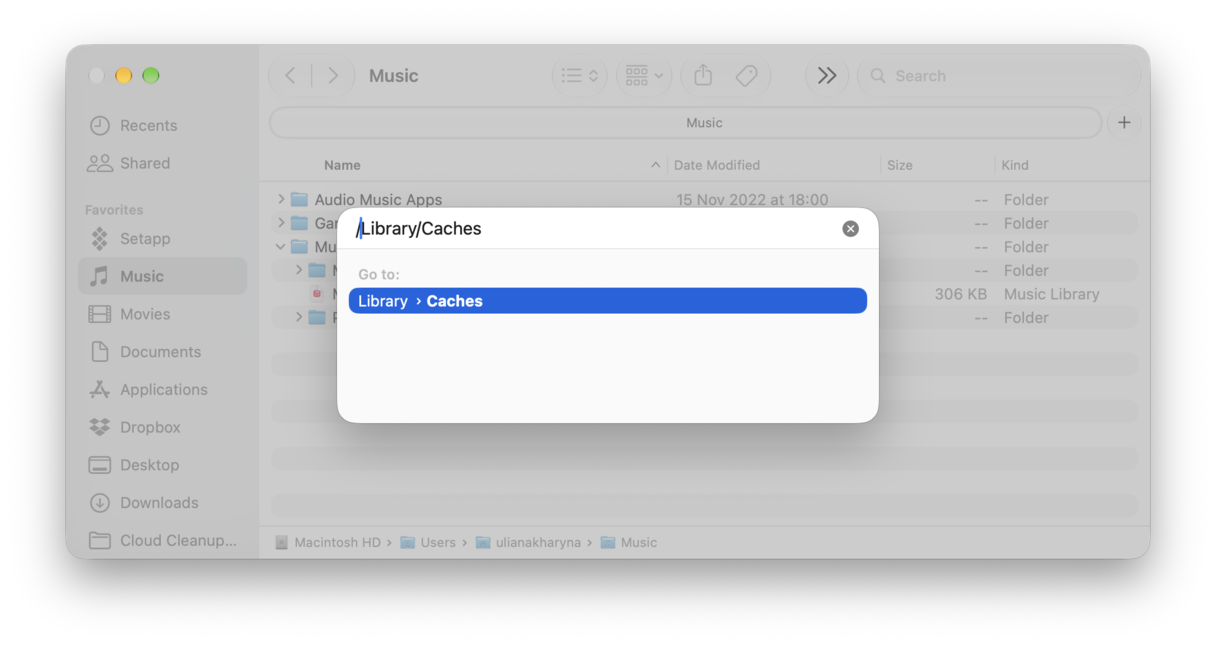
If you want to find out how much space it occupies, right-click the Caches folder and choose Get Info from the menu. You'll see the size of the folder in the info window:
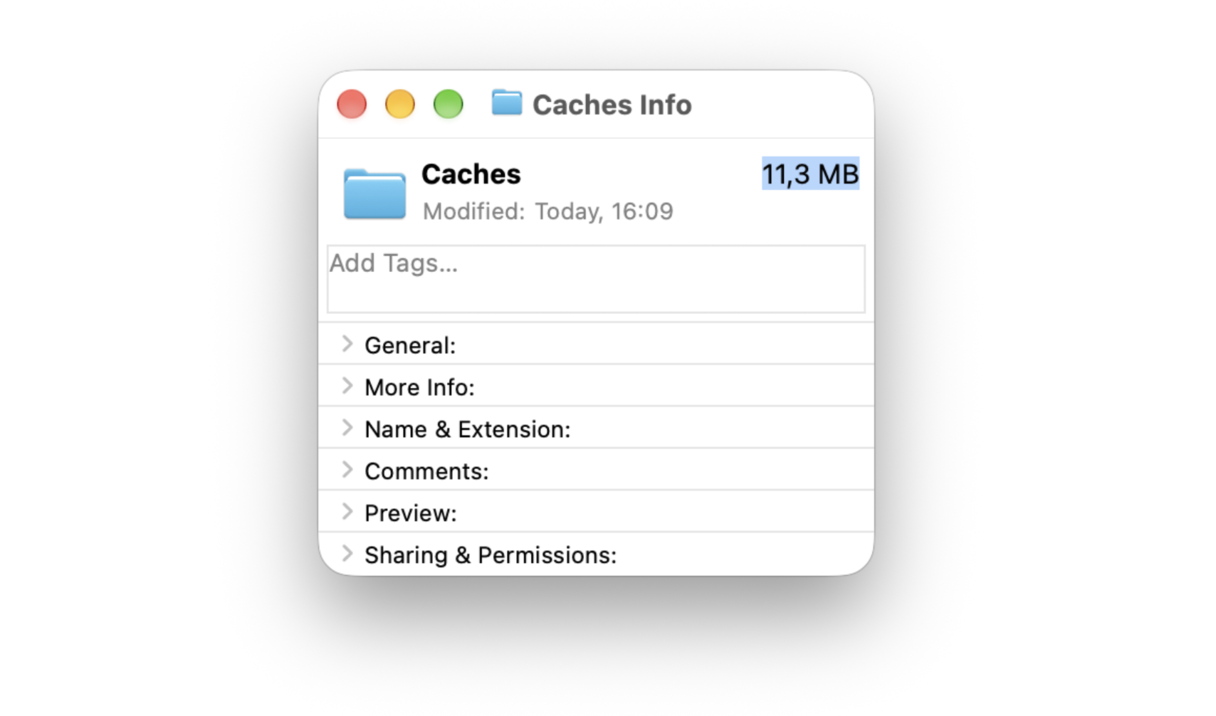
To remove system cache files, browse through the com.apple folders you see and send files to the Trash. Note that only files can be deleted — keep the folders. It is generally safe to remove the contents of the folder, and the system should work just fine after the cleanup.
Alternatively, you can use the rm command in Terminal. Type it and then drag the content of the folder you want to remove. Press Return, and the files are gone. Repeat for all folders. Note that they are deleted permanently instead of being sent to the Trash, so we do not recommend using this command unless you are 100% sure what you are about to remove.
Extra commands to run in Terminal:
ls ~/Library/Caches to find cache data
du -sh ~/Library/Caches/* to see how much space each folder inside Caches takes
How to clear application cache on Mac
As we mentioned, apps also generate cache files, so you may delete them as well. Some users believe these files are needed; still, deleting them is absolutely safe.
Some apps may create more cache than others, for instance, Spotify, Xcode, and Steam. But removing it is still a piece of cake.
- You can get rid of the app cache on Mac by opening
~/Library/Cachesfrom the Go menu of the Finder. - There, you'll find different app cache — for example, com.spotify.client stores Spotify cache.
- Clear up these folders: open one, Command-click the files inside to select them (leave the folders), then right-click them, choose Move to Trash, and empty the Trash.
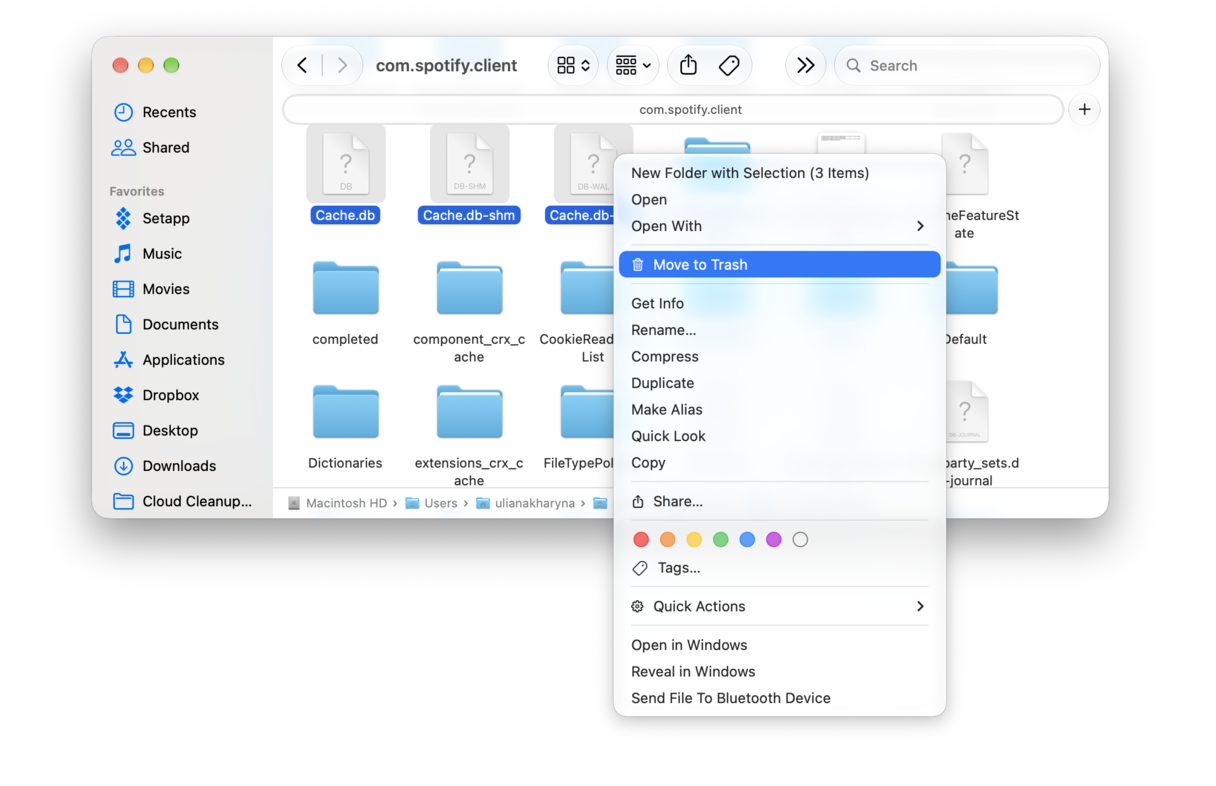
To delete cache generated by other apps, just repeat the process for other folders with "com.[app name]" or simply named as the app itself. Look for the Cache or Caches folder inside and remove the contents. Do not forget to first quit the app if it's running.
Which apps generate the most cache
It all depends on how you use specific apps, but these apps usually generate a lot of cache: Adobe Creative Cloud apps (Photoshop and the like) and alternatives (Final Cut Pro), AI apps (ChatGPT or Perplexity), browsers, messaging apps (like WhatsApp or Viber), streaming and video conferencing apps (like Spotify or Zoom), and developer tools (including virtualization tools like Parallels Toolbox or VMware).
How to flush DNS cache
Sometimes, your browsers may misbehave because you experience issues with the network. One way to fix them is to flush the DNS cache. Flushing DNS cache is clearing stored Domain Name System (DNS) records.
You will have to run this command in Terminal to do it:
sudo dscacheutil -flushcache; sudo killall -HUP mDNSResponder
You will need to enter your admin password followed by Return to execute this command.
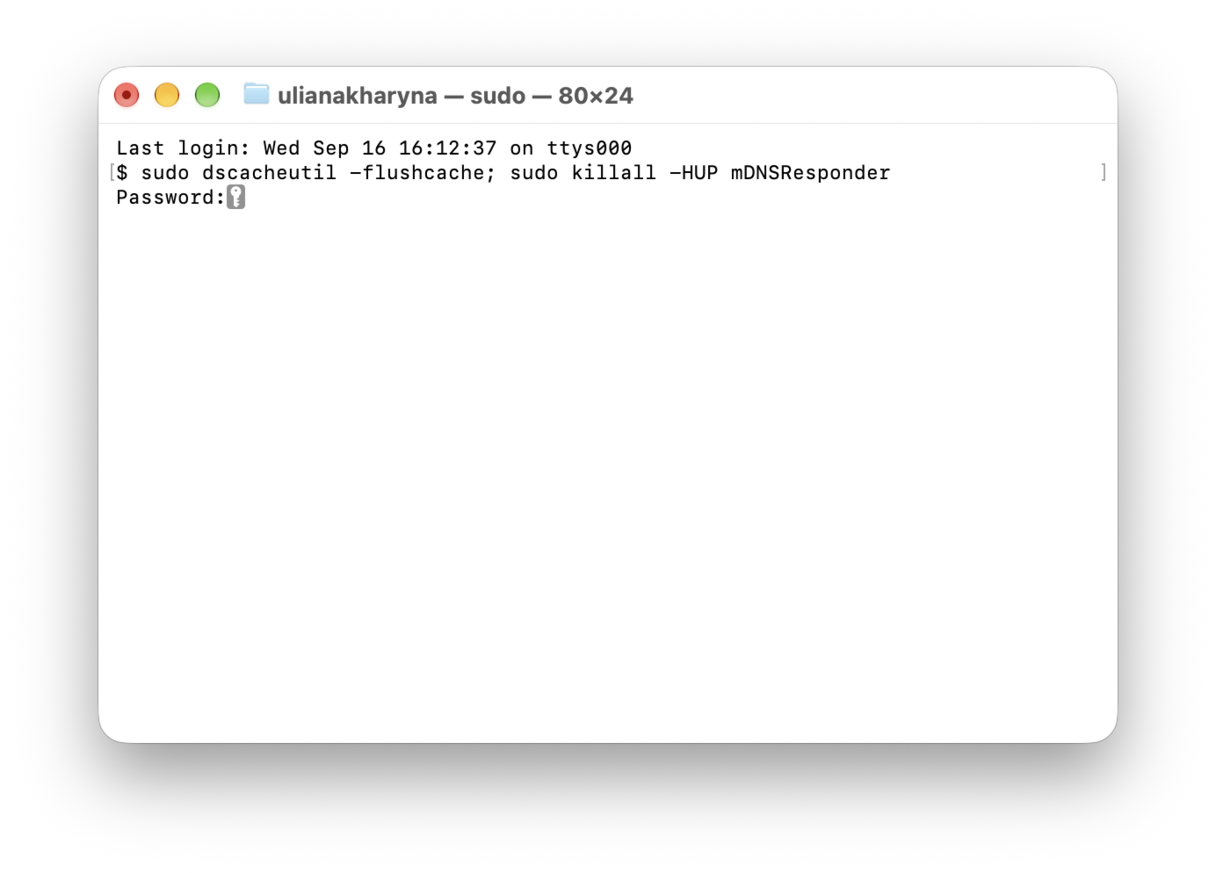
If running the command returned no message, the flushing was successful. You will also know that it was successful by observing immediate network changes.
If you need more tips, check out this article on how to flush DNS cache. It also lists Terminal commands for macOS versions older than Catalina.
How to use safe mode to clear system caches automatically
Did you know that you can boot your Mac into safe mode and clear system cache automatically? It is a special startup mode that helps you find out whether an issue is caused by software that loads as your Mac starts up. It also clears some system caches, including font caches and the kernel cache, which macOS creates again as needed.
How to boot Mac into safe mode
Intel-based Mac
- Turn on or restart your MacBook.
- As soon as your Mac switches on and lights up, press and hold the Shift key.
- Release the Shift key as soon as the login window appears.

Mac with Apple silicon
- Click Apple menu > Shut Down.
- Once it is completely shut down (all lights are off), press and hold the power button. Do not release it until you see “Loading startup options.”
- Select your startup disk (usually Macintosh HD) and, after it, press and hold the Shift key.
- Next, click Continue in Safe Mode. After your Mac restarts, you might see “Safe Boot” in red in the upper-right corner of the login window.

Best Mac cache cleaner: Automated solutions
If all of the steps above seem like a lot of work, or you’re worried that you might delete any files vital for the proper work of the macOS — which you might — you’ll be pleased to know that you can automate the whole process without booting into safe mode. Just use a Mac cleaner app like CleanMyMac.
CleanMyMac: Comprehensive Mac cleaning
This Apple-notarized app removes cache files as well as document versions, and more. Once it completes the very first scan, you'll be able to enjoy more disk space, better Mac performance, and higher speed. Here's how to clear cache on Mac the easy way:
- Get your free CleanMyMac trial — you can use all app's tools for 7 days at zero cost.
- Go to Cleanup in the sidebar and run a scan (it takes just a few minutes to complete).
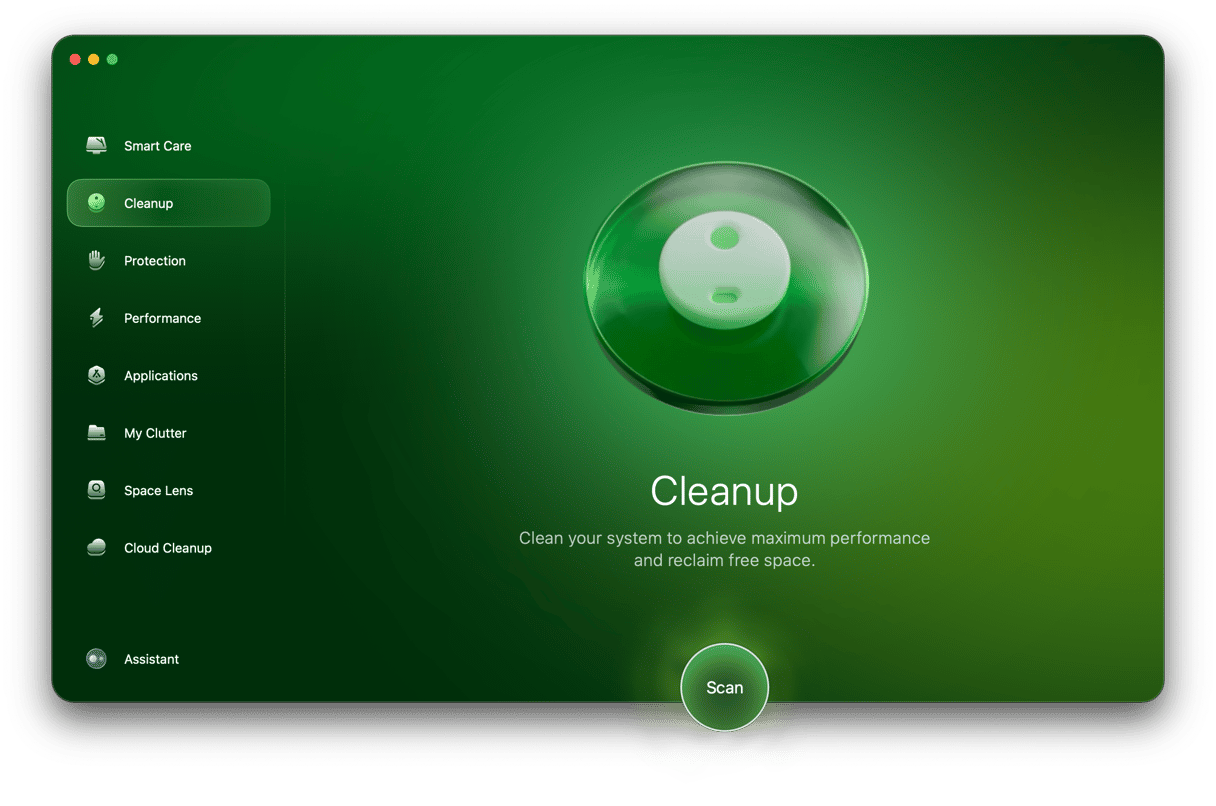
- Click Clean, and all cache that is safe to delete, along with other unneeded junk, is gone.
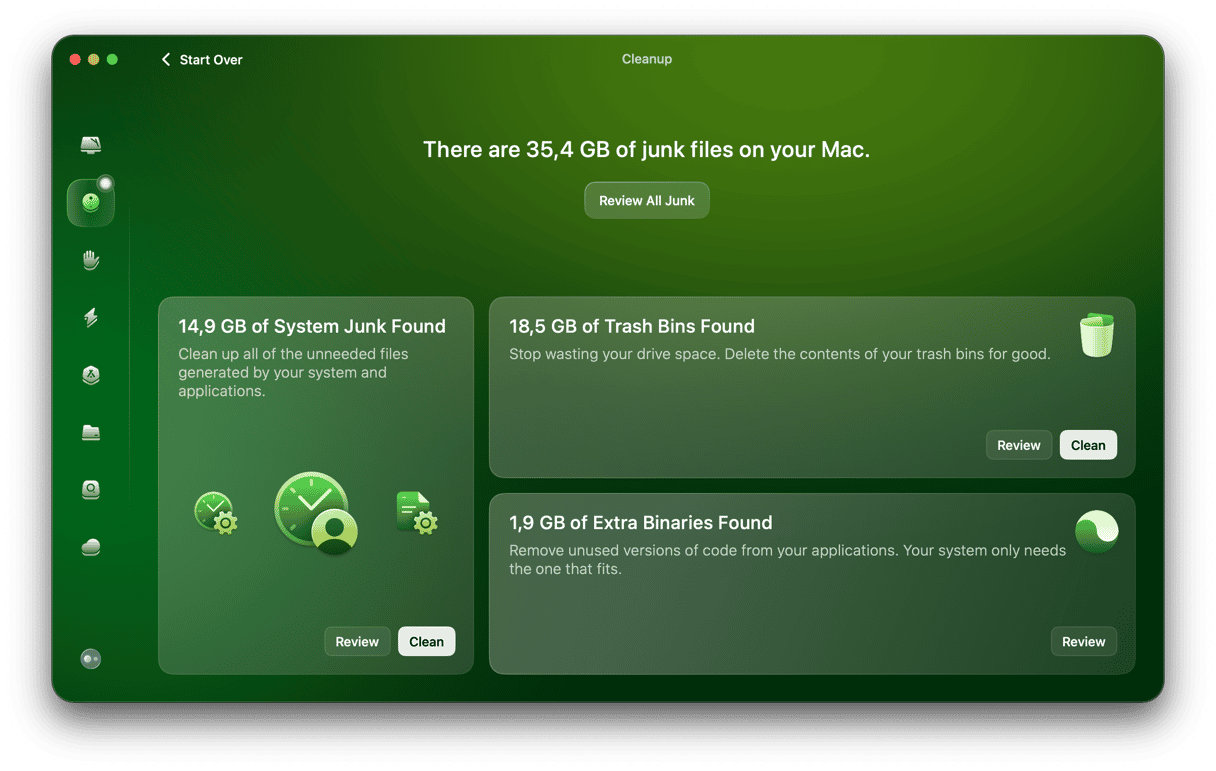
If you want to choose specific cache files, click Review All Junk, select what you no longer need, and click Clean Up.

That's it. CleanMyMac works on macOS 11 and later.
Of course, you can use an alternative, but make sure to download a cleaner from trusted developers and get it from the official website. Not sure which one to choose? Check out our top picks here.
Why choose CleanMyMac
- The Cleanup feature is a fast way to remove cache and other safe-to-delete junk files — on average, a scan takes up 6 seconds, and you’ll need 6 more seconds to get rid of preselected items (based on internal reports)
- With the help of the Cleanup feature, on average, users remove over 8 GB of junk files after the first scan (based on internal reports)
- In addition to deleting cache files automatically, it comes with 20+ other tools to declutter, optimize, and protect your Mac: on average, users remove 1 malware, 4 duplicates, and 5 similar images after the first scan and run 4 maintenance tasks (based on internal reports)
- Used in 185+ countries
- Not only is CleanMyMac safe to use and effective, but it is also pleasant-looking — the winner of the iF Design Award
Try CleanMyMac for free — forget about the headache of manual Mac cleaning.
Comparing manual vs. automated cache clearing
Both manual and automatic cache clearing are effective ways to remove old cache files. However, choosing the one that is best for you depends on your situation. Here’s a quick comparison of both:
Manual cache clearing | Automated cache clearing | |
Pros | Free | Fast and safe |
Cons | The risk of deleting important files | Paid-for option |
Type of users | Extra cautious | Casual users without tech background |
Time needed | 2+ hours | Less than 5 minutes |
Problems and solutions when clearing cache
Cache clearing is not always a hassle-free process. Sometimes, you may face problems. Here are some common issues as well as the ways to fix them:
- "Permission Denied" errors: check permissions in Get Info (should be Read & Write), use
sudoif you’re executing commands in Terminal, or run First Aid via Disk Utility - Cache won’t delete (“Files in use” error message): quit all apps, restart your Mac,
or start up in safe mode, which clears some system caches for you
- Slow performance after clearing cache: wait for cache to rebuild; if the issues persist, start up in safe mode to check whether software that loads at startup is causing them
What happens after you clear cache on Mac
Knowing what to expect may help understand whether you’re facing a glitch or everything works as it should. Here’s what to keep in mind:
📌 Immediate effect: temporary slowdown (usually lasting for a few minutes), possible website logouts if you also removed cookies, slower first loads, and missing preferences
📌 Expected performance improvement: moderate (unless you’ve removed over 50 GB of space)
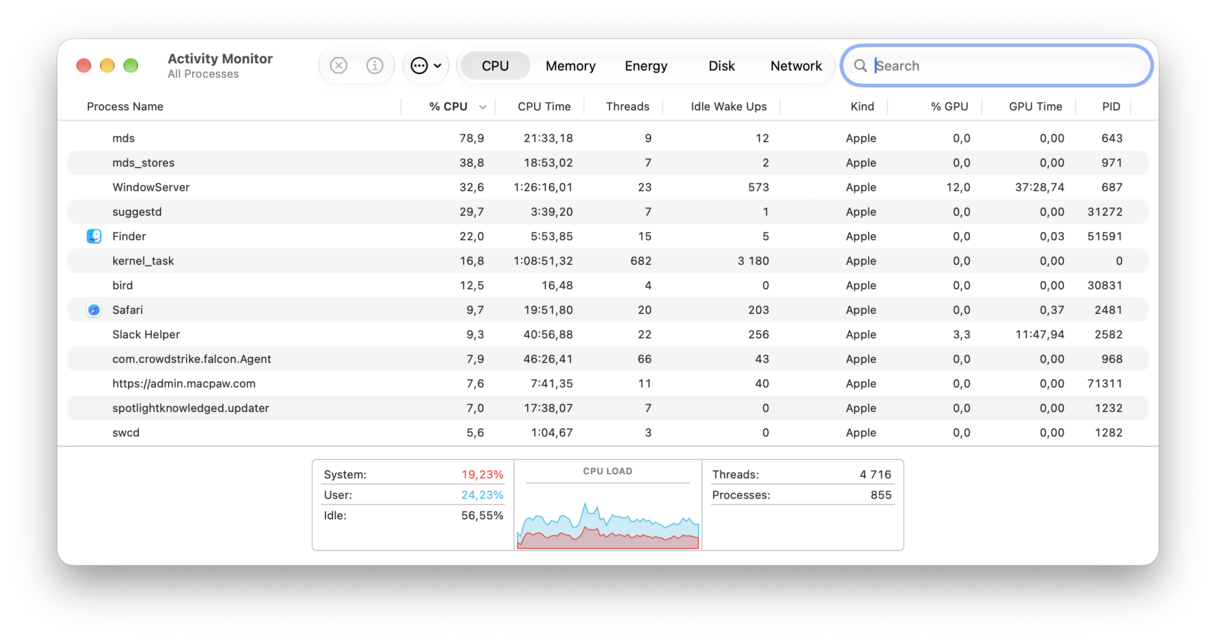
If your Mac does not become snappier, reduce CPU usage and Memory consumption. You can do both via Activity Monitor. Besides, if you have Content Caching enabled in System Settings > General > Sharing, you can use Activity Monitor to view content cache activity for different periods.
There you have it. You now know how to clear cache on MacBook. You might now be wondering if you need any specific maintenance routine after cache removal. No, but what you can do to ensure your Mac is in top shape is keep your app and software up-to-date, restart your computer weekly, and delete cache files from time to time depending on the usage.
And remember if you have persistent issues with your Mac, it may be better to seek professional help. You can contact Apple support for more information.
Frequently asked questions about clearing cache on Mac
Is it safe to delete cache files on Mac or will cache clearing harm my computer?
Generally, it is absolutely safe to remove cache because the apps you install or browsers you use will create new cache files when needed. However, caution is necessary when removing the cache generated by the system — your macOS. A good rule of thumb is to delete individual files but preserve the folders in which they were created.
How much space will clearing cache free up?
There’s no universal answer, as it varies among Mac users. But if you haven’t ever cleared cache and are a heavy user of web browsers and numerous apps on your Mac, you can expect to free up 10+ GB of space. Some of our team members even managed to delete over 70 GB of cache, but they actively used Photoshop and online editors (like Canva) in their MacBooks. If cache cleanup is a part of regular cleaning, you’ll perhaps reclaim around 1 GB of space.
Will clearing cache delete my files or photos?
No, your documents and photos will remain intact. Cache clearing only removes temporary files that are then re-generated as long as you follow all precautions.
Can I recover deleted cache files?
Yes, if you’ve backed up your Mac using Time Machine or another backup method, you can easily recover deleted caches.
Do I need admin permissions to remove cache from Mac?
Yes and no. To delete system cache, you may need to have admin permissions. But to remove app cache and browser cache, you won't need them.