
The way that the Mac stores and manages passwords has changed in recent versions of macOS. Depending on the version of the operating system, you can find them in Safari or Keychain Access, System Settings, or the Passwords app introduced in macOS Sequia. In this article, we’ll show you all the ways to find saved passwords on Mac.
Where to find saved passwords on Mac
Depending on your macOS, check the steps below to view saved passwords.
How to see saved passwords on Mac: macOS Sequoia or later
In macOS Sequoia, Apple introduced the Passwords app — the universal storage for all passwords and passkeys. So, if you use macOS Sequoia or Tahoe, it is the quickest way to find the needed password. Here's how to see passwords on Mac in the Passwords app:
- Open the Passwords app — you can use Spotlight search to find the application or ask Siri to open it. Also, you can find the app in the Applications folder.
- Enter your passwords.
- Select your account and find the needed password.
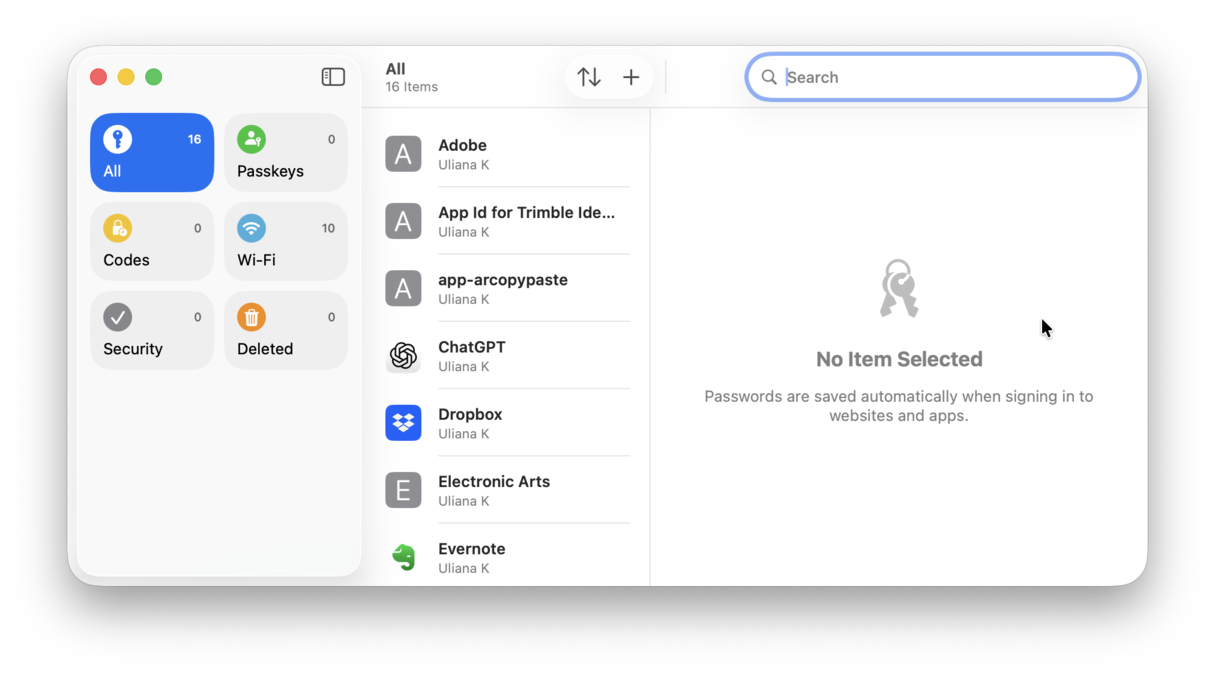
You can learn more about how to use the Passwords app in this article from Apple Support.
How to view saved passwords on Mac: macOS Sonoma or earlier
For macOS Sonoma or earlier, use your preferred method from those described below.
System Settings
- Click the Apple menu and go to System Settings.
- In the sidebar, click Passwords and type in your user password or authenticate using Touch ID or Apple Watch.
- To find the password you want, use the search box or scroll through the list.
- To see the password, click the ‘i’ next to the website name and hover the mouse pointer over the password.
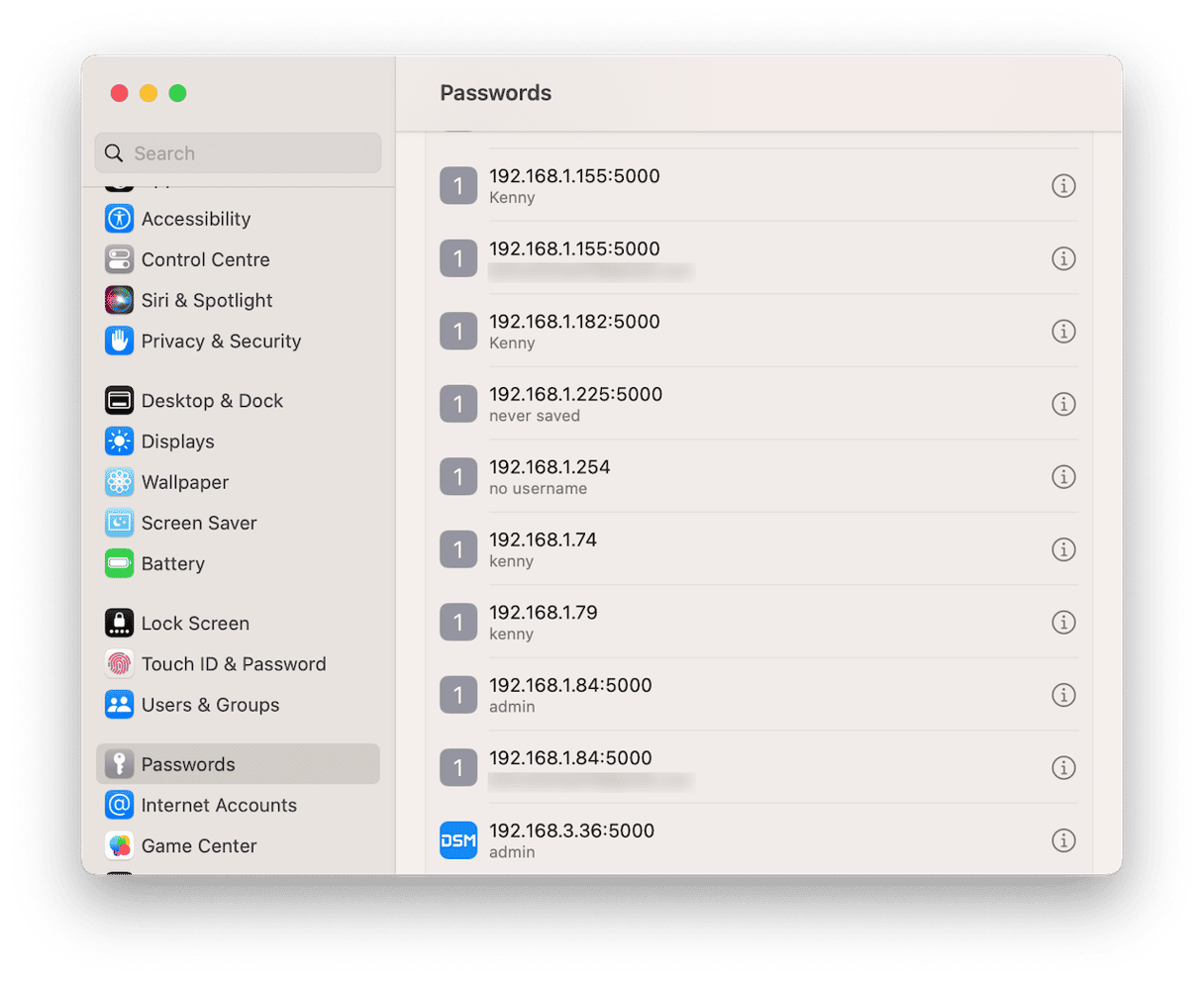
You can also use Spotlight to access the Passwords section of System Settings. Just click Spotlight in the menu bar or press Command-Space, then type ‘passwords’ into the search box. You should see the System Settings icon and the word ‘Passwords’ in the results. Click that to go directly to the Passwords section of System Settings.
Keychain Access
The most widely used alternative to the Passwords pane is Keychain Access. Here’s how to use it:
- Open Keychain Access from Applications > Utilities.
- Choose the iCloud keychain.
- Search for the website whose password you want to find.
- Select it and click ‘i’ in the toolbar.
- Type in the keychain password and click Allow.
Safari
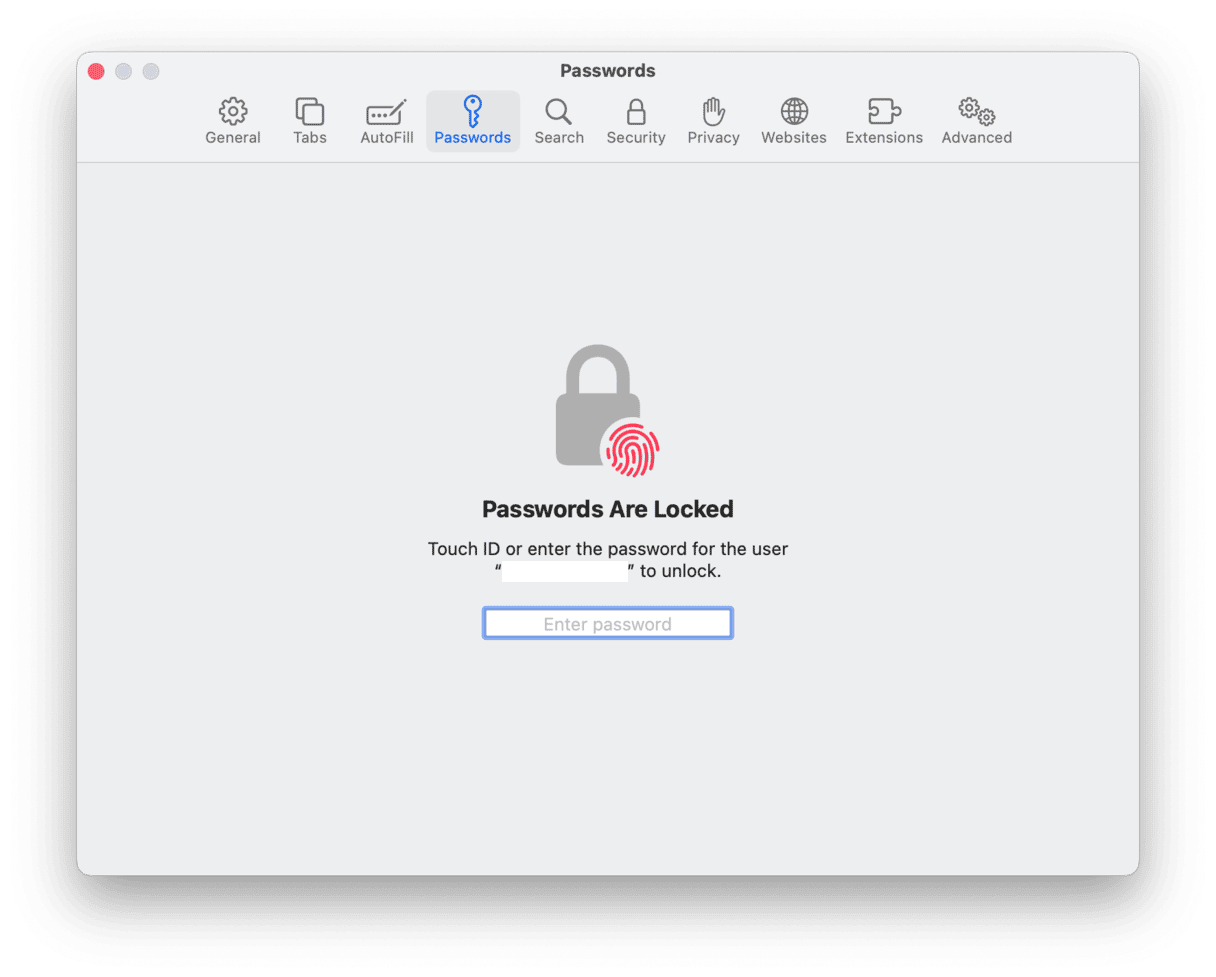
Passwords can also be seen in browsers. Here’s how to find saved passwords on Mac Safari:
- Click on the Safari menu in Safari.
- Select Settings.
- Click on Passwords and authenticate with Touch ID, Apple Watch, or by typing your password.
- Search for the website whose password you want.
- Select it and hover the mouse pointer over the ‘Password’ field.
Other browsers
Regardless of the macOS version your Mac runs, you can find saved passwords in other browsers of your choice, like Firefox or Google Chrome.
Firefox
Here are the steps for accessing saved passwords in Firefox:
- Open Firefox and log in to your account.
- Click the three lines to the right of the toolbar.
- Select passwords.
- Search for the password you need in the sidebar.
- Select the account details in the sidebar.
- Click the eye icon next to the password field.
Chrome
How to find saved passwords on Mac Chrome browser:
- Open Chrome and sign in to your Google account.
- Click on your profile picture in the toolbar and choose the key icon or type
chrome://settings/passwordsinto the address bar. - Search for the password you want.
- Click the password and type in your Mac login password.
- Click the eye to reveal the password.
How to find saved Wi-Fi passwords on Mac
Again, it all depends on the macOS version you use:
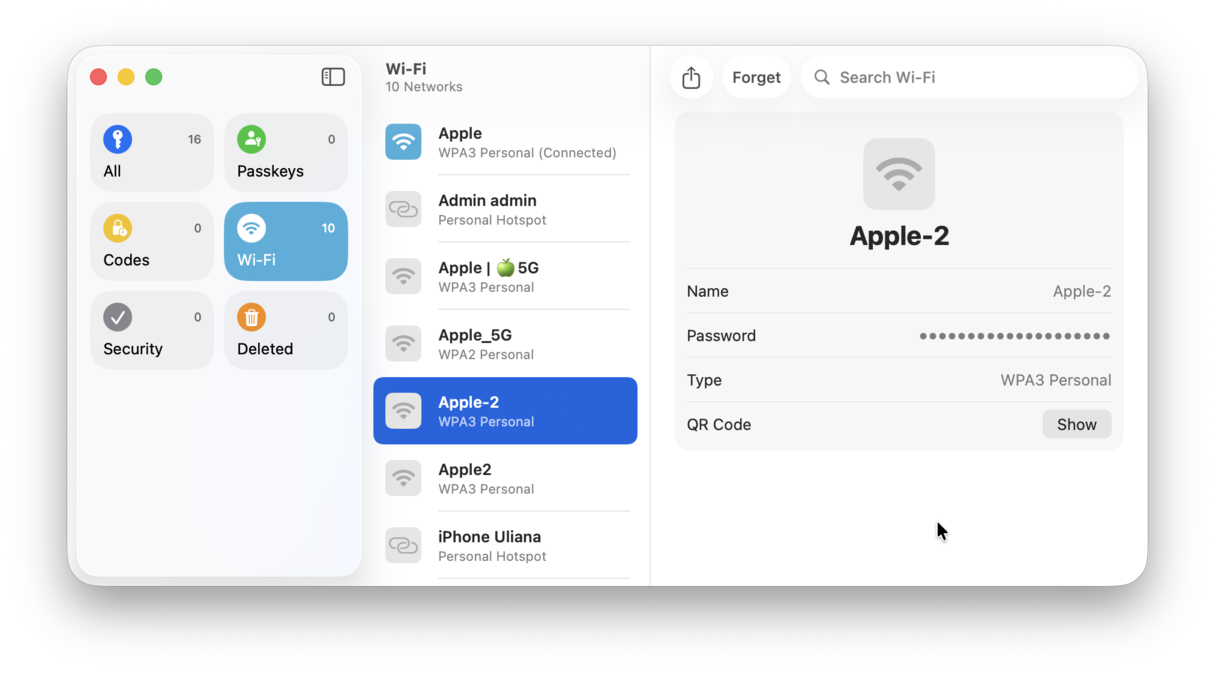
- macOS Seqoia or later: in the Passwords app, navigate to the Wi-Fi section. To view the password, click the network and hover over the dots next to Password.
- macOS Sonoma or earlier: in the Keychain Access app, filter items by kind and look at the AirPort network password entries. To view the password, double-click the network and select the checkbox next to Show password. Enter your admin password to confirm.
How to remove or edit passwords
Again, managing passwords depends on the macOS version your Mac runs or the browser you use:
- Passwords app: Click Edit, change the password, then click Save to update your passwords. To remove one, click Delete Password or Delete Passkey.
- System Settings: When you click the password, a window opens, and there are buttons for Delete and Edit.
- Safari: When you select a password, there’s a button to edit the password. To delete it, you click on the ‘-’ at the bottom of the sidebar.
- Chrome: Select the password and click Delete or Edit.
- Firefox: Select the password and click Edit or Remove. If you want to change the password itself, you will need to do that on the website itself.
For more information on how to manage passwords, see this article.
How to improve your privacy in Safari, Chrome, and Firefox
If you’re worried about saved passwords being accessed by others or that they’re not secure, you can remove them all from Safari, Chrome, and Firefox very easily.
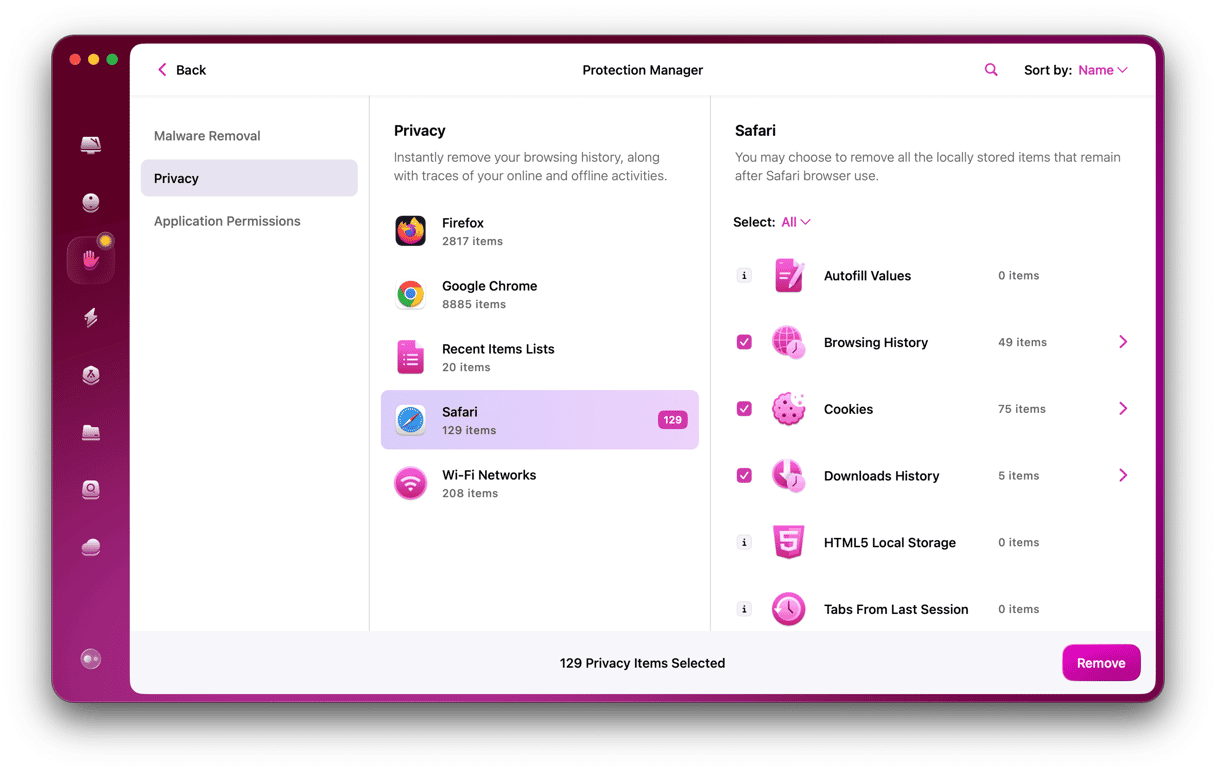
CleanMyMac’s Protection feature allows you to clear all the autofill data from all three browsers quickly and easily. It can also clear other private data like cookies, your search history, downloads, and browsing history. And it can remove Mac-specific malware, too. Once you’ve done that, follow the steps below to remove autofill data.
- Open CleanMyMac and select Protection from the sidebar.
- Click Scan. If you’re asked to quit web browsers, do that.
- When it’s done, click Manage Privacy Items.
- Click a web browser in the middle pane and select the Autofill Values setting.
- Hit Remove.
The benefits of using CleanMyMac
- Based on internal data, on average, users find and remove 1 malware after the first scan.
- A quick and effective way to keep your Mac clutter-free: according to internal reports, on average, users find and remove over 9 GB of safe-to-delete junk files in under 2 minutes.
- You can test all of its 25+ tools for 7 days at no charge — get your free trial here.
Key takeaways
There are lots of ways to save passwords and reveal saved passwords on your Mac:
- You can view passwords in System Settings, Keychain Access, and Safari’s settings for macOS versions older than Sonoma.
- In macOS Sequoia or later, use the Passwords app.
- Every major browser, including Chrome and Firefox, allows you to save passwords for websites.
- Depending on the macOS, System Settings/Passwords app allow a more unified view of the passwords, while Keychain Access can be used for advanced management on any macOS.
Frequently asked questions
How is the Passwords app different from the old System Settings approach?
The main difference between the two is that Passwords is now a dedicated native app. Unlike the old System Settings approach, it also has several pros: categorization, easier sharing, and CSV exports/imports (in the File menu in the menu bar). You can now easily back up all your passwords and keep them all as a separate CSV file that can be imported to, say, browsers other than Safari.
Does iCloud Keychain sync my passwords across iPhone, iPad, and Mac automatically?
Yes, as long as all your devices are signed in to the same Apple Account and have the feature enabled, any login you save on one device will instantly be available to autofill on the others.
What is the difference between the Passwords app, Keychain Access, and iCloud Keychain — and which one should I use?
All three tools manage passwords, passkeys, and Wi-Fi data. iCloud Keychain is the syncing tool that runs quietly in the background to autofill and sync passwords. Use it to sync passwords across different devices signed in to the same Apple Account. Keychain Access and the Passwords app are nearly the same. Use the Passwords app if your Mac is already upgraded to macOS Sequoia or Tahoe. For older macOS versions, use Keychain Access (since the Passwords app is missing). Still, Keychain Access has not been removed from newer macOS versions because it is needed for managing system certificates, local secure notes, and deep macOS troubleshooting.
What should I do if my Mac says a saved password has been compromised or leaked?
First off, go to the website on which you use this password and change it immediately. Enable two-factor authentication if possible. As a precaution for the future, consider switching to passkeys and stop reusing passwords. Learn more about password security recommendations in this guide from Apple Support.